dailynewsnblog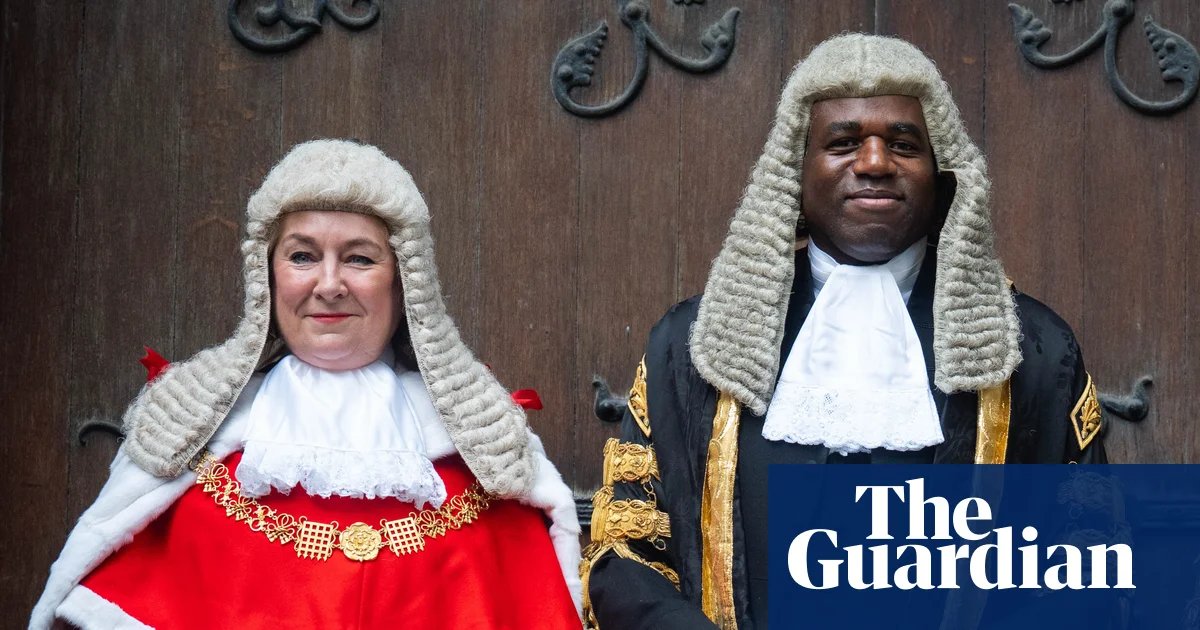
David Lammy and the most senior judge in England and Wales are drawing up plans to accelerate the recruitment of minority ethnic and working-class solicitors into the judiciary.
A new judicial and legal diversity board, chaired by Lammy, who is the first black lord chancellor, and Sue Carr, the lady chief justice, has met for the first time to discuss removing barriers for diverse candidates attempting to join the judiciary.
Members of the seven-strong panel hope to fast-track solicitors from under-represented backgrounds and improve mentoring schemes for new recruits.
The move follows criticisms that Lammy’s plans to slash thousands of jury trials will result in an increase in racial and class bias from a mainly white and middle-class judiciary.
The new board met in central London on Thursday with the aim of building on the success of recent recruitment drives, which increased the proportion of female judges to 44%.
Speaking before the meeting, Lammy told the Guardian: “This new board is a huge step forward as the lady chief justice and I look to break down barriers and back talent from all walks of life – continuing to drive real progress towards a judiciary that’s reflective of modern Britain.”
Lady Carr, the first woman to serve as head of the judiciary, said the board was a “welcome forum for us to work alongside the legal professions in providing opportunities”. The Ministry of Justice’s 2025 statistics show that representation of black judges has remained at 1%, despite recent recruitment campaigns.
Three-quarters of senior judges were students at Oxford or Cambridge, while nearly two-thirds attended private school, according to a Sutton Trust report released in September.
As part of its programme to improve representation, the board hopes to work with black and other minority legal professionals, including those from working‑class backgrounds, to strengthen mentoring and support.
The UK Association of Black Judges, which was launched last year to address recruitment failings, said it was unable to send a representative to the inaugural board meeting because it was only invited three days ago.
Cordella Bart-Stewart, chair of the association, said the recruitment targets should be set for the judicial appointments commission, which recommends individuals for judicial office.
“This initiative is welcomed,” she said. “However, the government is trying to do this without properly consulting our members about what we see as being the issues in the appointments process.
“The problems lie within the judicial appointments commission. Their processes and internal biases need analysis because they continue to exclude people.”
The commission has been approached for a comment.
Keir Monteith KC, a prominent barrister, said any plan for change needed to take into account evidence of institutional racism in the justice system. “That very fact will hamper the recruitment of black and ethnic minority judges and will result in very little real change even after some take office,” he said. “It helps to explain why previous initiatives over the last 10 years have failed to bring about any change.”
Fiona Rutherford, chief executive of the legal reform charity Justice, welcomed the board but said it remained unclear how this new initiative differed from existing ones.
“Diverse candidates are already applying for judicial roles in greater numbers, yet this has not translated into appointments. Work needs to be done on ensuring the appointments process is free from bias backed by meaningful diversity targets,” she said.
It emerged in February that Lammy was examining whether his plans to expand the number of judge-led trials for all but the most serious cases could result in harsher sentences for minority ethnic defendants.
Critics have pointed to a 2017 review written by Lammy into the treatment of people from ethnic minority backgrounds in the criminal justice system.
In the review, Lammy said people from ethnic minority backgrounds were more likely than white defendants to receive prison sentences for drug offences, and cited public comments that ethnic minorities “had more confidence in the fairness of juries than they had in the fairness of magistrates courts”.
The Guardian has also been told that ministers plan to allow sentencing remarks by the chief magistrate to be broadcast live for the first time. Lammy and Carr have also agreed to establish a joint working group to explore how court broadcasting can be expanded further.