dailynewsnblog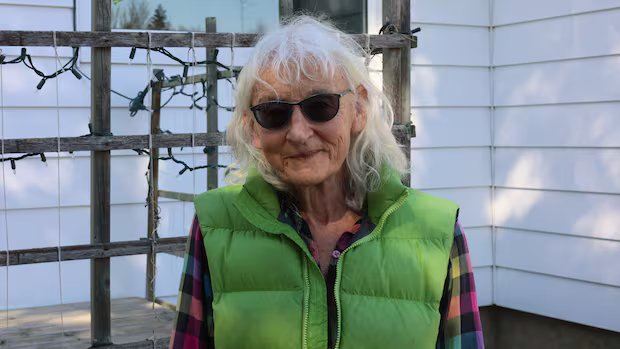
Marnie Desjardins set down roots in Olds, Alta., a few years after moving to the town in 1986, eventually purchasing a home on the east side.
The mature trees, interesting architecture and friendly neighbours are just some of her favourite parts of living in the agricultural hub, which is home to about 10,000 residents.
But since January, her mostly quiet life has become upended, she said, after Synapse Data Center Inc. proposed a massive data centre project and accompanying natural gas plant right near her home.
Now, she feels life as she knows it is at stake.

“I really thought that I would be retiring here, and I certainly had a vision of what that was going to look like,” she said, choking up on her front lawn.
“But I’m not sure … if this were to go through at the scope and scale that it is being proposed at this point in time, I’m not sure if I would stay, which breaks my heart. It really, really does.”
Desjardins is one of several Olds residents who are deeply concerned about the health impacts that could come from living next to ten 100-megawatt data centres and a power plant with enough generating capacity to light up Edmonton.
A local group called the Olds Transparency Project has recently banded together to raise awareness of the data centre project and to stop it in its tracks. On April 28, the group held a town hall to discuss its potential health impacts.

Janae Johnson, an Olds resident, mother to three young children and a member of the group, teared up thinking about what her kids’ future might look like if the project goes ahead.
Health impacts are at the top of her list of concerns, she said, citing potential noise pollution and emissions.
Johnson said she’s never advocated on this scale — or spoken to political leaders or the media for that matter — but now feels she has to.
“I am a mom by day and a researcher and emailer by night,” she said. “There hasn’t been a lot of interaction with the town … and the provincial government. We’ve raised a lot of concerns, but there just hasn’t been much feedback.”

Documents, town halls and meetings
The town, province and residents have hosted several town halls and meetings to get people up-to-speed on the proposal and process.
That means people who have never had to think about a project like this are trying to wrap their heads around the science and operations of data centres while diving into the complex world of provincial and federal policy — much of which hasn’t caught up to this evolving technology.
“I know more about AI data centres now than I ever wanted to know,” said Karen Swanepoel, a resident who can see the site of the proposed data centre from her front yard.
“It’s not something that we set out to learn about, but it’s infuriating that a lot of people don’t understand why we don’t think the risk is fair.”

“It’s consuming my life. It really is, and I’m choosing that. I’m choosing that [because] it is important enough to me,” said Desjardins.
She thinks the timelines are moving too fast.
“I think there’s a lot of people that really don’t know how to have their voices heard. Not everybody uses computers. Not everybody is on Facebook,” she said.
The project was initially rejected by the Alberta Utilities Commission (AUC). Synapse is currently awaiting approval on its resubmission. The AUC will hold an information session later in May and give residents the opportunity to participate in a hearing later this year.
To address concerns about public consultation deficiencies, Synapse also launched a website answering questions about the project.

In a statement emailed to CBC News, Minister of Technology and Innovation Nate Glubish said Synapse’s first application to the Alberta Utilities Commission “was inadequate and thus did not proceed. This is evidence of the process working.”
He added that data centre projects “must also meet requirements related to water, emissions, noise, and land use through multiple process[es]. Albertans can participate in those regulatory consultations and have their say.”
Organizing to be heard
Bradley Lafortune, executive director of Public Interest Alberta, a non-profit organization that advocates for various issues, said he’s hearing from many people who are uncertain about data centre projects proposed near them.
“They don’t really know from the government or from companies that are planning to build them here what exactly they are and how much impact they will have on local communities,” he said.
“People are also wondering why is it that we’re charging ahead without any sort of AI or AI data centre legal framework in place. Alberta has no overarching legal framework for AI or AI data centres, nor does the federal government.”
The province has not required the Synapse data centre project and Kevin O’Leary’s Wonder Valley to do an environmental impact assessment.
Three other data centre proposals in Alberta (the Woodland Cree First Nation-led Mihta Askiy data centre and Beacon AI Centers’ Heartland Project and Indus Project) are also not required to complete impact assessments, as decided by the Impact Assessment Agency of Canada.

Having spoken to residents in Olds and across Alberta, as well as people in Saskatchewan where a development agreement was approved for Bell Canada’s 300-megawatt AI data centre, Lafortune said “provincial governments, so far, are not doing a diligent enough job in engaging with citizens and informing them about all of the aspects of these proposed projects.”
Regina residents have rallied against the proposed data centre project on the outskirts of the city.
On the east coast, residents of Lorneville, a rural Saint John community, have vocalized their disapproval of a data centre proposal from Calgary-based Beacon AI Centers and Volta Grid, which is based in Texas.
‘They stole our summer’
The plight of Olds residents fighting against the Synapse data centre project is familiar to Wayne Shuttleworth.
The farmer and landowner who lives in Rocky View County, just northeast of Calgary, plunged into documents and meetings last summer when an AI data centre was proposed right next to his property.
“It was … kind of like 100 per cent of our life for that whole summer,” he said, thinking back on that stressful time. “We had, like, documents of hundreds of pages deep, and as just a group of residents, we had only, like, 80 days to go through them.”

Shuttleworth said he’d wake up in the middle of the night just to jot down new points and build his case against the data centre.
“They stole our summer away from us dealing with this thing.”
At a Rocky View Council hearing on Sept. 9, Shuttleworth and dozens of residents presented their cases against the data centre, while less than a handful said they were in favour. The council voted 6-1 to reject the plan, citing concerns about the data centre’s proposed location and potential impacts on neighbouring farmers.
As an Albertan who succeeded in his fight against the data centre trying to move in next door, Shuttleworth had this advice for Olds residents: “Check your emotions at the door” and gather as much information as possible on the proposed development so that when the time comes, you have a strong case to make.
“I wouldn’t wish this on anybody.”