dailynewsnblog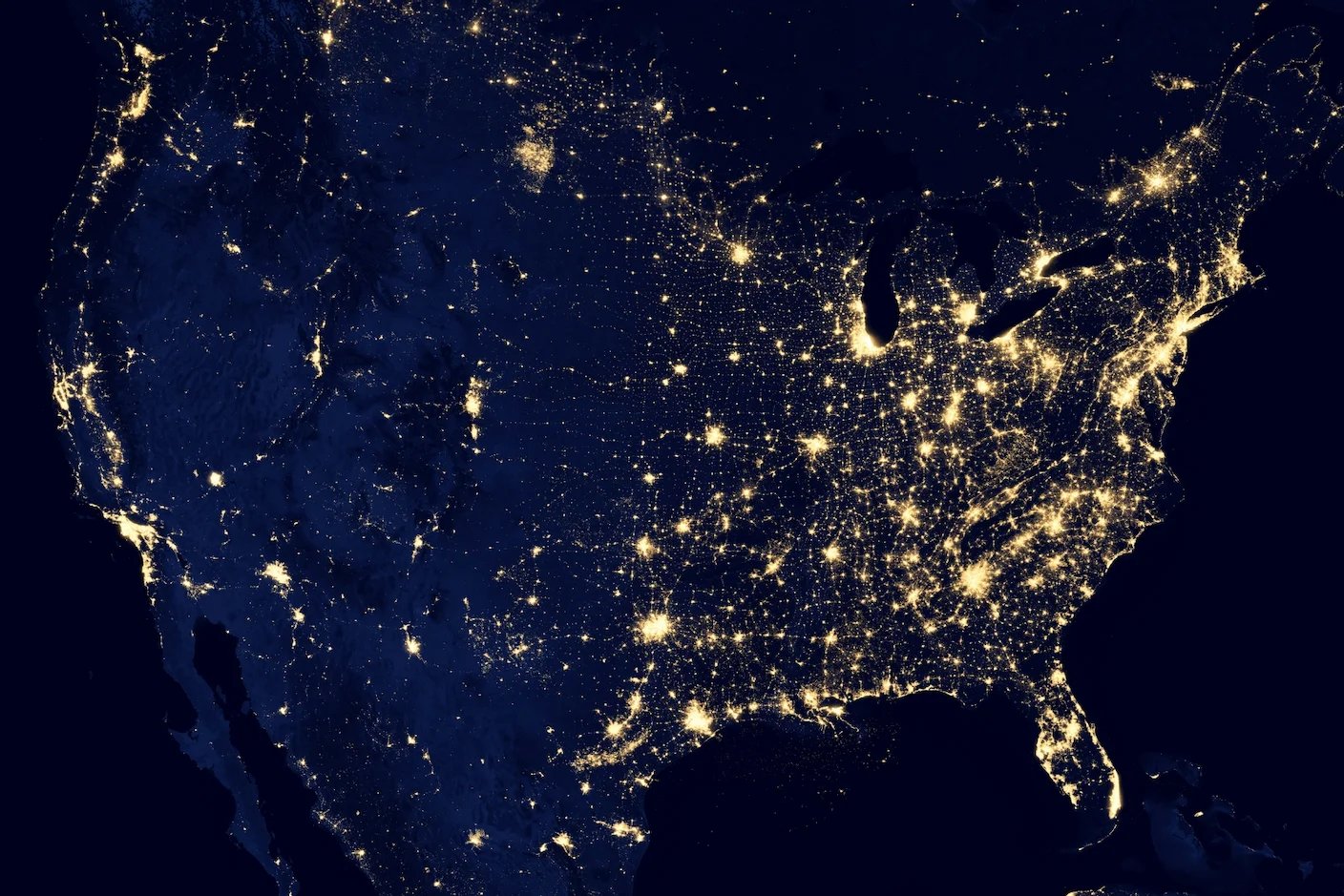
As the AI boom accelerates, governments and utilities are struggling to keep pace with the industry’s huge energy demands. New figures suggest data centers now consume about 6 percent of electricity in the US, raising concerns about grid capacity and environmental impacts.
Data centers have always been energy-hungry, but the AI explosion is causing computing demand to skyrocket. The biggest data centers now consume as much electricity as small cities and are proliferating at breakneck speed.
A new report from the International Data Center Authority (IDCA) finds that the total power draw of all these facilities has now hit 67.7 gigawatts—a 36 percent jump over two years. The US alone accounts for 29.2 gigawatts of that total, roughly 43 percent of global consumption.
“Our real-time data shows that many very large AI factories are coming into operation, spiking up total US consumption,” Mehdi Paryavi, CEO and founder of IDCA, told Data Center Knowledge. “The US now devotes 6 percent of its total electricity to data centers.”

That could be a significant milestone, as the report warns that “significant community and political pushback starts to occur in nations once their data center footprints have reached the 5 percent consumption level of national grids.” The US isn’t alone—the UK is now using 5.8 percent of its electricity to power data centers, and in Germany, the figure has hit 9.5 percent.
Opposition is growing.
Hundreds of state-level bills to regulate data centers have been introduced, according to the report. In Maine, the legislature passed a bill that would have barred construction of data centers bigger than 20 megawatts until 2027. Maine’s governor, Janet Mills, vetoed the bill, and the legislature failed to override the veto. But Mills later signed an executive order forming a council to investigate the impact of data centers in the state, with recommendations due in early 2027.
Local planners are also refusing to issue new permits due to energy scarcity. For example, developers in Northern Virginia’s Data Center Alley, a region already densely packed with the facilities, will have to wait until 2032 to launch new projects.
Water usage is an equally important concern in many areas. The vast majority of data centers rely on water-cooled chillers or evaporative cooling towers that can consume millions of gallons daily. A single large facility can potentially draw as much water as 6,500 households. Modern AI facilities increasingly use more modern closed-loop liquid cooling systems that require minimal ongoing water use, but these account for a small proportion of the overall data center fleet.
The report suggests that some of this negative reaction is also self-inflicted. Developers routinely use locally registered entities with generic names that obscure who is actually behind a project, leading to a lack of trust in local communities.
“Before being swept along by the enthusiasm of tech billionaires whose profits depend on this expansion, we should pause and ask ourselves whether it’s worth the price,” Greenpeace UK’s chief scientist Doug Parr told the Guardian in response to the findings.
“We need more transparency about the amount of water and energy used by data centers, proper environmental impact assessments, and a ban on new polluting plants being built to power AI.”
It’s not only new projects putting strain on the grid though. The report found that an estimated 13 percent of US cloud consumption, totaling more than 3 gigawatts, comes from so-called “zombie” workloads—abandoned test environments and unused applications that continue to draw power without doing any useful work.
In addition, there are thousands of smaller data centers embedded in corporate buildings and regional offices drawing considerable amounts of power. These are often missed by consumption estimates that typically focus on large hyperscale campuses, but the IDCA says they account for at least 15 percent of total data center power consumption, in part because they are considerably less efficient than their larger counterparts.
The problems are only likely to get worse though, as tech companies show no signs of slowing down. Annual global data center spending is approaching $1 trillion, with up to $700 billion anticipated in the US alone in 2026, the report notes.
Whether grids will be able to absorb all that new capacity, and how hard local communities fight back against developments, may well end up being a deciding factor in whether the AI boom keeps rolling or fizzles out.