dailynewsnblog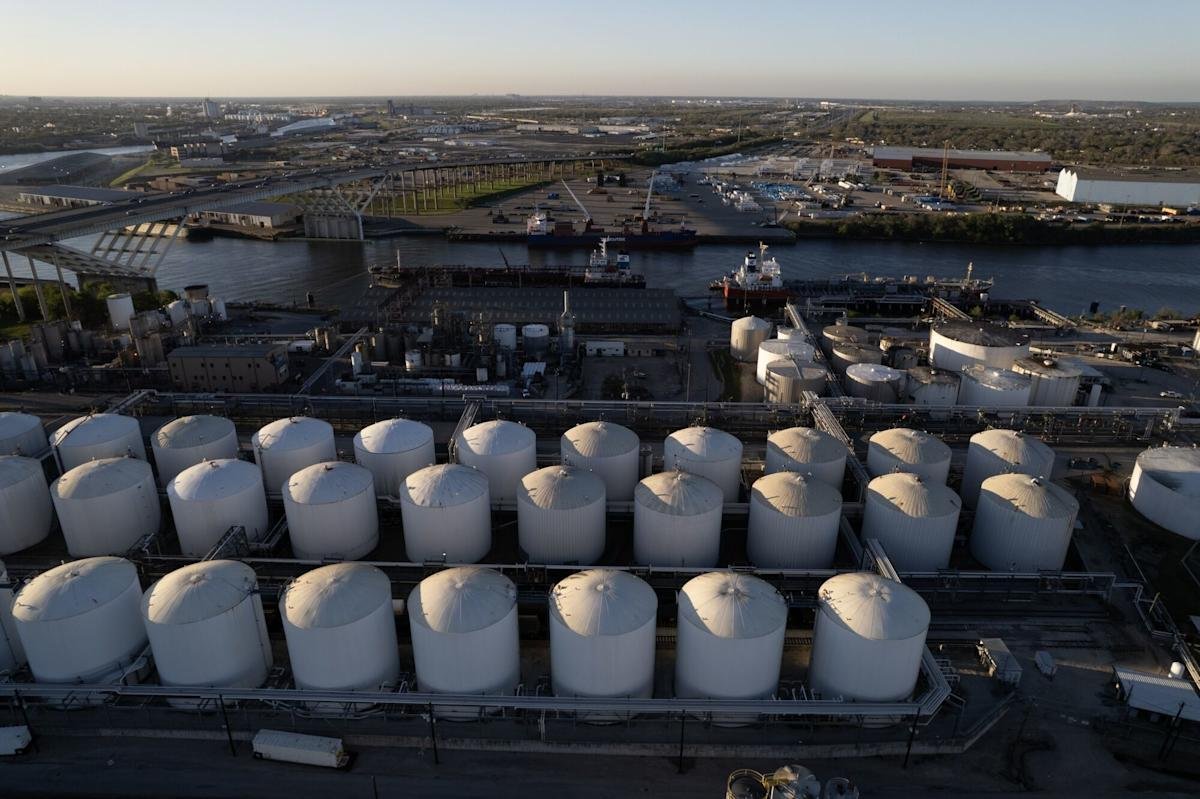
(Bloomberg) — Oil sank after the US and Iran agreed to an interim deal to end their months-long war, potentially allowing the Strait of Hormuz to reopen and easing a supply crunch that has rattled global energy markets.
Most Read from Bloomberg
Brent tumbled more than 4% to below $84 a barrel, after closing last week at a three-month low, while West Texas Intermediate was near $81. President Donald Trump said in social-media posts he was authorizing the “toll free opening” of Hormuz, as well as ending a blockade of the Islamic Republic, with the strait to reopen when the deal is signed on Friday.
While the US leader heralded the move to “let the oil flow!,” traders and analysts struck a more cautious tone, highlighting the lack of fine-print detail on the text, hurdles for the shipping industry to restart transits of the waterway, and a drawn-out timeline for fields to restart pumping.
Iran Deputy Foreign Minister Kazem Gharibabadi confirmed an agreement was reached, but said the text would be published only after the signing event in Switzerland. US Vice President JD Vance said he “certainly” plans to attend the ceremony, and it was possible that Trump would also go.
Global energy markets have been in thrall to the war since it erupted in late February, when the US and Israel attacked Iran to curb its nuclear program. Tehran’s response included strikes across the Persian Gulf and shuttering Hormuz, which in peacetime carried about a fifth of global oil flows. US forces subsequently imposed their own blockade of Iran-linked vessels.
After spiking in the initial period of the conflict, oil prices have given up ground in recent weeks on repeated signals that Washington and Tehran were close to an agreement, as well as signs that some crude flows via the strait had resumed. In addition, developed economies tapped emergency crude reserves, and some leading importers — notably China — scaled back imports.
Lower crude prices — if they endure — stand to reduce inflationary risks for policymakers including at the Federal Reserve, which will review interest rates this week. Beyond oil, European natural gas futures sank as much as 5.8% on Monday, while gold and copper rose as the US dollar weakened. Crops declined.
At this stage, many hurdles remain before traffic through Hormuz can fully resume. These include the clearing of mines, as well as clarity on Tehran’s desire to exercise greater control over vessels passing through.