dailynewsnblog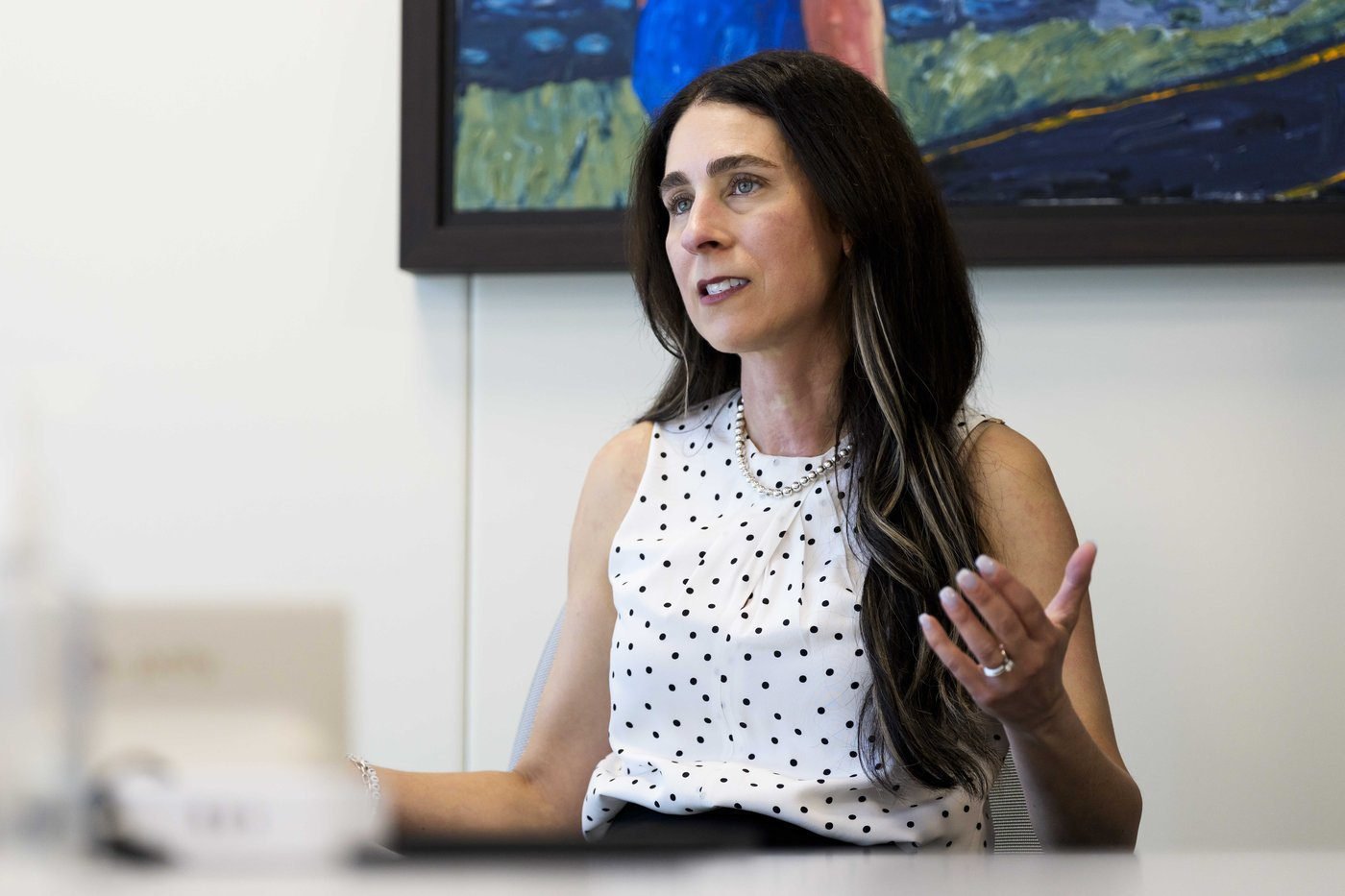
OTTAWA — CRTC chairperson Vicky Eatrides says the regulator would like to move more quickly to modernize Canada’s broadcasting system, but implementing the new rules is complex work and the CRTC must consider conflicting opinions.
“We would all like to go faster,” she said in a wide-ranging interview with The Canadian Press. “It’s balancing getting it done quickly and getting it done right. These are hugely complex issues.”
The CRTC has taken a lot of heat from critics who say it is taking too long to complete its work. On Tuesday, CPAC, the Canadian service that provides direct coverage of political events, said the CRTC’s delay in implementing the Online Streaming Act was partly to blame for its decision to cut two flagship news programs.
In a social media post reacting to the cuts at CPAC and the associated layoffs, Culture Minister Marc Miller said he was “disappointed that the CRTC is not moving faster to fully implement the Online Streaming Act, a law that ensures online streamers pay their fair share.”
The Liberal government passed that legislation in 2023, setting up the CRTC to regulate streaming companies.
The regulator initially said it would aim to begin the last phase of that work — implementing the new regulatory framework — in late 2024. The CRTC has introduced some new regulations, such as a new definition of Canadian content and initial contribution requirements for streamers, but has yet to hold consultations on other aspects of the bill.
Eatrides said the work involves “literally completely overhauling decades-old regulatory frameworks … frameworks that have been in place forever.”
“There are a lot of separate issues and tricky issues,” she said, citing as one example the fact that the CRTC must account for English and French markets that are very different.
The CRTC must also consider the interventions it receives through its public consultations. In the case of the Online Streaming Act, that means looking at more than 1,700 different submissions, according to a CRTC spokesperson.
“Having heard from so many different interveners with wildly different views on all of these issues, we’ve taken an approach where we’re trying to deal with issues almost on a progressive basis,” Eatrides said.
The CRTC has prioritized getting some decisions out quickly, she said — including one to grant CPAC’s request to increase the wholesale fee from which it draws its revenues.
Eatrides said the CPAC job losses are “troubling” and the CRTC granted the increase CPAC requested “within the time frame that they asked for.”
But Christa Dickenson, CPAC’s president and CEO, said in an earlier interview that was a short-term fix and the broadcaster had expected the CRTC to have a longer-term solution to funding in place by now.
One thing that hasn’t affected the ongoing work, Eatrides maintained, is political pressure.
The U.S. has identified the Online Streaming Act and Online News Act — which the CRTC is also in charge of implementing — as trade irritants ahead of negotiations on the continental trade pact. United States Trade Representative Jamieson Greer reiterated his opposition to the Online Streaming Act while testifying at a Capitol Hill committee Wednesday.
“We’re takers of legislation,” Eatrides said. “Of course, we know what’s happening globally, and we keep an eye on what’s happening, but we’re really focused on our mandate and getting the job done that was given to us by Parliament.”
Asked whether the CRTC has had to adjust how it does that work because of political pressure, Eatrides said the regulator bases its decisions on the public record, including the many conflicting interventions it has received.
So does she worry the government could eliminate two pieces of legislation the CRTC has now spent years working on?
“Our focus is really on getting to decisions, getting the right decisions in place so that we can fulfil the mandate that was given to us by Parliament. So that’s really what we’re focused on. And that keeps us busy,” Eatrides said.
She also pointed to an initial decision in 2024 to require streamers to pay five per cent of their annual Canadian revenues to funds devoted to producing Canadian content as one element the CRTC moved to put in place quickly.
Streamers have launched a court challenge of that initial decision, and in December 2024, the Federal Court of Appeal put a pause on the payments, estimated to be at least $1.25 million annually per company, until it releases its decision — which it has yet to do.
The CRTC has continued to work on establishing a final regime for streamers’ financial contributions regardless, Eatrides said.
“We’re moving ahead,” she said, noting it’s not unusual for various parties to challenge CRTC decisions on both broadcasting and telecom.
If the court strikes down the initial contribution requirements, that won’t necessarily put an end to the CRTC’s work, Eatrides indicated.
“We’ll need to see what the court decision says, but we’ve certainly been given a mandate to ensure that there are contributions for the Canadian broadcasting system. So we will continue that work and we’ll see how we might need to adjust.”
This report by The Canadian Press was first published April 24, 2026.
Anja Karadeglija, The Canadian Press