dailynewsnblog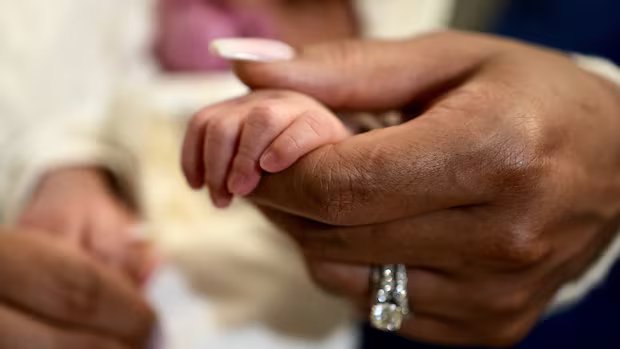
The Ontario Court of Appeal will now decide whether pregnant mothers targeted by controversial birth alerts — a practice that led to newborns being taken away from their families — can pursue a class-action lawsuit against 49 children’s aid societies across the province.
The decision could mean either overturning or amending an Ontario common law that hasn’t been revisited in decades.
If granted, the move would provide a significant pathway for vulnerable people to access justice in future class-actions, lawyers say, while others argue it could harm Ontario businesses.
“[It’s] an unnecessary barrier and shouldn’t be the law of Ontario,” said Tina Yang, a partner with Goldblatt Partners LLP and a lawyer for the plaintiffs.
Birth alerts involved child welfare agencies issuing notifications to hospitals about pregnant people they deemed “high-risk.” The alerts required health-care staff to alert authorities when the mothers came to seek medical care or deliver their baby. The process led to newborns being separated from their parents, a practice blasted by critics as unconstitutional and illegal.
The Ontario government issued a directive in 2020 to end the practice, saying the alerts disproportionately affected Indigenous and racialized mothers. Of the several birth alert class-action lawsuits since launched in multiple provinces, Ontario’s is the furthest along.
Last year, a judge gave the lawsuit a green light to go against the Ontario government, but didn’t allow it to pursue the 49 Children’s Aid Societies (CASs) also listed as defendants.
During a two-day hearing this week at the Ontario Court of Appeal, Yang’s team argued the action against the 49 societies should be reconsidered, allowing affected families to seek accountability from the very agencies that allegedly harmed them.
“We’re grateful to have clients who said, ‘Don’t let this be the end of the road for the other people who were subjected to birth alerts,'” Yang told CBC, referring to co-plaintiffs G.G. and W.W., whose identities are protected under a publication ban.
“We’re hopeful that the court agrees with us.”
Ontario an ‘outlier’
The decision is being overseen by five appeal court judges instead of the typical panel of three because of the weight of what’s being asked, said Yang — to overturn or make an exception to a procedural rule the appeal court hasn’t revisited since a 2002 decision.
“I feel like it’s a big deal,” said Yang, adding that it’s “a potentially very significant [shift] in terms of promoting access to justice for class members.”
The procedural rule at issue is dubbed the Ragoonanan principle, which requires each named defendant to have a corresponding plaintiff with a direct claim against them. It’s meant in part to protect defendants from speculative claims.
In this case, that would mean Yang’s team would have to find 49 people who’ve experienced birth alerts willing to publicly represent class actions against each agency — which lawyers argue is difficult given the power imbalance and vulnerabilities of the group.
There’s also the time, cost, pain and stigma involved, explained Yang.
“When you stack all those things together … it becomes virtually impossible for people to come forward,” she said.

During this week’s court hearing, Yang’s team argued the CASs all issued birth alerts for years and that vulnerable class members should be protected behind the named plaintiffs.
They called Ontario an “outlier” in that other provinces don’t have such a strict rule or have provisions to help vulnerable groups pursue class actions like this.
The lawyers representing the 49 child welfare agencies countered that each CAS is a separate entity with its own directors, service demographic and operations.
They said this lawsuit tries to cast a wide net to go after 49 agencies but that the two named plaintiffs were only directly impacted by the Native Child and Family Services of Toronto and Chatham-Kent Children’s Services.
They argued it’s speculative to say other plaintiffs won’t be willing to come forward.
The CAS lawyers declined CBC’s request for an interview.

‘Downstream consequences’
In court, third-party organizations also presented their positions in favour, or against, the move.
Alongside groups like Women of Class and the Class Action Clinic at the University of Windsor, the Canadian Civil Liberties Association (CCLA) called for the Ragoonanan principle to be abandoned or modified.
In its submission, the CCLA said the rule “overshoots its purpose” and “acts as an escape hatch for wrongdoers.”
Lawyer Golnaz Nayerahmadi, who represented CCLA in court, told CBC that class actions have helped vulnerable groups seek accountability and can address systemic wrongdoings or Charter violations.
She added that overturning the Ragoonanan principle could be “extremely helpful” for future groups to seek justice.
“It could have significant consequences in terms of improving access to justice for vulnerable groups,” Nayerahmadi said.

But the Ontario Chamber of Commerce warned that overturning the rule would expose the province’s business community to even more litigation.
The chamber urged the panel of judges to consider those “downstream consequences” and effects on future lawsuits, adding there may be major financial burdens on the business community.
Province also appeals
The Ontario government appealed the judge’s decision to certify the lawsuit against it.
Its lawyers argued Ontario isn’t liable for independent CAS actions, despite its regulatory oversight authority. Lawyers argued the government’s broad duty to the public doesn’t mean it has a specific “duty of care” to pregnant people.
The Ministry of Children, Community and Social Services declined an interview request, citing the ongoing case.
Chief Justice Michael Tulloch reserved the panel’s decision, which Yang said could take a few months.



![15-Hour Nonstop Flights: Explore Virgin Australia’s 10 Longest Routes In 2026 [Map]](https://dailynewsnblog.com/wp-content/uploads/2026/06/qatar-airways-777-300er.jfif.jpeg)