Court rules confidentiality clause for air travel complaints violates Charter


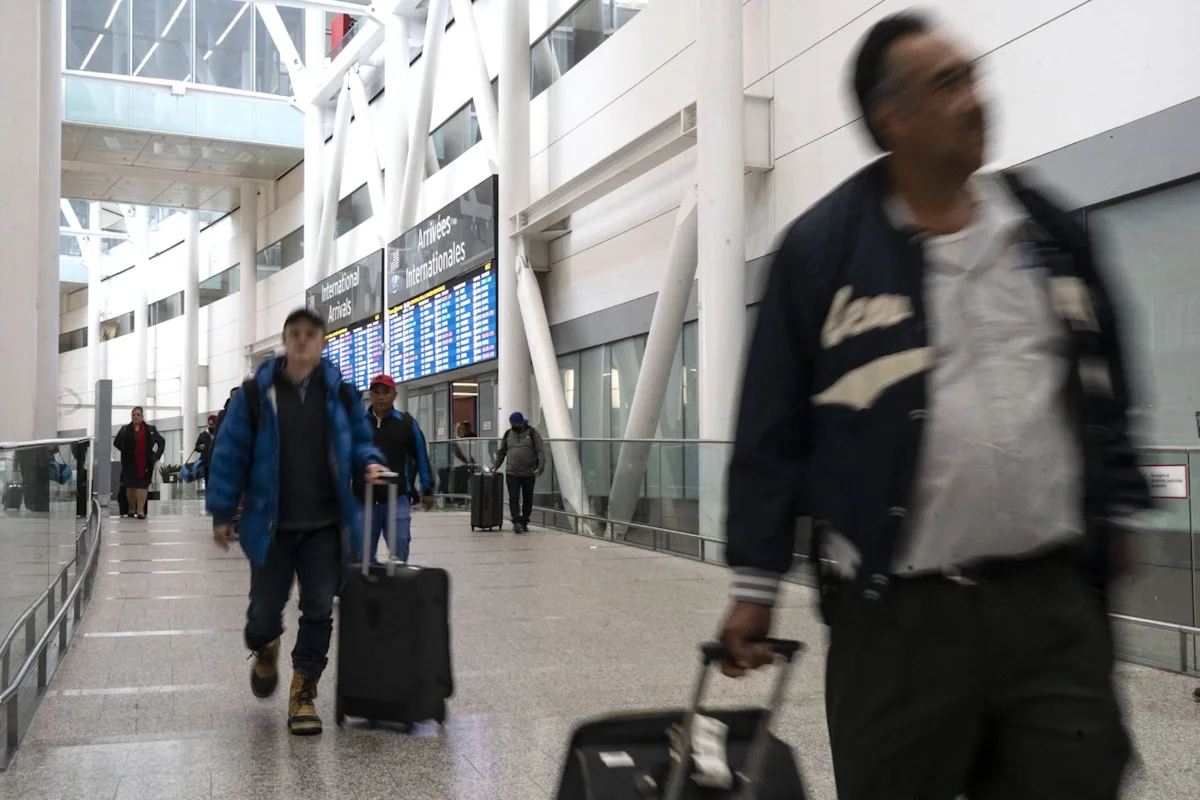
Passengers arrive at Pearson Airport in Mississauga, Ont., Tuesday, March 14, 2023. THE CANADIAN PRESS/Chris Young – The Canadian Press

An Ontario Superior Court judge has struck down a rule that blocks travellers from sharing the outcome of passenger complaints made to the country’s transport regulator.


The ruling Wednesday found that regulations barring travellers from disclosing the result of complaints on matters ranging from accessible travel to compensation for a cancelled flight violate Canadians’ Charter right to freedom of expression.

The Canadian Transportation Agency’s complaint resolution process, in place since 2023, had prevented consumers and airlines from publicly disclosing such information unless both parties agreed to waive confidentiality.

Canada’s biggest airlines — including Air Canada, WestJet, Air Transat, Jazz Aviation and the industry group that represents them — had opposed the court challenge.

They argued complaint cases involve submissions with sensitive information that could undermine carriers’ commercial interests and create privacy risks for passengers and employees. They also claimed that safety could be compromised, as workers might think twice about disclosing problems that could result in more payouts to passengers.

But in his written decision, Justice Charles Hackland said there was no evidence that the confidentiality requirement “is necessary or required to achieve efficiency in the adjudication process or to prevent the release of confidential information.”

Hackland added the regulator is violating Canada’s open court principle when it enforces the confidentiality rule by refusing to release decisions, orders or other complaint-related documents upon request, including to the media.

Advocacy group Air Passenger Rights filed the constitutional challenge just over a year ago, arguing Canadians should have access to rulings by the quasi-judicial tribunal.

Gabor Lukacs, president of the group, had claimed the confidentiality rules amounted to a “gag order” that violates freedom of expression, accusing the airlines of not wanting “their dirty laundry in the open.”

He said in an interview Thursday that the ruling serves to empower customers who would no longer have to fear discussing the complaints process publicly.

Lukacs compared the complaints process to a “black box,” with tens of thousands of cases shrouded in mystery.

“Now we can actually say, ‘OK, was there any evidence to support what the airlines were saying?'” said Lukacs, adding only the airlines themselves had access to databases of rulings.

“What this is also going to create is a more level playing field. It’s not only airlines that have to know how those matters are being handled, but also passengers, and we who advocate for passengers.”

The National Airlines Council of Canada did not immediately respond to a request for comment.

Currently, the Canada Transportation Act caps penalties against individuals who breach confidentiality rules at $5,000.

The issue over transparency in complaint rulings comes as those gripes continue to mount.

In his decision, Hackland noted the current backlog of complaints before the agency had recently approached 100,000, citing public statements from members of the federal cabinet.

Transport Minister Steven MacKinnon said in May that backlog was “unacceptable” as he announced a plan to eliminate it. He said that would rely on a new process in which a neutral, third-party dispute resolution organization could “apply private sector know-how to settle complaints.”

“For too long, Canadians have been left waiting while complaints pile up and accountability falls short. That ends now,” he said in a statement at the time.

“We are clearing the backlog, strengthening enforcement, clarifying the regulations and ensuring airlines meet their obligations to passengers.”

Ottawa had also vowed to remove the onus on passengers to maintain confidentiality in the complaints process in order to improve transparency.

MacKinnon said the government would increase the Canadian Transportation Agency’s enforcement powers by allowing fines of up to $1 million for systemic violations of the Air Passenger Protection Regulations.

This report by The Canadian Press was first published July 9, 2026.

Companies in this story: (TSX:AC, TSX:TRZ)

Sammy Hudes and Christopher Reynolds, The Canadian Press


Source link

  • Related Posts

    Prosecutors show video from interview with Tyler Robinson’s former roommate

    IE 11 is not supported. For an optimal experience visit our site on another browser. Now Playing Prosecutors show video from interview with Tyler Robinson’s former roommate 04:42 UP NEXT…

    Keeping cool: How Meta plans to cut down on water use at its Alberta data centre

    Meta, the tech giant behind Facebook and Instagram, says it’s building a new AI date centre in Sturgeon County, Alta. The facility, shown in this rendered image, will be a…

    Leave a Reply

    Your email address will not be published. Required fields are marked *

    You Missed

    Where auto thefts in Etobicoke were reported this week

    Where auto thefts in Etobicoke were reported this week

    Prosecutors show video from interview with Tyler Robinson’s former roommate

    Prosecutors show video from interview with Tyler Robinson’s former roommate

    South Florida’s Palm Beach airport renamed

    South Florida’s Palm Beach airport renamed

    Aviation Pioneer And Space-Travel Record Breaker Wally Funk Dies At 87

    Aviation Pioneer And Space-Travel Record Breaker Wally Funk Dies At 87

    Middlesex name Julie Harrington as interim chief executive

    Middlesex name Julie Harrington as interim chief executive

    Keir Starmer may award resignation honours when he leaves No 10 | Keir Starmer

    Keir Starmer may award resignation honours when he leaves No 10 | Keir Starmer