dailynewsnblog
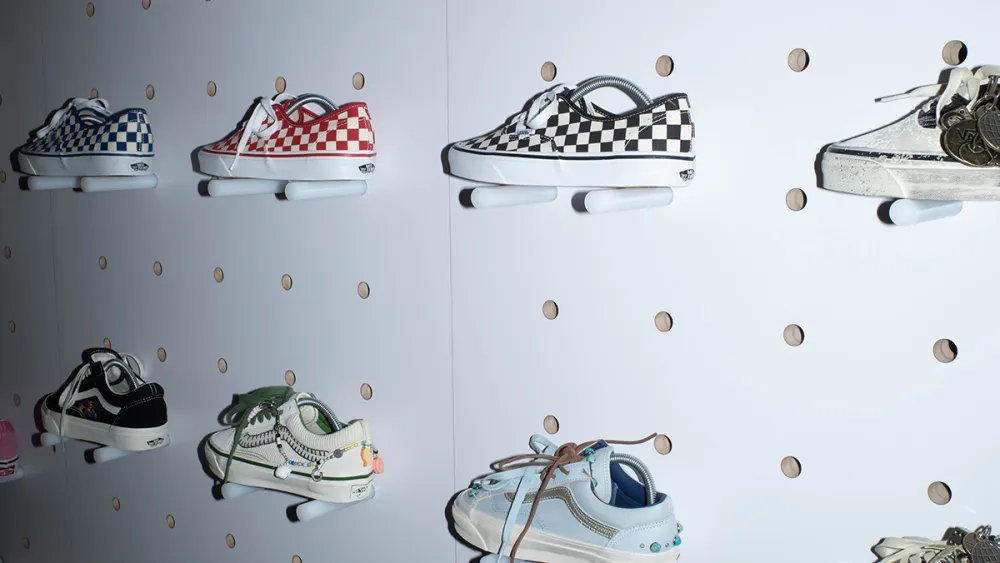
The Federal Reserve is now expected to cut U.S. interest rates later this year — perhaps an indication of what’s happening with inflation and the impact on consumer spending and shoe prices.
The Fed on Wednesday decided to hold rates at between 3.5 percent and 3.75 percent against a backdrop of inflation risks due to the war with Iran and rising energy prices. The post-meeting statement from the FOMC cited uncertainty regarding the impact on the U.S. economy due to developments in the Middle East.
Nigel Green, the CEO of independent financial advisory firm DeVere Group said he expects the next rate cut to be either in September or, more likely, in October.
“Inflation is not falling fast enough. The latest wholesale inflation data shows prices rising at 3.4 percent year-on-year, the strongest pace in a year, and core measures are still running close to 4 percent,” Green said.
He noted that oil prices surged following the escalation of the Iran conflict, which has led to rising gasoline prices that are at their highest levels since 2023. (On Wednesday, prices hit nearly $110 per barrel.) “A near 50 percent jump in oil prices in a matter of weeks will not stay contained. It feeds directly into transport, production, and consumer prices,” he explained.
In addition, the U.S. labor market has held steady even as hiring has softened and the unemployment rate remains at a “relatively low” 4.4 percent. “A stable labor market removes the justification for easing. It allows the Federal Reserve to focus squarely on inflation, and inflation remains too high,” Green concluded.
Economists at Wells Fargo said the spike in oil prices are inflationary over the near term, but noted that it is a supply shock that monetary policy is “ill-equipped to solve.” They also noted that the wait-and-see approach suggests that there could be one 25 basis point cut in 2026, followed by another cut in 2027.
The joint U.S.-Israeli operation began on Feb. 28, 2026, and it targeted Iran’s leadership and infrastructure.
Wells Fargo economists said in a report last week on January personal income and spending data that consumer’s willingness to spend saw momentum that continued at the start of the year. Yet, there was a “modest pullback in discretionary services categories of spending [that signaled] some signs of caution among consumers, even ahead of the recent oil-price shock.”
The report also noted that the ongoing conflict in Iran is likely to “dent households’ purchasing power in coming months amid higher gasoline prices.”
Last month, the Footwear Distributors and Retailers of America (FDRA) said retail shoe prices rose 2.0 percent in January, higher than five of the last six months and the most since 2022. In comparison, shoe prices rose just 1.1 percent year-over-year in December. Leading the charge was men’s retail footwear prices, jumping 3.4 percent in January, the most in 20 months. Children’s prices rose 1.5 percent and women’s were up 1.1 percent. The pricing data is one-month behind, with February’s pricing structure available later this month. The trend from December to January — plus continued high inflation — suggests that there’s a chance shoe prices at retail could climb again in February and beyond.
FDRA’s chief economist Gary Raines said the high are due primarily to the average landed, duty-paid cost per pair for shoe imports, which jumped at a double-digit year-over-year rate for the ninth straight month since the spring and when U.S. President Donald Trump announced his reciprocal tariff policy on April 2, 2025.
The National Retail Federation (NRF) on Wednesday projected that retail sales in 2026 will grow by 4.4 percent over 2025 levels to $5.6 trillion, based on a forecasting approach that the NRF development in partnership with Oxford Economics.
“Renewed tensions in the Middle East and the ripple effects across global markets are adding more uncertainty to the economic landscape, said NRF chief economist and executive director of research Mark Mathews in a statement. “While the geopolitical environment and ongoing trade policy challenges warrant close attention, we remain optimistic that the underlying fundamentals of the U.S. economy will support continued stability in the year ahead.”
In an NRF webinar Wednesday on the “State of the Consumer,” Mathews noted a bifurcated spending outlook between higher-and lower-income consumers, with higher-income households driving the majority of growth in spending across retail categories.
While inflation is expected to remain elevated at least through mid-year, the chief economist also said consumer spending could receive a modest boost in the first half from larger refunds due to tax cuts resulting from the Working Families Tax Cut Act.