dailynewsnblog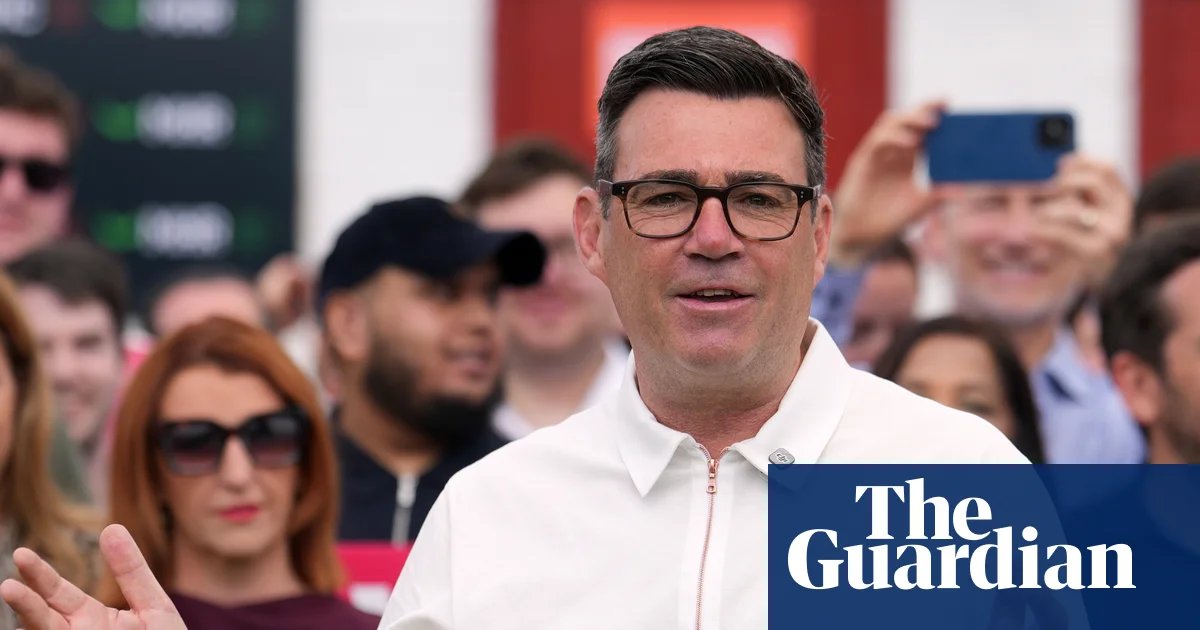
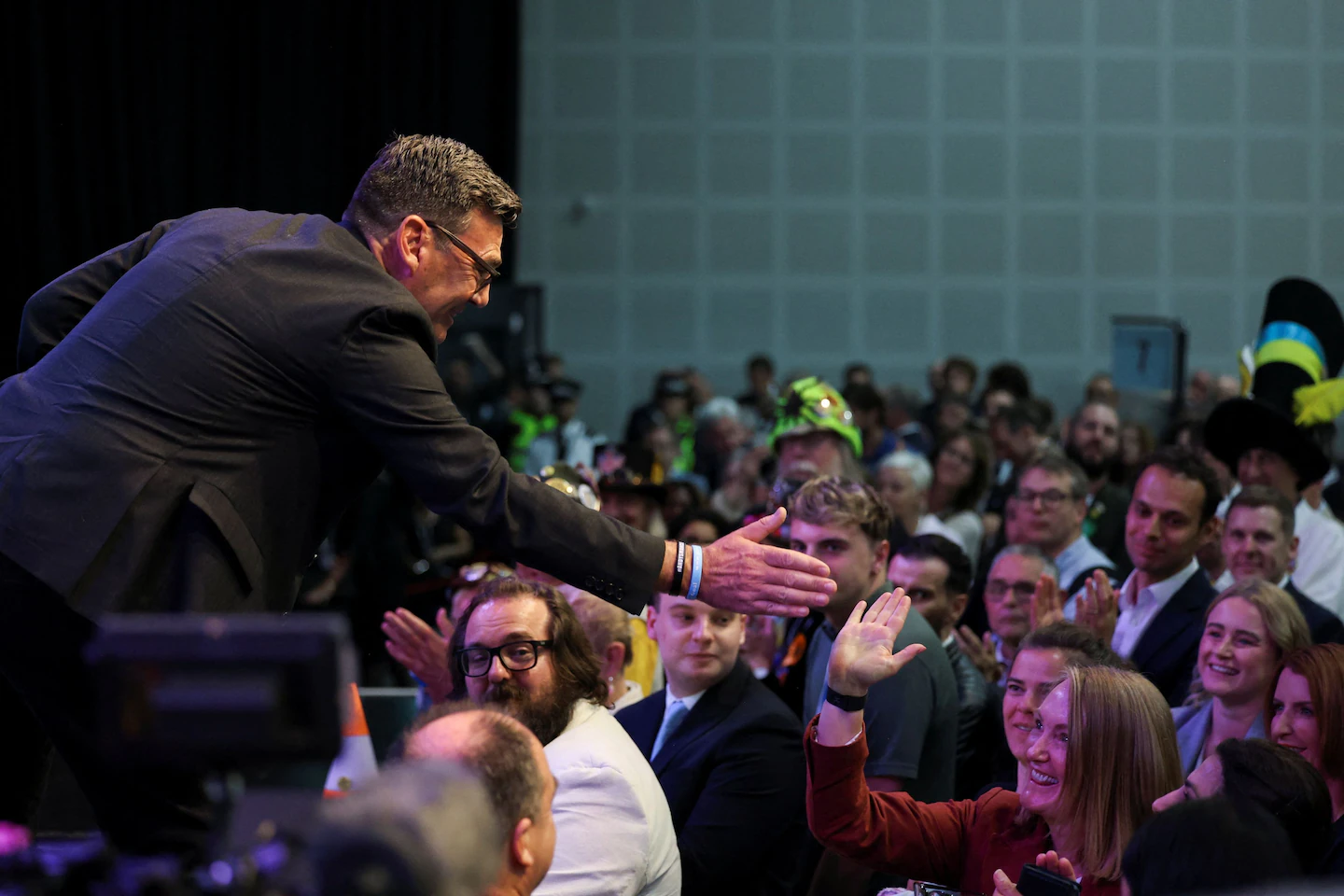
“We know no king but the King in the North”, declares the young Lady Lyanna Mormont in the hit HBO series Game of Thrones. In the early hours of Friday morning, in a nondescript conference hall in the north of England, it appeared that the electorate agreed.
About 70,000 voters in a post-industrial region of north-west England may have changed the face of British politics this week, after electing the charismatic Labour politician Andy Burnham to represent them in London.
His ambitions do not end there. In a development that would have improbable just a few months ago, it would now be a surprise if Burnham does not end up representing the UK on the world stage, as its next prime minister – its sixth in 10 years.
And that change could come soon.
That is what was at stake in the byelection in Makerfield – it gave Burnham his much-craved path back to Westminster, and a chance to challenge Keir Starmer to become prime minister.
Burnham is that rare breed in British politics. He has been a member of parliament before, and few people who knew him then could have foreseen his transformation. But when he stepped way and became mayor of Greater Manchester nine years ago, he reinvented himself.
In this role, he forged a second political career, revelling in the moniker “king of the north” for his robust championing of an area that has long ceased to be the UK’s economic engine.
It was this personal popularity that may have been decisive in the Makerfield contest.
Pundits thought it would be close: it was billed as a two-horse race between Burnham’s progressive Labour party and the rightwing Reform UK, which has ballooned in popularity since the 2024 general election.
Yet by the early hours of Friday morning it became clear that Burnham had pulled off a barnstorming victory – taking 55% of the votes to Reform’s 35% and almost doubling the majority of his predecessor.
It was an extraordinary result and in his victory speech, Burnham did little to hide the fact that his eyes were now firmly on deposing Keir Starmer.
“This is a final chance to change,” he said. “This is what people said directly to me on the hundreds of doorsteps that I stood on. We must hear it, we must act upon it and we must get it right. There will be no second chance.”
Throughout his slick, fast-paced and social media-friendly campaign, Burnham has tapped into a deep sense of dissatisfaction felt by many people in Britain.
Speaking directly to a hand-held camera in folksy daily video clips from the campaign trail, he has said repeatedly that people from places like the town of Ashton-in-Makerfield and its surrounding former coal-mining villages felt neglected, forgotten, left behind.
“That changes tonight,” he said on Friday. “This result changes that. This result will bring about a country that works fairly for everywhere and for everybody. People here have voted for change. They have voted for more power for the north and everywhere forgotten by Westminster.”
Dressed casually in a dark suit and black T-shirt, the 56-year-old wore a pin badge bearing an image of the worker bee, long a symbol of the industrial heritage of Manchester and the north: an emblem of where he is from, and what he now wants to do.
Burnham – in his time away from Westminster – has built a reputation as a strong communicator, who is comfortable in his own skin. He has alsomanaged to position himself as a Westminster outsider, despite his background.
A career politician who has held key jobs at the top of the British government, he is currently making his third bid to become leader of his party after more than a year of political manoeuvering.
First elected in 2001, he soon became a junior minister in Tony Blair’s New Labour government, before being promoted to the cabinet under the next prime minister, Gordon Brown, first as culture secretary and then taking charge of the health department.
When Labour lost the general election in 2010 he ran to become leader of the party but crashed out in fourth place. In 2015 he tried again only to lose out to veteran leftwinger Jeremy Corbyn.
Ambition thwarted and a potentially long period in opposition looming, Burnham quit Westminster in 2016 to run as the Labour candidate to become the mayor of Manchester, saying in a blunt farewell speech that “voters have a problem with an out-of-touch elite who don’t seem to care”.
His closest friend in politics, Steve Rotheram, the mayor of Liverpool city region, has said the role – which he took up in 2017 – shaped the politician he has become. “I’ve known him for 18 years. I saw the way he started to shape politics once he left Westminster,” he said. “Before that, politics was starting to shape him.”
In the nine years since Burnham left London, his political and personal style and demeanour have transformed. Gone are the sharp suits and conservative ties. Now he dresses in T-shirts and bomber jackets.
His willingness to challenge critics on social media, and channel the style of his New York mayoral counterpart, Zohran Mamdani, in direct-to-voter messaging has delighted his backers.
The contrast with Starmer – a forensic technocrat who has at times seemed to belong to another political era – could not be more stark.
Described by friends as charming and funny in private, the prime minister’s public delivery is often stiff and overewhelmingly cautious – contributing to record low favourability ratings in opinion polls.
But while shooting from the hip can be praised, and go relatively unpunished in a regional mayor, critics warn that Burnham’s people-pleasing urges could prove a liability in the highest office.
In recent weeks the former mayor has had to row back from previous suggestions that the UK should be less in hock to the reaction of bond traders, and that he would like to see the UK rejoin the EU in his lifetime.
It is likely that both the hard-right Reform UK and rightwing Conservatives will paint Burnham as a leftwinger, who will hike taxes and be profligate with taxpayers’ money.
“People don’t want hard socialism under Burnham,” said one Reform parliamentarian on Friday. But Burnham has described himself as a democratic socialist and while he is associated with the left wing of his party, during his stint as Manchester mayor he gained a reputation for pragmatism.
He has described his economic model as “business-friendly socialism” – or “Manchesterism” – after the model he adopted in the northern city during his nine years in charge.
In a video launching his campaign to get back to Westminster, he said this meant “the end of neoliberalism” – and would mean the national rollout of what he has achieved in the city: essential assets like transport and water brought into greater public control, a closer partnership between the state and business to spread the proceeds of wealth, and a huge expansion of devolution.
Burnham’s bid for the top job is not guaranteed. He will now need the support of 80 of his fellow Labour parliamentarians to fire the starting pistol on a leadership battle, which Starmer said on Friday that he would contest.
Burnham allies are hoping the prime minister will change his mind and instead opt for a more dignified exit.
If so, the annual gathering of the Labour party faithful in Burnham’s birthplace of Liverpool in October may be less of a conference, more of a coronation.