dailynewsnblog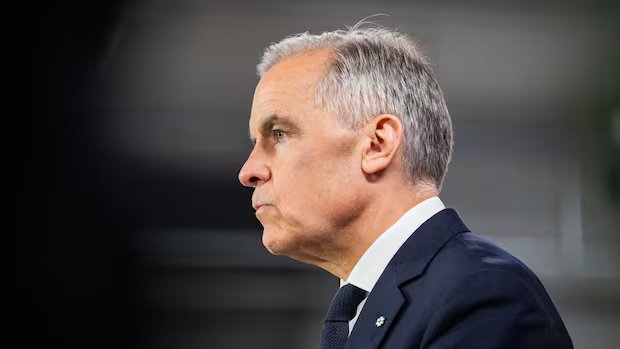

Listen to this article
Estimated 5 minutes
The audio version of this article is generated by AI-based technology. Mispronunciations can occur. We are working with our partners to continually review and improve the results.
A corporate watchdog was still accepting complaints right up until the point Prime Minister Mark Carney announced its dissolution — seemingly out of nowhere — despite saying the decision to discontinue the office was made “months” earlier.
The Canadian Ombudsperson for Responsible Enterprise (CORE) was introduced under former prime minister Justin Trudeau in 2019 to investigate potential human rights abuses committed by Canadian companies operating abroad.
During an unrelated news conference last month, Carney mentioned in passing that the government had decided to eliminate the role, claiming it was ineffective.
“Part of government is to look at things and see whether or not they’re effective and try to improve it,” the prime minister said at the time.
Carney said that the decision was made “months ago” — but a spokesperson for Global Affairs Canada said the CORE office was still accepting complaints until Carney’s abrupt announcement.

Prime Minister Mark Carney says his government decided ‘months ago’ to get rid of the Trudeau-era Canadian Ombudsperson for Responsible Enterprise.
“The CORE stopped accepting complaints following the announcement on the pending closure made by the prime minister,” the spokesperson said in an email.
Aidan Gilchrist-Blackwood, head of the Canadian Network on Corporate Accountability, said it was an “incredibly callous decision” to close the office and to announce it seemingly in passing.
“We were really astounded to see the news come out and to see it come out in this way,” he told CBC News.
Rob Parker, an independent researcher and advocate who had been facilitating a complaint out of Namibia, said there was little in the way of communication regarding the case that he brought to the watchdog in 2024.
“What I was surprised, or maybe shocked at, was that they did so in a fashion which left so many complainants in limbo. They didn’t contact us at all during this period,” he said.
“I’m angry that this government has treated these communities with such blatant disrespect.”
Top job had been vacant for over a year
The office’s top role was vacant for well over a year, prompting the United Nations Human Rights Committee to recommend that Canada “urgently appoint” a new watchdog.
Gilchrist-Blackwood said the lengthy vacancy was perhaps a sign that the government was set on abandoning the CORE. But he noted that the cancellation of the office ran contradictory to recent comments from senior officials.
A number of ministers touted the watchdog in the months leading up to its dissolution, including Finance Minister François-Philippe Champagne — who announced the new role when he was minister for international trade — and Foreign Affairs Minister Anita Anand who in March said the office “remains important.”
Just hours before Carney’s comments about cancelling the CORE, International Trade Minister Maninder Sidhu was asked in question period about the vacant position.
“We’ll make a decision in due course,” he said in the House of Commons, echoing language in documents tabled in the House the day before.
Sidhu gave no indication that the office was being shuttered.

CBC News asked Sidhu’s office for clarification around the timeline for cancelling the CORE. The minister’s press team referred CBC News to Anand’s office. Neither provided a statement by deadline.
The government says complaints sent to the CORE will be shuffled to a separate office known as the National Contact Point (NCP). But both Gilchrist-Blackwood and Parker blasted the NCP for lacking tangible investigative powers.
The NCP’s website indicates that the office focuses on mediation between companies and complainants. Gilchrist-Blackwood argued that in some cases the office has made situations “worse” for complainants.
“The NCP has an unfortunately very long track record of just not being effective as a tool for ensuring respect for human rights,” he said.
Parker said he and his partners considered sending their complaint to the NCP before deciding to go to the CORE, citing the former’s lack of teeth.
“Yet here we are with our case being shepherded to an office that we never would have consented to,” Parker said.

The federal government tabled a bill on Friday to tighten import bans on products made with forced labour. The move follows Trump administration threats to impose new tariffs on dozens of countries, including Canada, over the issue.
The CORE was established following nearly a decade of lobbying from advocates who argued the office was needed. Gilchrist-Blackwood pointed out that the NCP, which was established in 2000, had been in place years prior to that campaign.
Carney’s comments on the CORE’s cancellation came during a news conference about the federal food strategy. He brought up the office in response to a question about the threat of new U.S. tariffs allegedly related to concerns over forced labour.
The prime minister responded by saying the government is working to improve its enforcement powers. He backed up his claim that the CORE had been ineffective by pointing out the office had only launched one investigation (looking into allegations of forced labour) since it was launched.
The CORE had previously been criticized for lacking the powers to fulfil its mandate, but Gilchrist-Blackwood argued that the government needed to improve the office rather than close it outright.
“The solution there isn’t to eliminate the CORE. It’s to deliver on those promises and empower the office with the tools it needs,” he said.