dailynewsnblog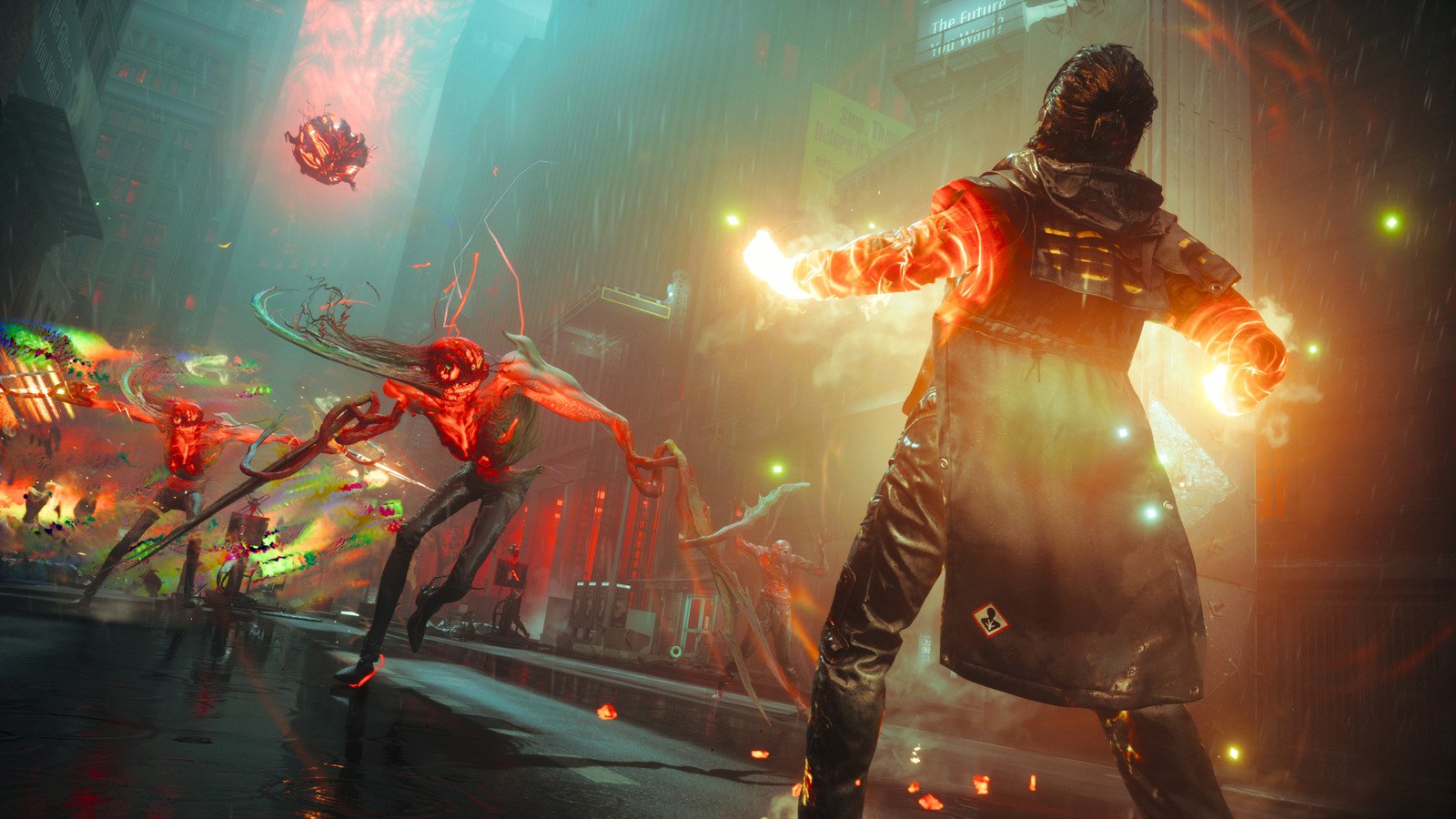
Remedy Entertainment is taking a very bold approach for the sequel to 2019’s Control. Focusing on a new protagonist stepping out into a weird, corrupted version of New York City, Control Resonant shifts to a more open-ended action-RPG that dives deep into punchy melee combat. While Jesse Faden is no longer the protagonist, her brother’s story is off to a captivating start.
Ahead of the latest showcase at Summer Game Fest 2026, we visited the Annapurna Pictures offices (its games division is co-funding the sequel with Remedy Entertainment) to play the opening hours of Control Resonant. As the next installment of the Remedy Connected Universe, Control Resonant is shaping up to be the most expansive game that the developers have made, and it’s got an impressive opening act that really sets the tone and weirdness of this high-stakes sequel.
Picking up seven years after the events of Control, we find that the Hiss have broken containment from The Oldest House and invaded the outside city of Manhattan. With Jesse Faden missing and the remaining FBC scattered, her brother and powerful supernatural entity, Dylan Faden, leaves The Oldest House for the first time, stepping into a hostile and twisted world torn apart by The Hiss. Teaming up with the remaining agents and the mysterious force known as The Board, Dylan resolves to find his sister by pushing his supernatural powers to the limit to face the onslaught of Hiss and stop them from escaping into the outside world.
Control Resonant is a marked departure from the original Control‘s more enclosed spaces and Jesse’s story. There is that lingering sense of disappointment that Jesse is no longer the protagonist, given that she was a compelling and personable character to go on that weird journey with. Yet, Dylan’s perspective as someone being thrust into a more-hostile world and learning to regain his humanity is an interesting narrative backbone for the sequel. From my hands-on time, which really got me into the flow of Dylan’s story of finding a way into the outside world, I felt more drawn into the setup for the sequel.
 Remedy Entertainment
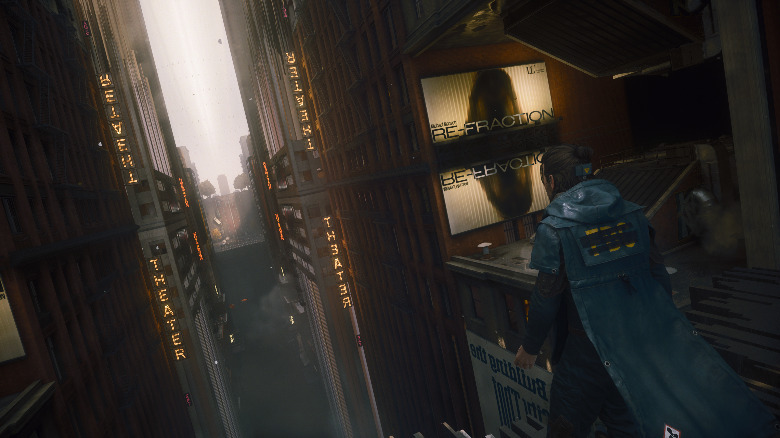
Compared to the original, Control Resonant takes a more punchy, high-flying approach to combat and exploration. Since we’re outside the realm of The Oldest House and into the mostly open streets of Manhattan, Dylan has way more room to leap and dash across the city in some fun ways. When I spoke with art director Elmeri Raitanen, he stated that remaking Manhattan into a Hiss-corrupted landscape was all about putting a Remedy twist on a familiar setting.
Exploring Manhattan during my time was equal parts eerie and exciting. It feels like a mash-up of movies like Inception and Everything Everywhere All at Once, with Manhattan loaded with enemies and other oddities to find. This is all while seeing New York City’s familiar streets and iconography warping about in some bizarre ways. With Resonant‘s Manhattan fragmented into several explorable zones and its cityscape distorted almost beyond recognition, it feels like a living alien landscape that vaguely mimics New York’s look. It’s a very clear shift away from the original’s brutalist architecture and mundane office aesthetic, but one that I was really taken in by.
 Remedy Entertainment
Unlike the action-shooter original, Resonant‘s melee-focused combat goes for more chaotic and large-scale engagements. The style of the action is more in the vein of Devil May Cry or Nier Automata, which is a significant departure from Control. Dylan’s primary weapon is the Aberrant — an Object-of-Power that looks like a construction tool — which transforms into weapons such as twin blades, gauntlets, a scythe, and a large hammer.
It’s an odd, yet really cool concept for a weapon system that leans well into Control‘s new-weird tone. As you develop Dylan’s skills, he can swap between weapon forms in combat with his primary, secondary, and combo-ender moves. What makes it really interesting is that you can fully customize which weapons you want in your attack flow, and I was able to pull off some really wild-looking combos against the Hiss. When firing on all cylinders, Dylan is a very fast and nimble fighter who can lay into the Hiss very quickly, and it was fun tearing into enemies with the bizarro all-in-one weapon.
Control Resonant also moves further into the realm of an RPG compared to its predecessor. In addition to augmenting your moves, you can also apply status effects on enemies to really tear into crowds of enemies. I will admit that it initially took me some time to grasp the system, given the amount of skill trees and perks to sift through in order to augment Dylan’s abilities. However, it really clicked for me in the later sections of this preview, once more of Dylan’s skills came into play.
Set during a section called The Sinkhole, I had to explore the corrupted underground of Manhattan, which led into a zone filled with Hiss and elite monsters. This combat-heavy sequence is where the melee action really came together for me. I did have some struggles with surviving during fights, as the Hiss are far more aggressive and Dylan’s health can drop fast, but I was able to turn things around when leveraging finishing moves and extra combat abilities that ignite foes to deal burn damage. When it’s fully engaged, combat is fierce and very intense, and I really enjoyed seeing how far I could push Dylan’s abilities.
 Remedy Entertainment
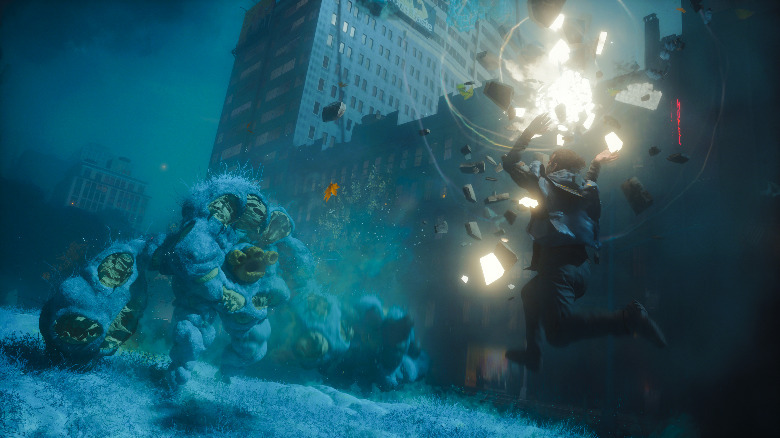
Despite the combat-heavy focus of the preview, my favorite sections of the game were the more story-driven sequences with Dylan. As he’s coming to grips with his place outside The Oldest House, he slips into the very familiar Control-style surrealism that places you in some bizarre settings — and they still continue to impress. The preview ended with Dylan escaping a winding underground apartment complex that quickly turned into a very Backrooms-esque mega-complex. It felt similar to the infamous Ashtry Maze from Control, and I was very glad to see the game still stick with those visually stunning spectacle moments.
From the opening hours, it’s clear that Control Resonant goes in a different direction from the original. I suspect that many fans may find this a sticking point, since Jesse’s story and the original’s measured pace made for a more mysterious adventure. Still, Control Resonant is very much a Control game, and developer Remedy’s take on an open-ended RPG is one that I find to be really captivating with its Neon Genesis Evangelion-inspired style of storytelling that places Dylan front and center. It’s a bold shift for the series, but one that I’m very eager to see play out on its grand scale.