dailynewsnblog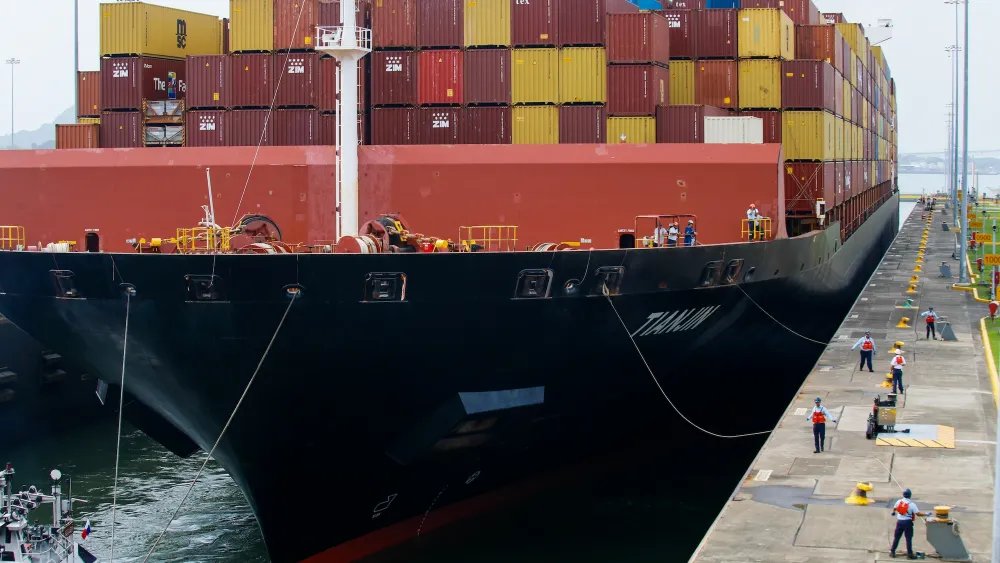
A container ship has reportedly paid up as much as $4 million to reserve a slot to skip the line to sail through the Panama Canal, reaching near-record levels seen in April as the war in Iran brings more traffic to the corridor and upcoming weather concerns force the canal’s operator to implement draft restrictions.
The buyer of the transit slot was the owner of the Singapore-flagged Seaspan Benefactor, a 10,100 20-foot equivalent unit (TEU) vessel, according to a report from Bloomberg.
Using the Panama Canal Authority’s (ACP) long-term reservation process, vessels pay a flat rate for a booking. But companies without a booking can pay more to cross through an auction that awards slots to the highest bidder.
As security risks have kept tankers from traveling through the Strait of Hormuz since the start of the war, buyers and sellers of oil and other energy sources have sought out alternative routes, leading to elevated traffic.
Wait times at the canal have been increasing over the past month as the ACP institutes draft restrictions to conserve water in Gatún Lake, the manmade, rainfall-fed reservoir that feeds the canal’s lock system.
As of Wednesday, 110 vessels were waiting to traverse the canal, with 78 of them holding a reservation to pass.
Northbound vessels that haven’t booked a reservation must wait an average of 7.9 days to transit, up from 2.3 days on July 16. Non-booked southbound ships must wait 9.6 days, up from the 5.6-day average last month.
The decision to bid the high amount is rare for container ships, which are the main users of the canal and typically have initial booking priority over other vessel types due to their fixed schedules and importance to global trade. In times of higher congestion, vessels including liquefied petroleum gas (LPG) carriers and chemical tankers are known to fork over higher bids during the auction process to reserve a transit slot.
“The Benefactor holds a position in a fixed rotation. Berth windows on the far side, feeder connections, chassis and rail appointments inland, all of it scheduled around the ship showing up when it is supposed to,” said Flexport in a Tuesday post. “A missed transit doesn’t cost 10 days one time. It rolls into the next sailing and the one after that, and every container that was supposed to connect misses too. Set $4 million against a whole loop of broken schedules and thousands of late containers, and the bid starts to look like math instead of desperation.”
Flexport’s analysis of the bidding process found that the ACP’s auction calendar for the remainder of August shows zero slots.
“Seaspan wasn’t overpaying for convenience,” Flexport’s post read. “They bought one of the last seats before the room closed for three weeks.”
ONE (Ocean Network Express) charters the Seaspan Benefactor on the Premier Alliance’s EC4 loop from Asia to the U.S. East Coast.
According to AIS transponder data, the Seaspan Benefactor is at anchor in the Gulf of Panama, having arrived from South Korea’s Busan Port.
ONE’s online schedule shows the ship was expected to transit the canal on August 16-17 and then to proceed to Houston and Mobile, Ala. before returning to the Canal for a return transit on September 6–7.
Flexport, which has 30 containers aboard the Seaspan Benefactor across 14 clients, is advising shippers to widen their expected transit time buffers given the current wait times. Additionally, the digital freight forwarder is advising shippers to expect added canal-related costs if any goods are being moved through Panama in either direction.
After instilling a series of surcharges to bring cargo through the channel, multiple ocean carriers are already increasing their fees.
Starting Sept. 10, CMA CGM will charge $500 extra per TEU on cargo from the Far East headed to the U.S. East and Gulf Coasts, up from the previous surcharge of $320. Two days later, Mediterranean Shipping Company (MSC) will apply a fee of $149 per TEU on the same trade route. This is an increase from the $100 per TEU that is set to go into effect on Aug. 19.
Panama is expecting to see below-average rainfall in the coming months due to an expected historically strong El Niño weather pattern that would result in warmer-than-normal water temperatures in the eastern and central tropical Pacific Ocean.
Such conditions could lead to a rehash of the 2023-2024 drought that required the ACP to limit daily transits through the canal, as well as the depth which larger Neopanamax vessels can pass through its locks.
The ACP has adjusted draft levels twice since the start of July, and will again narrow depth levels to 48.5 feet on Saturday.
From there, the canal operator will lower maximum draft for the locks to 48 feet on Aug. 26, and then again to 47.5 feet on Sept. 3.