dailynewsnblog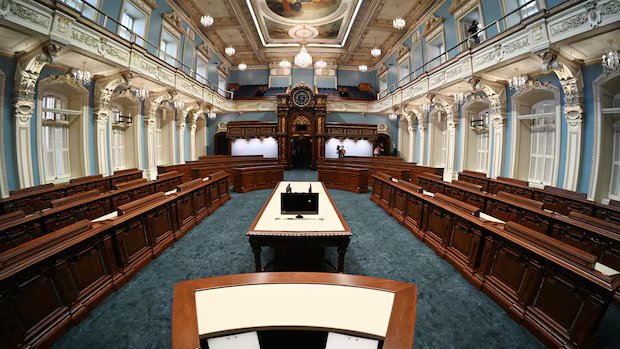

Listen to this article
Estimated 4 minutes
The audio version of this article is generated by AI-based technology. Mispronunciations can occur. We are working with our partners to continually review and improve the results.
Quebec Premier Christine Fréchette’s government is entering the final sprint at the National Assembly, with a logjam of more than a dozen bills only days before the summer break.
The ruling Coalition Avenir Québec (CAQ) is still trying to pass several key pieces of legislation in what will be the last legislative session prior to the provincial election scheduled for Oct. 5.
The session wraps up on Friday, June 12. Given the timing, several bills are unlikely to pass into law and could be revived as campaign promises in the fall.
“It’s a short period, but we’re ready for it,” Fréchette said last month, at the start of the five-week session. Now, there are only five days to go.
In total, there are 19 pieces of legislation on the order paper. Among the most important are:
Bill 1 (Quebec constitution): This is a major proposed law that would create a Quebec constitution. The proposal has been the subject of widespread criticism from legal experts, civil liberties groups and First Nations leaders. Opposition parties have also panned the bill. But Justice Minister Simon Jolin-Barrette said recently he is working to get it passed, insisting that he wants to ensure that Quebec “has more legal tools, more constitutional tools, to defend the [French] language, to defend secularism, to defend the integrity of Quebec territory.”
Bill 3 (Electoral map reform): This legislation would increase the number of provincial electoral ridings from 125 to 127. The bill was introduced in response to the independent electoral boundaries commission’s redrawn map, which would have eliminated one riding in the Gaspé Peninsula and one in eastern Montreal in favour of two new districts in the growing Laurentians and Centre-du-Québec regions. The commission deplored the proposed law in a letter published in La Presse, arguing that “elected officials are proposing to replace the map established following an independent process … with a map responding to political motives.”
Bill 4 (Intimate partner violence protection): This bill, referred to as Gabby’s Law, would allow police to share information about a person’s violent criminal past with an intimate partner deemed to be at risk. The legislation also aims to tighten rules within the provincial correctional system regarding sex offenders and domestic abusers. While welcomed by some advocates, other groups, including Quebec Native Women, have called for more consultations to ensure it “genuinely protects First Nations and Inuit women and girls.”
Bill 8 (Bill 101 expansion): The expansion of Bill 101, tabled last Thursday, aims to extend the Charter of the French Language to adult education and vocational training. English-language school boards have criticized the legislation, which would require an estimated 27,000 students to transfer to the francophone system. The opposition Liberals have come out against the proposal, and it’s unlikely to pass before the session wraps up.
Bill 9 (Ban on energy drinks among youth): The health minister is attempting to pass a new bill banning the sale of energy drinks to minors under 16, following the death of a 15-year-old. However, fast-tracking legislation requires unanimous consent, and Conservative MNA Maïté Blanchette Vézina has indicated she wants to delay adoption to debate it further in the fall.
Bill 38 (Involuntary hospitalization): This bill was introduced in March following the high-profile murder of a Montreal convenience store clerk. The legislation would lower the legal threshold for involuntary hospitalization, by removing the strict requirement that a person must pose a “grave and immediate danger,” changing it instead to any situation where “a danger exists.”
Bill 20 (Housing co-ops): The CAQ has already dropped one piece of legislation, Bill 20, a housing reform that faced strong opposition from the co-operative housing sector over a proposed centralized tenant registry and financial penalties.
Earlier in the session, Parti Québécois Leader Paul St-Pierre Plamondon said the process was too rushed.
“We’re obviously not far enough in the process to do serious and rigorous work on those issues,” he said.