dailynewsnblog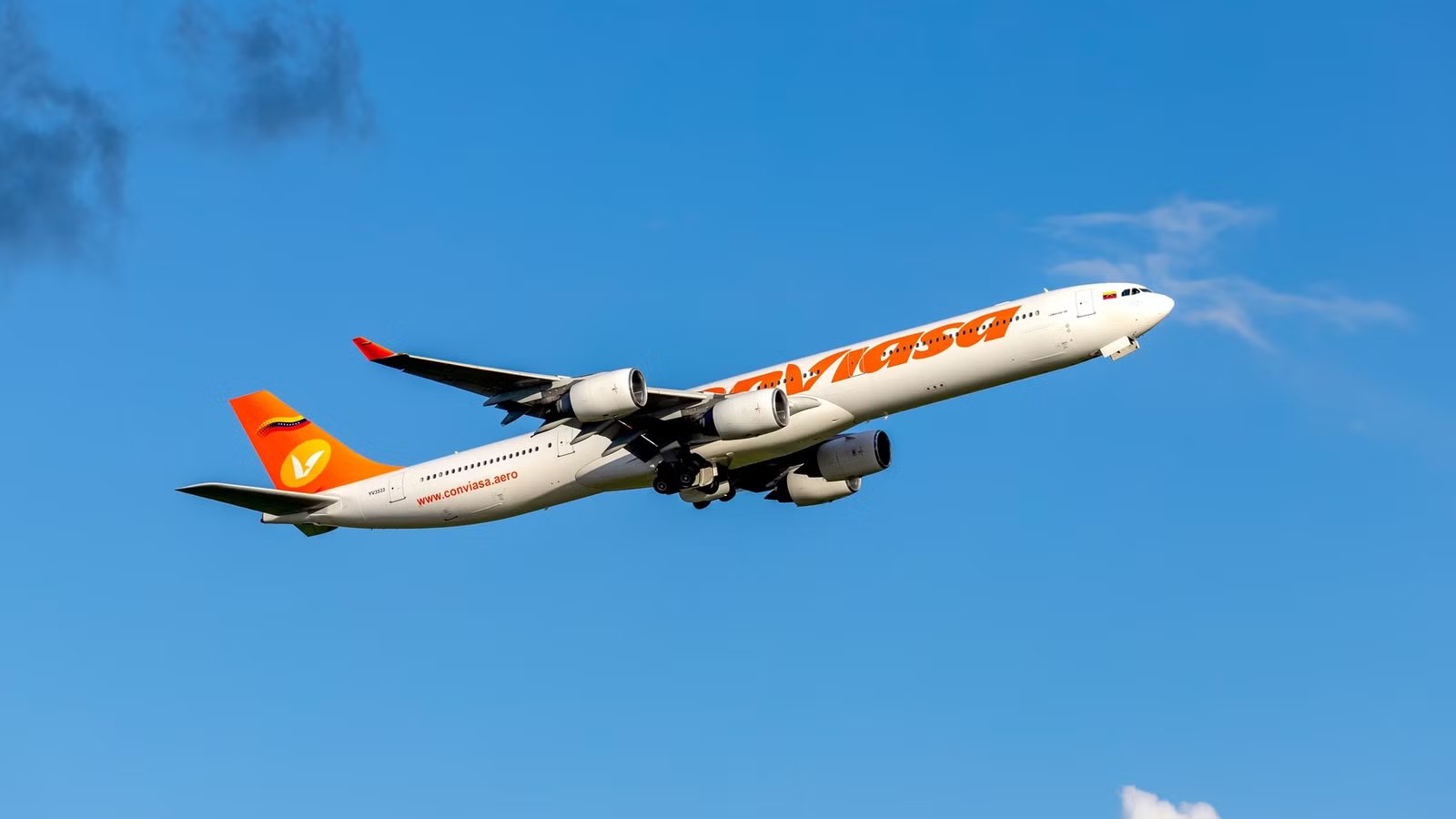
Commercial passenger flights have returned to Venezuela‘s primary international gateway almost ten weeks after two powerful earthquakes forced it to close. Simón Bolívar International Airport (CCS), around 12 miles from Caracas in the coastal state of La Guaira, partially reopened on Tuesday, after magnitude 7.2 and 7.5 earthquakes on June 24 badly damaged its runways, control tower, and passenger and cargo facilities. More than 6,500 people were killed and around 17,900 were left homeless by the disaster.
However, as AP News reports, today’s reopening remains far from a return to normal. Passengers are being processed through a temporary facility constructed in the airport parking lot, and the Venezuelan government expects to initially recover only around 25% of the airport’s pre-earthquake operations. Several international airlines are returning during the first week of September, although others — including multiple US airlines — remain weeks or months away.
Commercial Flights Return To Caracas After Ten Weeks

The first phase of operations includes seven domestic and four international round-trip flights. Hometown carrier Conviasa boarded a mid-morning Airbus A340-600 service to Santa Lucía in Mexico, while Panama’s Copa Airlines and Spain’s Air Europa were among the first international carriers operating as the airport reopened.
Air Europa was one of the first carriers to confirm that it would restore its flights from  Madrid Barajas Airport (MAD), which operate five-times-weekly using a Boeing 787-9. Meanwhile, neighboring Avianca is also restarting its daily service to Bogotá’s El Dorado International Airport (BOG), which is likely to pick up to its normal twice-daily routine as capacity becomes available.
For now, passengers will have a very different airport experience. Reuters reports that the temporary terminal covers approximately 10,000 square meters (108,000 square feet), and can process up to 2,200 passengers per day. The facility includes check-in desks, air-conditioned waiting areas, Wi-Fi, restrooms, and medical facilities. Passengers are then transported by bus between the temporary terminal and their aircraft while reconstruction work continues elsewhere at the airport.
Transport Minister Francisco Garcés said the airport has undergone detailed inspections before commercial operations were permitted to restart, and that it is intentionally operating a staggered recovery:
“We hope that with this initial phase of operations we will recover 25% of the operations we had before the earthquake. We will gradually create the conditions to increase these capacities, reaching 40% in a few months and 60% by the end of the year or beginning of next year.”
Airlines Are Returning To Caracas On Very Different Timelines

Simón Bolívar International Airport’s normal scheduled network stretches across the Americas, Europe and the Middle East, with 21 airlines providing service to 32 destinations, split equally between domestic and international. But these airlines are restoring service at very different speeds: some returned today, while many others will follow over the coming days and weeks, and some have yet to firm up their plans.
Airline | Caracas Route(s) | Return |
|---|---|---|
Air Europa | Madrid | September 1 |
Avianca | Bogotá | September 1 |
Copa Airlines | Panama City | September 1 |
Conviasa | Mexico City (NLU) | September 1 |
LASER Airlines | Madrid, Miami, Bogotá, Curaçao, Santo Domingo | September 1* |
Euroairlines | Madrid, Bogotá, Lima, Curaçao, Santo Domingo | September 1 |
Venezolana | Panama City | September 1 |
Estelar | Madrid, Panama City | September 2* |
Iberia | Madrid | September 3 |
LATAM | Bogotá | September 4 |
American Airlines | Miami | September 7 |
Wingo | Bogotá, Medellín | September 7 |
Avior Airlines | Bogotá, Medellín, Curaçao | September 7 |
Plus Ultra | Madrid, Tenerife North | September 8* |
GOL | São Paulo | September 15 |
Caribbean Airlines | Port of Spain | September 19 |
TAP Air Portugal | Lisbon, Funchal | October TBD |
Turkish Airlines | Istanbul | October TBD |
Qatar Airways | Bogotá, Doha | November 4 |
United Airlines | Houston | January 12 |
* Multiple carriers, such as LASER and Plus Ultra, are restoring partial service at CCS, while still retaining some ongoing service at diversion airports where they have been operating during the CCS shutdown. Full CCS frequencies will only return once further authorization is granted by Venezuelan authorities.
 American Airlines‘ return is particularly notable because it had only resumed Venezuela service in April after a seven-year absence. It operated daily to Caracas from its
  Miami International Airport (MIA) hub with an Embraer E175, before increasing its schedule to twice daily by adding a Boeing 737-800. The earthquakes interrupted the restored US-Venezuela link less than two months later, but American’s nonstop schedule is now due to resume on September 7.
 United Airlines is taking a markedly more cautious approach: its proposed route from
  Houston George Bush Intercontinental Airport (IAH) to Caracas route has already been pushed back twice, and is now scheduled for January 12, 2027. Meanwhile, JetBlue still intends to launch its first-ever Venezuelan service between
  Fort Lauderdale-Hollywood International Airport (FLL) and Caracas later this year, while
  Qatar Airways‘ new Doha-Bogotá-Caracas operation is now expected to begin on November 4, giving Venezuela its first scheduled link with a Gulf carrier.
How The Earthquakes Cut Venezuela’s Main Gateway Off From The World

The June 24 earthquakes were the strongest recorded in Venezuela in more than a century, and struck just 39 seconds apart along the country’s heavily populated coastal mountain range. La Guaira, where Simón Bolívar International Airport is located, was particularly badly affected, while significant damage was also reported in Caracas itself, and in the states of Carabobo, Miranda, Aragua, and Yaracuy.
Closing CCS created an unusually severe problem because, unlike other global capitals, Caracas has no other nearby airport capable of simply absorbing its traffic. International services were instead diverted to Valencia (VLN), which is over 100 miles (160 km) from Caracas, and even as far afield as Barcelona (BLA), which is nearly 200 miles (320 km) from the capital. Airlines either suspended service, or were left to develop their own temporary solutions. So, for example, Air Europa and Plus Ultra used Valencia, while LATAM operated via Barcelona.
The reopening of CCS therefore restores much more than an airport terminal: it begins reconnecting Venezuela’s capital directly with some of its most important overseas markets. Yet with the airport initially limited to roughly 25% of its former operation, September 1 marks the beginning rather than the end of Simón Bolívar International Airport’s recovery.