dailynewsnblog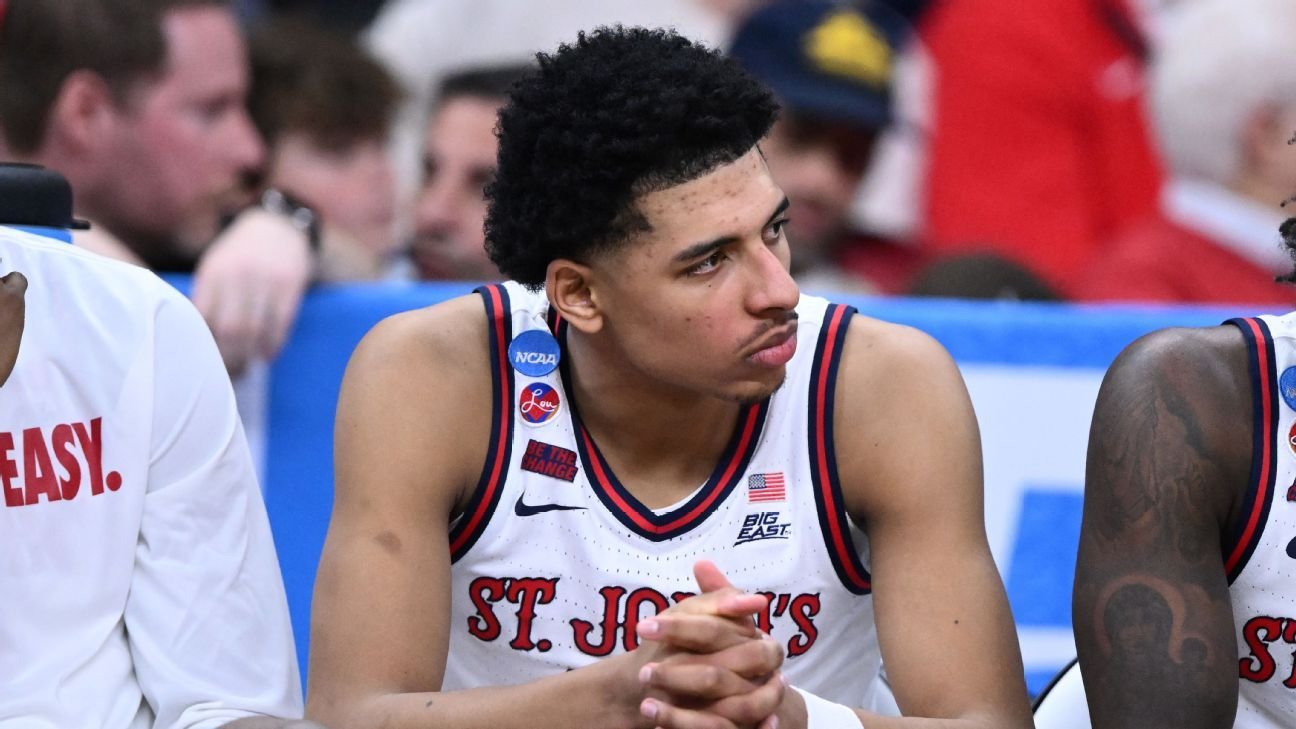

Myron Medcalf

Multiple Authors
The NCAA’s eligibility rules have turned college basketball into an episode of “Law & Order.”
To recap: Since the NCAA announced in June players will have five years of eligibility beginning with their first semester of college, or the first semester after they turn 19 years old — a system designed largely to eliminate the waivers and redshirts available to athletes in the past — there have been more than 30 state lawsuits and multiple federal cases filed by athletes from the class of 2022 who were excluded from the new rules.
If it sounds clear-cut, it isn’t. Athletes initially won at both levels, before the NCAA received three small but let victories the past two weeks, winning stay requests in two state cases (Ohio, Tennessee) and the federal case (Colorado) that granted a blanket waiver to all class of 2022 athletes.
Things became more complicated after the conferences decided to step into the fray. In response to a state lawsuit that allowed players in NFL training camps to return to college, the SEC — followed by the Big Ten, Big 12 and ACC — released new rules denying players with professional experience the opportunity to compete in college again. (The Big East, per ESPN’s Pete Thamel, is continuing to meet over the issue.)
The conferences are now in the crosshairs along with the NCAA. Thursday, a Texas court granted a temporary restraining order in a case that mentioned not just the NCAA but also the SEC and its commissioner, Greg Sankey. And a Louisiana state judge signed an order Friday temporarily prohibiting the league from punishing a school if it didn’t follow its new rules.
Here’s where things stand after another chaotic week.

Aug. 28 updates
What do the SEC’s new rules mean for teams?
They could pit players — and their schools — against the league itself.
Per the new rules, approved unanimously by the schools, the following players are not eligible to compete in college basketball:
Any player who has signed a contract with an NBA team or G League team
Any player who previously declared for the NBA draft without “appropriately” withdrawing — players must withdraw from the draft by a May deadline to preserve their college eligibility
Any player who has been listed on an NBA or G League roster.
It is also important to understand the multiple contracts in the NBA that could affect eligibility. An Exhibit 10 contract is essentially a “training camp” deal that allows a player to compete with a team with limited hopes of actually making the final roster. A two-way contract is a deal that can be converted into a standard deal. Two-way players can spend time in the NBA and the G League.
The SEC may have to more specifically define a professional contract. Does a player who gets a 10-day deal or a player who competes on a Summer League team also automatically lose eligibility?
The new rule could also be called “The RJ Luis Jr. Rule.” Despite being cleared to play for LSU this season by a Louisiana judge, Luis — the 2025 Big East Player of the Year — signed multiple two-way contracts after going undrafted in 2025, though never appeared in a regular season game.
Kentucky commit Mark Mitchell, who played at Missouri last season, never signed an Exhibit 10 after going undrafted in June, per a source — which means he should be eligible to play this year. But for whom? The SEC is scrutinizing Mitchell’s move to Kentucky, due to him transferring to another league school outside the official portal window — against the rules The lawyer in the Kentucky court case that cleared Mitchell in the first place amended the complaint Friday to challenge the SEC.
In general, the SEC is drawing a line in the sand on any players who’ve been professional athletes, even if the courts say otherwise. The standoff will likely lead to additional courtroom battles.
So, what’s the deal with LSU?
Good question. There are currently four players officially listed on the roster on the team website. Wade’s ability to put together a team for 2026-27 depends on the outcome of the current battle royale between players and their schools, the conferences and the NCAA.
The first, and most important fight, will involve Luis, who had won an injunction at the beginning of the week but is now in violation of nearly every tenet of the new SEC rules. The former St. John’s star’s’ attorney, Tony Clayton, told a Louisiana radio station Thursday he has already filed an amended complaint to include the SEC and Greg Sankey.
Former UCLA standouts Skyy Clark and Donovan Dent were both cleared in a California court case to join LSU, though the NCAA has vowed to fight the state decisions. Dent is the best available fifth-year point guard on the market and many teams tried to sign him. Clark would also be a solid backcourt addition in Baton Rouge.
It’s not just the American players on the Tigers roster, however, who are under scrutiny. Saliou Niang (the 58th pick in the 2025 NBA draft), and Brice Dessert (undrafted in 2025) seem to be ineligible under the new SEC rules, even though both players stayed in Europe and did not ultimately sign with NBA teams.
What about international players?
International players have faced more scrutiny in recent years, with multiple teams signing players with professional experience in Europe. The NCAA has cleared those players in the past — it even cleared James Nnaji, who had professional experience in Europe and was selected in the 2023 NBA draft, then signed with Baylor last season.
The Big 12 created language that should clear its international talent, though the SEC’s rules seemingly put some of those players in its league in a difficult spot — specifically those who entered the NBA draft after playing overseas. International players are automatically entered in the draft when they turn 22 years old, unless they request early entry. It’s a different process from what American players, or players coming from NCAA basketball, experience.
As a result, the college careers of the international players with professional and contractual ties to the NBA in the SEC could be in jeopardy.

Aug. 22 updates
How did we get here?
Eligibility isn’t a new issue in college sports, with players taking the NCAA to court for years in an effort to play more seasons, including this past campaign with Charles Bediako.
In order to create some structure, the governing body announced in June a five-year eligibility window that would go into effect for every sport’s upcoming season. A player would have a five-year window from enrollment — beginning no later than the semester after their 19th birthday — within which to play college sports. It is a continuous clock, which would eliminate the redshirts and most of the waivers that have been granted to players in the past.
Many lawsuits are a result of the NCAA’s decision to exclude high school graduates in the 2022 class from eligibility for a fifth year under the rule.
There’s also the issue of whether players granted another season could switch schools outside of their sport’s respective transfer window (April for college basketball). Some lawsuits address this; others don’t.
Who is impacted most by the decision to grant the NCAA’s request for a stay?
The stay pauses the blanket waiver granted to the entire high school class of 2022, regardless of whether players are involved in a state lawsuit.
At the top of the list of players affected is Denzel Aberdeen, who helped lead Florida to the 2025 national title before transferring to Kentucky for his fourth season of college basketball. Coach Todd Golden has said the Gators would back Aberdeen in a state lawsuit for a fifth year.
Former North Carolina guard Seth Trimble recently announced his commitment to Louisville under the waiver. He played in the NBA summer league with the Washington Wizards, though he never signed a professional contract. Pat Kelsey’s team is top-10 good and already features additions such as Flory Bidunga, but Trimble could give the Cardinals the edge in the race to the Final Four, provided he regains eligibility.
Donovan Atwell is looking to return to Texas Tech for his fifth season after averaging 13.5 PPG and 46% from 3 this past campaign. Former Columbia guard Kenny Noland (committed to Michigan) and former Quinnipiac forward Amarri Monroe (committed to Syracuse) are also among the top names impacted.
As it currently stands, these players cannot join a college basketball roster.
So, who is currently eligible to play?
Anyone who has been cleared — at least temporarily — by one of the numerous state lawsuits that have been filed.
Former Missouri star Mark Mitchell (18.3 PPG, 39% from 3) has entered the transfer portal after a judge in Kentucky granted him a temporary injunction.
Jaxon Kohler, an All-Big Ten honorable mention selection at Michigan State, committed to BYU this week after a judge in California cleared him and others, including former UCLA stars Donovan Dent and Skyy Clark, former NC State guard Tre Holloman and former Florida guard Xaivian Lee.
AJ Storr, who averaged 15.5 PPG at Ole Miss last season, is currently eligible to play at UNLV as a result of a separate state case in Tennessee.
Darrion Williams, who spent two seasons at Texas Tech — including leading the Red Raiders to the Elite Eight in 2025 — before playing at NC State last season, has his eligibility due to a Texas lawsuit.
A wild card is Miami’s Malik Reneau, who averaged nearly 19 points per game last season and could return to the team pending the outcome of a state case filed in South Carolina.
What’s next in the legal battle over eligibility?
So far, the NCAA has prevailed in two small respects: the stay in the Colorado ruling appeal and a similar decision earlier in the week in one of the first major state lawsuits regarding “five in five,” in Ohio. Both cases are moving through their respective appeals processes, so expect more decisions to come.
“I think the NCAA is trapped,” said one prominent NIL attorney about the flurry of lawsuits the group is currently fighting at the state and federal levels.
Another question is who can be granted a waiver. Earlier this week, a ruling in Louisiana opened the door for multiple athletes — including players currently in NFL training camps — to enter the portal and play next season. Attorney Ryan Downton, who has spearheaded a number of state lawsuits, including the one in Louisiana, said more are on the way.
“It’s somewhat remarkable that I think it’s close to a dozen courts that have looked at this now at the trial court level,” he told ESPN. “And I think I’m only aware of one that’s sided with the NCAA.”
Former SMU women’s basketball player Kyla Deck, who was initially granted eligibility due to the blanket waiver in the Wisne ruling, has filed a federal antitrust lawsuit challenging the restrictions of the portal. Lawsuits about roster cap numbers and other eligibility-related issues might follow.
Whether the NCAA wins its appeal in the Colorado federal case or not, a flurry of state cases will persist.