dailynewsnblog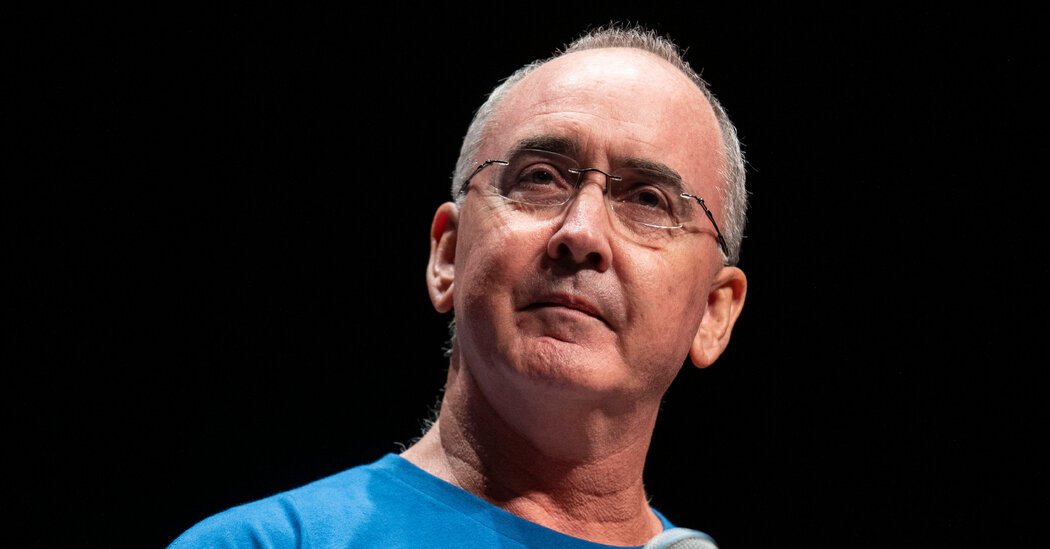
Shawn Fain, the United Automobile Workers president, embarked on a re-election bid this year with much to brag about.
He had secured substantial contracts with top automakers, organized Volkswagen workers in Tennessee, and expanded the union’s ranks and political clout. After years of waning influence, the U.A.W. seemed poised for a renaissance.
But with the election two months away, Mr. Fain is facing resistance. Former allies have turned on him. A federal monitor overseeing the union — an arrangement resulting from a 2021 court settlement to resolve a corruption scandal — has accused Mr. Fain of abusing his authority and retaliating against board members who refused to do his bidding. The U.S. attorney’s office in Detroit, which is participating in federal oversight of the union, has opened a criminal investigation into Mr. Fain’s conduct, prompted by the monitor’s findings.
Mr. Fain has denied wrongdoing and doubled down on his allegations that his opponents are trying to rig the election. He has accused Neil Barofsky, the federal monitor, of targeting him over his political stances, in particular the union’s support for a cease-fire in Gaza.
These percolating problems burst into public view this summer. In July, Mr. Fain publicly defended himself and revealed that he had recorded part of a December 2023 telephone call with the monitor.
In the recording, which was reviewed by The New York Times, Mr. Barofsky told Mr. Fain that in announcing U.A.W.’s support for a cease-fire, Mr. Fain seemed to draw a parallel between Israel and Nazi Germany.
“I think you may have unintentionally, you know, crossed a line that is an unfortunate one,” Mr. Barofsky said.
Mr. Fain’s supporters say it was Mr. Barofsky who crossed a line. They say Mr. Barofsky — who has substantial authority over the union’s internal affairs — seemed to disapprove of Mr. Fain’s stance on a political issue.
Mr. Fain’s opponents say he is to blame for his current troubles. They accuse him of self-aggrandizement, bullying and corruption. They take issue with his decisions, including his spending on political organizing.
During an online debate on July 30, Tricia Geiger, a contender for the union presidency, dismissed Mr. Fain’s claims of political retribution.
“He is prepared to sacrifice this union on the altar of his ego,” she said. “Shame on us if we let him.”
‘A Realm of Power’
A corruption scandal that led to convictions of more than a dozen U.A.W. officials, including two former presidents, brought Mr. Fain and Mr. Barofsky into their current roles.
In 2021, as part of the case’s settlement, federal prosecutors selected Mr. Barofsky and his law firm, Jenner & Block, to oversee the union’s elections, compliance and investigations. The settlement empowered the monitor to root out fraud, corruption and other unethical practices from the union.
It also paved the way for direct elections of U.A.W. leaders. In March 2023, Mr. Fain, a former electrician for Chrysler, eked out a victory to become president.
That September, U.A.W. staged a strike against the three largest U.S. automakers: General Motors, Ford Motor and Stellantis. President Joseph R. Biden Jr. joined the picket line. The union won substantial raises.
The next year, workers at Volkswagen’s factory in Chattanooga, Tenn., voted to unionize, raising hopes among organizers that U.A.W. could make inroads in the South.
Israel’s military campaign in Gaza following the Hamas attacks on Oct. 7, 2023, galvanized the union’s decades-long focus on U.S. foreign policy in the Middle East.
U.A.W.’s Arab American autoworkers in Michigan have led protests over Israel for more than five decades. Those efforts grew as the U.A.W. began accepting university employees and graduate students into its ranks in the 1990s.
Their arrival accelerated under Mr. Fain. Upward of a fifth of the union’s 400,000 active members work at colleges and universities. In June, delegates at the U.A.W. convention voted 321 to 287 to divest union funds from Israel bonds.
Mr. Fain’s social media post on Dec. 1, 2023, announcing the union’s support for a cease-fire read: “From opposing fascism in WWII to mobilizing against apartheid South Africa and the CONTRA war, the UAW has consistently stood for justice across the globe.”
Mr. Barofsky placed his phone call to Mr. Fain two weeks later. Some U.A.W. board members had expressed wariness about a cease-fire resolution and wanted to hear from an expert about the conflict. In the call, Mr. Barofsky offered to recommend some. He also raised concerns about Mr. Fain’s post.
During the call, Mr. Fain said he supported Israel’s efforts to “go after Hamas.” He added, “My problem with this is they’re killing tens of thousands of innocent civilians in this process,” his remarks laced with profanities. He did not disavow his social media post.
“OK,” Mr. Barofsky said, “so that is what your intent was, to compare it to the Nazis.” He added: “That, you know, does potentially cross the line into the area of antisemitism because, whatever you want to say about Israel, if they wanted to commit genocide, it wouldn’t look like this. Genocide looks like what Hamas did.”
Mr. Fain said he wasn’t making a comparison to Nazi Germany.
“I don’t think that was your intention, right?” Mr. Barofsky said. “But, you know, when you make that comparison in this environment, that’s what people are perceiving.” He also said “the language of cease-fire” could veer into the “dehumanizing language” that prefigured the Holocaust.
“The people I see getting villainized in this are the Palestinians,” Mr. Fain said.
The call ended cordially.
Two months later, Mr. Barofsky shared with U.A.W.’s board a letter from the Anti-Defamation League, a pro-Israel group, denouncing the statements of a U.A.W. local representing higher education workers in New York City.
Days later, during a union board meeting, Mr. Barofsky explained his handling of the ADL letter and his call to Mr. Fain as efforts to share information. When Mr. Fain pushed back, Mr. Barofsky said he was “deeply sorry it was perceived in any way of me trying to push a belief,” and denied accusing Mr. Fain of antisemitism.
“You have a realm of power over us, so, yeah, it concerned me greatly,” Mr. Fain said to Mr. Barofsky. He added that he was willing to fight anyone who called him antisemitic.
Internal Conflicts
The deterioration of Mr. Fain and Mr. Barofsky’s relationship coincided with an internal problem for union leaders.
At a February 2024 meeting, the board voted to curtail the responsibilities of Margaret Mock, the union’s secretary-treasurer, after Mr. Fain accused her of obstructing the union’s work. Ms. Mock said Mr. Fain was retaliating against her for refusing to authorize some expenses.
In May 2024, Mr. Fain removed Rich Boyer, a vice president, from oversight of relations with Stellantis, saying Mr. Boyer had made unauthorized concessions in negotiations. Mr. Boyer said Mr. Fain was retaliating against him for declining to intervene in a workers’ compensation claim by the sister of Mr. Fain’s fiancée, or to approve a cash bonus that would have benefited his fiancée.
Mr. Boyer and Ms. Mock had supported Mr. Fain’s first run to lead the union. This year, Mr. Boyer is among five candidates running to replace Mr. Fain, with Ms. Mock on his slate.
In July 2024, Mr. Barofsky said he was investigating the claims against all three leaders, as required by the federal settlement. He also noted a “shift” in the union’s cooperation with his office. He said it was “slow rolling” the production of documents. The union challenged the breadth of the document request.
In a June 2025 filing in federal court, Mr. Barofsky cleared Ms. Mock of wrongdoing and ordered her reinstated, saying Mr. Fain and his office had “orchestrated a coordinated effort to discredit and disempower” her, including by manipulating a compliance report. The monitor later described a cover-up effort by Mr. Fain’s office. The episode led to the demotions and departures of several aides in Mr. Fain’s office.
U.A.W. lawyers defended the board’s actions and said Mr. Barofsky was reaching beyond his jurisdiction.
In June, the monitor said in a report that “Fain’s actions were improper and fit into what has become a recurring pattern of retaliation.”
A few weeks later, Bloomberg reported that Mr. Fain was under federal investigation and that the monitor had received a subpoena from the Justice Department. (The monitor and federal prosecutors work together through the court settlement.)
“People have now taken their political ambitions to the federal monitor to try and rig this election because they can’t run on what they’ve done for the membership,” Mr. Fain said in a livestream to U.A.W. members on July 13.
He denied wrongdoing in his dealings with Mr. Boyer and Ms. Mock and denied trying to benefit his family. He also suggested that Mr. Barofsky started investigating him after their December 2023 phone call.
“I’m not a conspiracy theorist, but I’m also not a freaking idiot,” Mr. Fain said.
Mr. Barofsky substantiated allegations of misconduct, corruption and retaliation by Mr. Fain that were made by union leaders, a representative for the monitor’s law firm told The Times.
“The monitor’s findings rest solely on the facts set out in his reports,” the representative said.
In a statement to The Times, Mr. Fain said: “The federal monitor is pushing bogus charges against me based on a political disagreement. I’m very confident that any impartial authority will find these allegations have no merit, and I remain focused on delivering for the membership, as I have been for the past three and a half years.”
Mr. Fain’s conflict with Mr. Barofsky and the federal investigation came up throughout the nearly three-hour U.A.W. presidential debate last month. But Mr. Fain and his opponents also addressed other concerns: The threat of artificial intelligence in the work force. Resistance to organizing. Rollbacks to union and worker protections.
The union won elections this year at suppliers like Webasto, a maker of sunroofs. But efforts to unionize the U.S. factories of big automakers like Toyota, Honda or Tesla have stalled. President Trump is hostile to unions, and automaker profits are declining.
“They can get more from the auto industry when the auto industry is doing well,” said Ian Greer, a research professor at Cornell University who focuses on organized labor. “And it’s not doing well.”
Noam Scheiber and Farah Stockman contributed reporting.