dailynewsnblog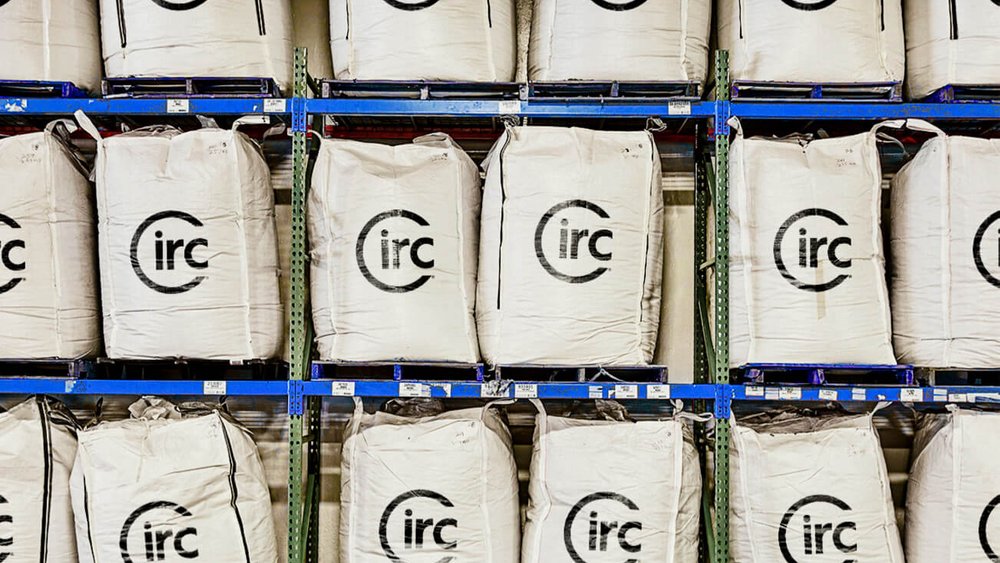
Circ is giving the polyester half of its polycotton recycling process a new route into China’s vast yarn-making base.
The Danville, Va.-based recycler has signed an agreement with Shenghong Chemical Fiber New Material Co. to advance the commercial production of polyester filament yarn made with Circ’s textile-to-textile recycled material, the companies said Tuesday.
Under the agreement, Shenghong will purchase Circ PET chip and convert it into recycled-content filament yarn at commercial scale. Neither company disclosed the volume or value of the purchase, the length of the agreement, when production will begin or which filament applications will be targeted first. The announcement also did not identify prospective brand customers or say where the chip supplied to Shenghong will be produced.
Still, the agreement places one of China’s largest polyester producers in Circ’s downstream manufacturing network, connecting the recycler’s recovered material with the spinning capacity needed to turn it into usable yarn.
Circ’s hydrothermal recycling process is designed to separate polyester and cellulose in blended textiles without sacrificing either component. The recovered cellulose can be used to make man-made cellulosic fibers such as lyocell, while the polyester portion can be returned to the supply chain as raw material for new synthetic fiber.
Shenghong’s scale gives Circ considerable room to test that pathway. The company operates production bases in Suzhou and Suqian and has annual capacity for 3.6 million metric tons of polyester filament products, according to Shenghong Holding Group. Its portfolio includes partially oriented yarn, fully drawn yarn and draw-textured yarn.
Shenghong also reports annual recycled-fiber capacity of 600,000 metric tons, which it describes in terms of processing the equivalent of nearly 36 billion discarded plastic bottles. Circ’s material would introduce another feedstock source: polyester recovered from textiles rather than packaging.
“Scaling textile-to-textile recycling requires more than breakthrough technology,” Circ CEO Peter Majeranowski said. Shenghong’s technical capabilities, manufacturing capacity and market reach, he added, could create “a more direct path” from discarded textiles to new fibers.
The companies said the agreement will help validate Circ Polyester across commercial filament applications and establish a manufacturing model that can be repeated as supply grows. Shenghong general manager Jason Tang said the collaboration would pair Circ’s recycling technology with the manufacturer’s fiber-making capabilities to move circular polyester into broader commercial use.
Shenghong is already working with at least one other textile-to-textile polyester recycler. The manufacturer struck a strategic partnership with Ambercycle in January 2025 to scale filament yarn made with the Los Angeles company’s Cycora regenerated polyester. Ambercycle said at the time that the two companies had been developing yarns together since 2024.
For Shenghong, the Circ agreement further expands the range of textile-derived polyester inputs it can offer customers. For Circ, it adds another converter capable of taking recycled raw material beyond the recycling plant and into the textile supply chain.
Circ has been assembling those downstream relationships as it prepares its first commercial-scale recycling facility in Saint-Avold, France. Construction on the 450-million-euro plant was slated to begin in 2026, with operations targeted for 2028. Once ramped up, Circ expects the facility to process 70,000 metric tons of polycotton textile waste annually and produce cellulose pulp, purified terephthalic acid and monoethylene glycol.
The recycler previously signed a five-year agreement under which Taiwan-based Acegreen committed to purchase recycled pulp from that facility, while parent company Acelon agreed to procure Circ Polyester for filament production. Unlike that agreement, Circ’s announcement with Shenghong did not tie the purchases to a particular facility or disclose a contract term.
The Shenghong deal therefore establishes another credible destination for Circ’s recovered polyester. How much material will travel that route—and how quickly—remains unanswered.