dailynewsnblog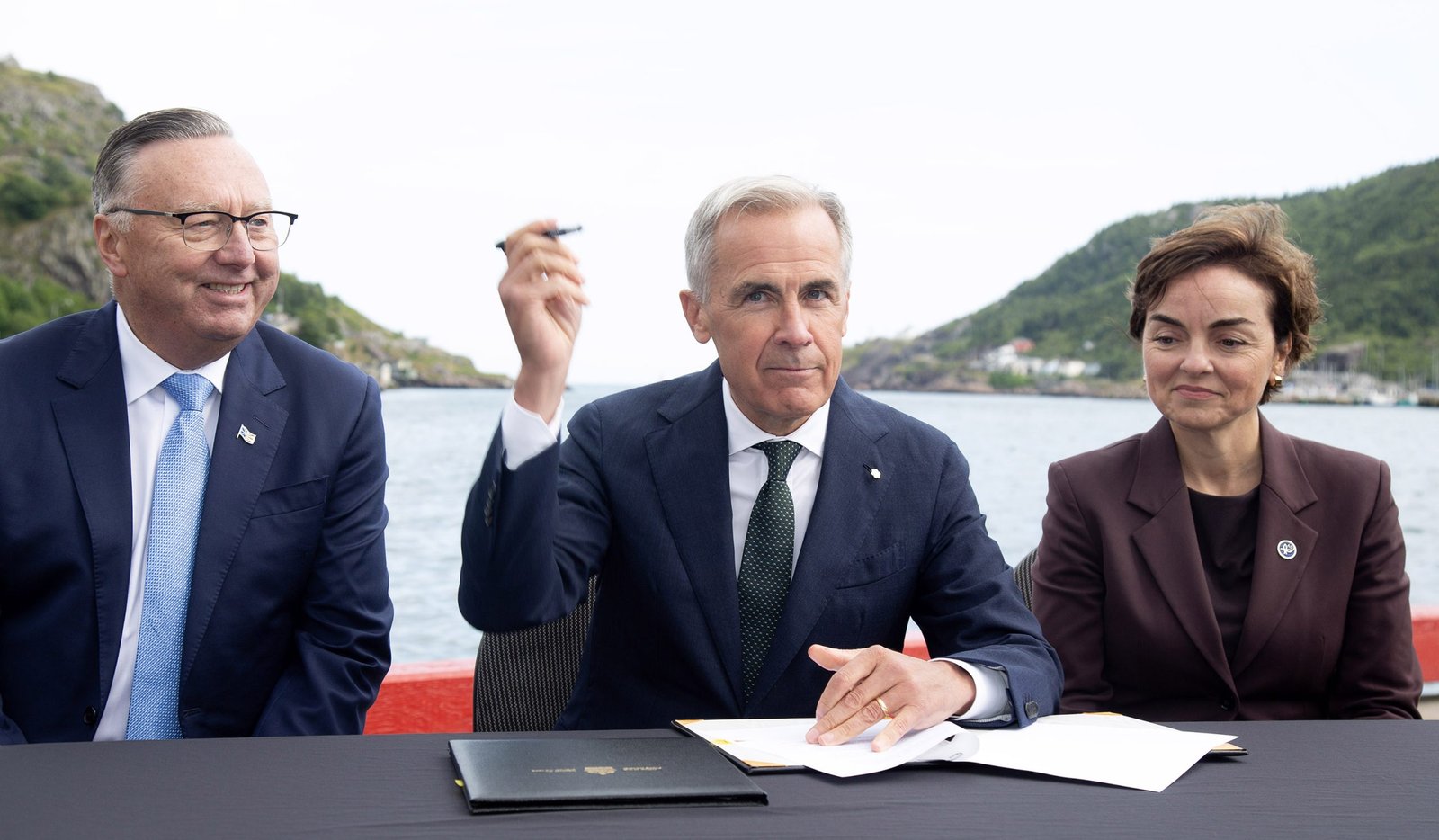
Economic sovereignty is about more than owning resources or generating power. It is about having the Canadian companies, technologies and talent to turn those assets into lasting economic value.
Last week, Newfoundland and Labrador Premier Tony Wakeham and Quebec Premier Christine Fréchette was joined by Prime Minister Mark Carney in St. John’s to announce one of the most consequential energy agreements Canada has seen in decades. As we’ve seen in recent days the innovation behind Canadian energy is the key to sovereignty and our prosperity.
Churchill Falls is among the largest hydroelectric facilities in the world. It currently generates more than 5,400 megawatts of clean electricity – about a quarter of Ontario’s total peak demand – providing the reliable power needed to fuel industry, attract investment and build new businesses at scale.
At roughly $50 billion, the Churchill Falls agreement is a generational investment into both Newfoundland and Labrador’s and Quebec’s ability to produce reliable and clean electricity. And while it is the largest investment in clean energy in North American history, it’s not simply an energy deal. It is an opportunity to grow Canada’s innovation economy.
Almost a year ago, we wrote about why the 2024 renegotiated Churchill Falls deal mattered to the prosperity of Newfoundland and Labrador. At the time, what was on offer was already a very good deal. Then a provincial election happened, alongside a few pivotal elections across Canada and around the world. A newly-elected Premier Wakeham took office. He saw an opportunity to go bigger, and in doing so, unlocked both a clean energy and economic advantage for future generations of Canadians.
As we’ve seen this past week the value of our energy has never been greater: North American markets need our energy and the world needs the critical minerals we can produce with this same energy in our province and our nation.
The agreement is also a major step forward to building a stronger, more sovereign Canada. Even with trade negotiations suspended, the Prime Minister signalled that the Churchill Falls agreement was biggest news in Canada last week—and we know he is right. It gives Canada something increasingly scarce in the global economy: the ability to produce significant amounts of clean electricity and use it to power new industries at scale. It’s also a critical linkage to the sovereignty that can fuel our prosperity.
Our first generation of major hydroelectric investments helped build Canadian industrial capacity, expertise and companies. They helped build world-class Canadian companies and cutting-edge Canadian expertise. Now, AI, advanced manufacturing, critical minerals, data centres and other technology-intensive industries depend on access to large amounts of reliable, affordable power. Countries around the world are competing to attract the capital, talent, infrastructure and energy required to build these industries at scale.
The success of Churchill Falls should not only be measured only by how much power is generated or exported. It should also be measured by what Canada builds around that power.
Billions of dollars in procurement will create opportunities for Canadian innovators. Companies such as Newfoundland and Labrador-based Tiller Engineering bring specialized engineering expertise, while Twinshore, through Crosbie and MacKinnon & Olding, brings the skilled trades and industrial capabilities needed to help deliver major projects. As Canada looks to build at greater scale, developing the skilled workforce needed to deliver these projects must become a national priority.
Across Canada, entrepreneurs are building the tools needed to deliver the next generation of major infrastructure. They should not simply be viewed as vendors, they should be part of the economic strategy.
The same is true of IP and data. Canadian technologies will help build these nation-building projects. We should ensure the knowledge and IP developed along the way become Canadian assets that create companies, jobs and prosperity anchored here, and as assets that can be sold around the world.
Companies like Newfoundland and Labrador’s own Mysa, which develops smart thermostats, and ICI, with its project-ready software, are already globally competitive. They can provide talent and technologies needed to support the smart use of energy strategies Canada wide.
Economic sovereignty is about more than owning resources or generating power. It is about having the Canadian companies, technologies and talent to turn those assets into lasting economic value.
Canada has a major advantage, and the Churchill Falls agreement, made possible by the ambition and partnership of the Newfoundland and Labrador and Quebec governments, alongside the federal government, is a significant step toward building a more resilient, sovereign and competitive Canada.
This is what nation-building ambition can look like: governments choosing to think beyond the immediate project, plan for the generations that follow, and create the conditions for Canadians to build at a scale that matches the opportunity before us. The full value of the Churchill Falls agreement should be measured not just in the power it generates, but in the companies, it helps build, the technologies it helps commercialize and anchor here in Canada, and the prosperity it creates for generations of Canadians to come.
The full value of the Churchill Falls agreement should be measured not just in the power it generates, but in the companies it helps build, the technologies it helps commercialize and anchor here in Canada, the skilled workforce it helps develop, and the prosperity it creates for generations of Canadians to come.
Karen Moores is the senior advisor, Atlantic Canada, at the Council of Canadian Innovators (CCI), where she heads up CCI’s Atlantic Canada Bureau. CCI represents more than 175 of Canada’s fastest-growing innovation companies. Founded in 2015, CCI advocates for policies that help Canadian innovators scale globally, create prosperity at home, and strengthen Canada’s economic sovereignty.
The views, opinions and positions expressed by all iPolitics columnists and contributors are the author’s alone. They do not inherently or expressly reflect the views, opinions and/or positions of iPolitics.