dailynewsnblog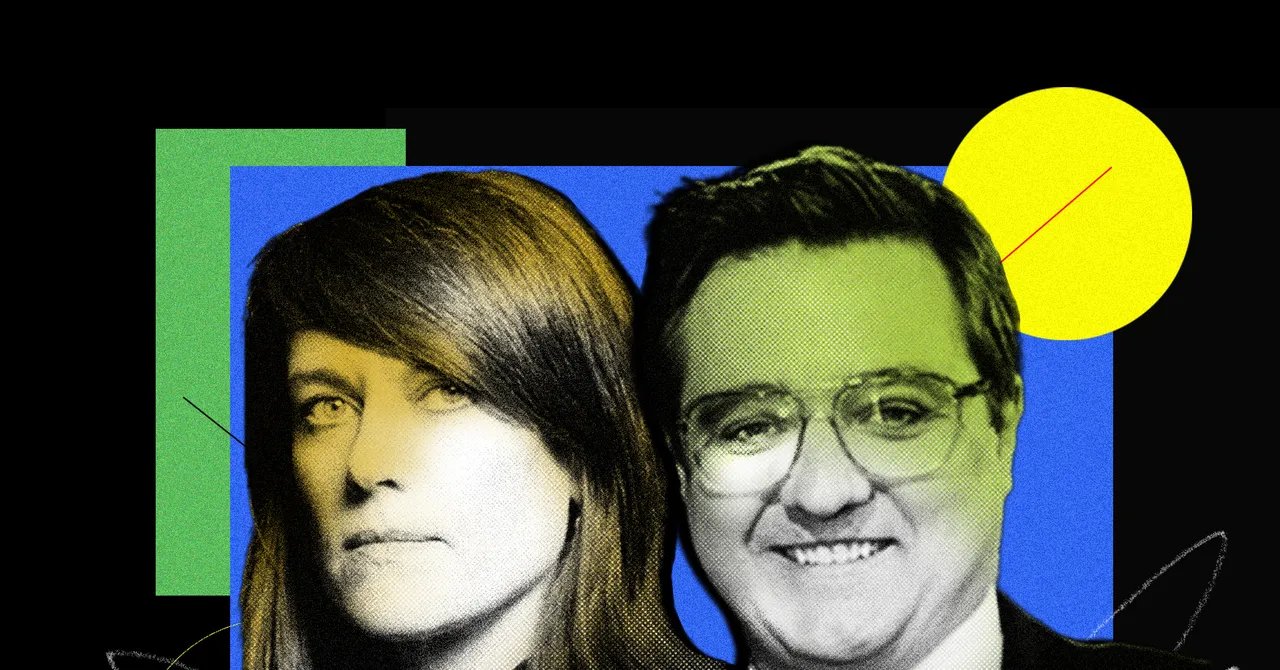
Chris Hayes makes a living from attention: What deserves some, what doesn’t, and how to make sure the public gives their own limited span of it to the right things.
That sounds simple enough. But as I found during my conversation with Hayes, which kicks off season two of The Big Interview podcast, it’s increasingly not. In 2025, the host of MS Now’s All In With Chris Hayes released The Sirens’ Call: How Attention Became the World’s Most Endangered Resource—a book whose central thesis argues that attention has become the defining commodity of modern life.
In keeping with that theme, Hayes himself is everywhere audiences spend time: opining on TV, hosting a podcast called Why Is This Happening?, interacting with his thousands of followers on social networks, and posting vertical videos there as well. In other words, Hayes is both adept at considering the attention economy from an intellectual perch and is participating in it as an attention merchant himself.
That’s specifically why I wanted to talk to Hayes, and talk to him right now. He has, after all, spent years studying and theorizing about attention. Given our current circumstances, it would probably behoove the rest of us to do a little of the same. I was looking for Hayes’ take on how the attention economy is increasingly shaping everything from entertainment and elections to ICE raids and world wars, and how both consumers and journalists could think about their own role in that economy as soberly and thoughtfully as possible.
When we sat down in early March, the US and Israel’s war with Iran was just getting started. Even in those early days, it had become a black hole for our attention, from relentless news alerts to President Trump’s Truth Social posts to AI-generated Department of War propaganda. We had to talk about it—along with Hayes’ views on the uneasy alliance between Silicon Valley and Washington, DC, his social media strategy, and what the left is getting wrong about AI.
This interview has been edited for length and clarity.
KATIE DRUMMOND: Chris Hayes, welcome to The Big Interview.
CHRIS HAYES: It’s great to be here. I’m a big fan of WIRED. You guys are doing amazing work.
Thank you.
I write about WIRED in the book. I remember asking my parents for the subscription. I think it was for Christmas. I was like a diehard. Every single page.
I’ve been thinking a lot about WIRED past, present, and future. I think the very early WIRED had a very rebellious, countercultural spirit. And I would argue the WIRED we are running has that same spirit, but directed at the industry that was born of the 1993 WIRED.
Totally. We think about who’s the incumbent, who’s the insurgent, and the valence of that switching. That WIRED vibe was Whole Earth ’Lectronic Link, like the original big bulletin board, kind of post-hippie cybernaut. Kinda libertarian, but also kind of left-coded, but definitely very hopeful utopian and also very insurgent against the powers that be. What happened was the powers that be are now the people that sat with the president at his inauguration.
They sure did. And we sure did cover that.
So the insurgent vibe is now directed in a different direction.
We’re sitting down in New York. It’s a Wednesday in early March. It’s hard to believe just a few days ago that the United States and Israel launched an all-out attack on Iran, which has escalated remarkably quickly. I would be remiss not to mention that this is the second leader this year that President Trump has ousted. The first being Nicolás Maduro in Venezuela. What is happening in the Middle East is terrifying. It’s sad. Hundreds of people are dead, including US service members. It is also, though, yet another all-consuming news cycle. It is a brain-melting, mind-numbing pace of news. We’re going to spend a lot of time in this conversation talking about attention. When you think about global conflict and war in this era, how much of it is about attention?