(Bloomberg) — China is over halfway to meeting its pledge to buy 25 million tons of US soybeans this year, but progress on a separate commitment to spend billions of dollars more on American crops has largely stalled.
Most Read from Bloomberg
The mixed signals ahead of this week’s presidential summit in Washington underscore the fragility of a trade truce both sides have worked carefully to preserve. Agriculture has proven to be an area where the US and China have found common ground, offering tangible incentives to help build a more stable relationship that’s usually defined by economic and geopolitical rivalry.
Hitting the annual target for soybeans, at least, seems doable. Since presidents Donald Trump and Xi Jinping last met in May, sales of the new crop harvested in the fall have picked up dramatically. But the second pledge to buy at least another $17 billion of US farm products at this point looks challenging, and may depend on Beijing offering relief on tariffs if it’s to be met.
“My expectation is that China ultimately meets the soybean commitment, particularly because soybean imports remain critical to China’s feed and vegetable oil sectors, and the volume is manageable within its overall import requirements,” said Kang Wei Cheang, an agricultural broker at StoneX Group Inc. in Singapore.
The second target is “achievable if political relations remain constructive and tariff barriers continue to ease,” he said.
The two nations have discussed cutting tariffs on goods including American energy and agricultural products ahead of the summit, a move that traders say could open the door to stepped up purchases from the US.
The two annual pledges run through 2028. The soybean purchases were agreed when Trump and Xi first called a truce last October. The $17 billion commitment followed at the May meeting and is prorated for this year. As well as the uneven timelines, another complication is that it isn’t clear if the dollar figure could include soybeans, which have typically accounted for the lion’s share of trade.
The White House didn’t respond to a request for comment.
US soybeans loom so large because the country is such a major producer and “it’s hard to forgo US supply entirely,” said Even Pay, a director at Beijing-based advisory firm Trivium China. For other oilseeds, grains and meat, China has more options.
Imports of niche crops like sorghum — used in animal feed and for producing baijiu, a popular Chinese liquor — have held up this year. But significant purchases of other key US crops haven’t materialized since the May meeting. For example, sales of corn and wheat for the 2026-27 season are zero, according to the US Department of Agriculture.
Total Farm Marketing analyst Naomi Blohm said China’s desire for diversification means there’s still hope for crops like corn, cotton, wheat and sorghum.
Farmer Marty Richardson in Missouri is betting on that.
“I know they like grain sorghum, but we haven’t got $17 billion of grain sorghum in the United States, so it can’t all be sorghum,” said Richardson, who also recently started his corn harvest.
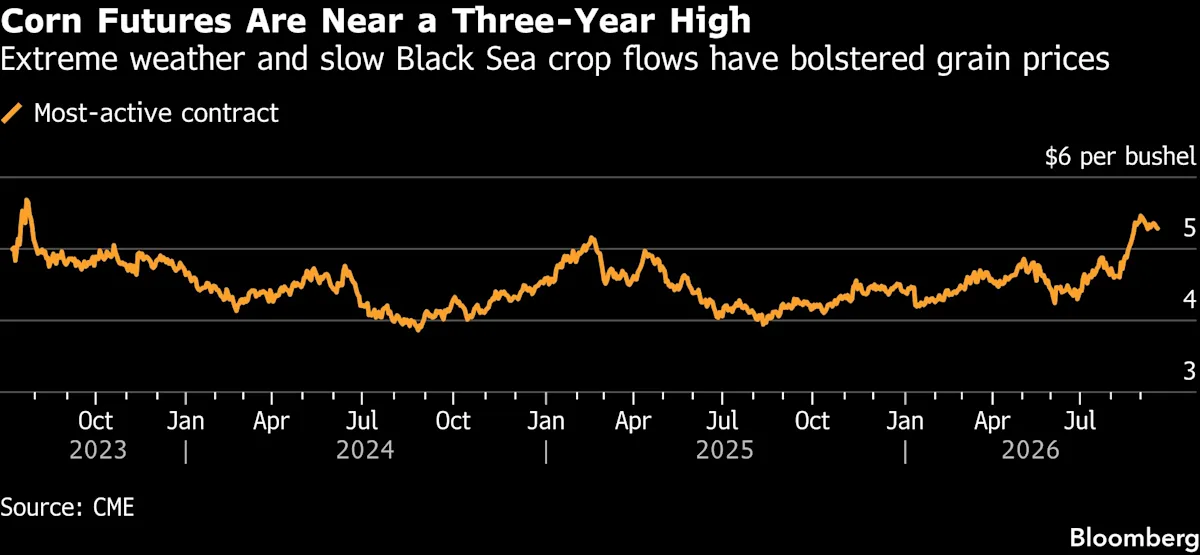
Richardson said he’d like to see China buy more corn, which hit a three-year high earlier this month. “With the yield, that’ll work pretty good — until we give it all back in diesel fuel and fertilizer,” he said.
In Louisiana, Meryl Kennedy Farr, chief executive officer of Kennedy Rice Mill, also sees potential for US rice producers to finally gain a better foothold in China.
“Rice has basically been nonexistent,” she said of shipments to the country. “Making rice part of that conversation would be huge for our industry.”
Reviving agricultural trade between the US and China is beset by a number of problems. Terrible weather and the Russia-Ukraine war have raised crop prices globally, deterring buyers, while the Iran conflict has ratcheted up fuel and fertilizer costs for farmers.
Within China, prospects are clouded by a slowing economy and ample domestic supplies, while Beijing’s tariffs on US farm goods have impeded trade even for soybeans. State-run firms have led purchases of beans, but if the economics could be improved it might entice private traders back into the market, which could help progress on both pledges.
Still, to fulfill the $17 billion commitment, China would have to raise US purchases at the expense of its hard-won strategy of diversification, cutting supplies from countries like Canada, Argentina, Brazil and Australia.
Beef offers another example of the gap between improved market access and actual trade. China renewed permits for hundreds of American beef plants in May, but shipments have barely recovered as surging US prices and weak Chinese demand curbed purchases.
Even for sorghum, a bright spot in bilateral trade, China’s appetite has slowed recently, said Tim Lust, chief executive officer of the National Sorghum Producers Association. The extra tariffs on the US don’t help, but sluggish demand from feed mills and alcohol distillers have also had an impact. The group sent a letter to Trump on Friday asking the president to advocate that China buy sorghum as part of its $17 billion pledge.
The broader hope is that Trump and Xi can cement their accommodation on agriculture, without getting derailed by thornier issues like Taiwan or artificial intelligence.
“As we look back over the last several years, we’ve had inconsistencies,” Lust said. “It’s been really good at times, and it’s been really slow at times. So that’s one of the things that we’re hopeful out of this, that we get that more consistent trade volume.”
Others have a more dialed-back set of expectations.
Minnesota corn and soybean farmer Nathan Serbus said he’s not looking for any blockbuster agricultural deals to be struck between Trump and Xi when the presidents meet. Instead, he’s just hoping nothing happens to roil the market and send prices lower, especially given that he’s looking at one of his best corn crops ever.
“Just as long as they don’t come out and we go to a trade war for no reason,” Serbus said.
On the Wire
US Treasury Secretary Scott Bessent lauded “very successful” talks with his Chinese counterparts that spanned artificial intelligence, trade and investment ahead of this week’s summit between leaders Donald Trump and Xi Jinping.
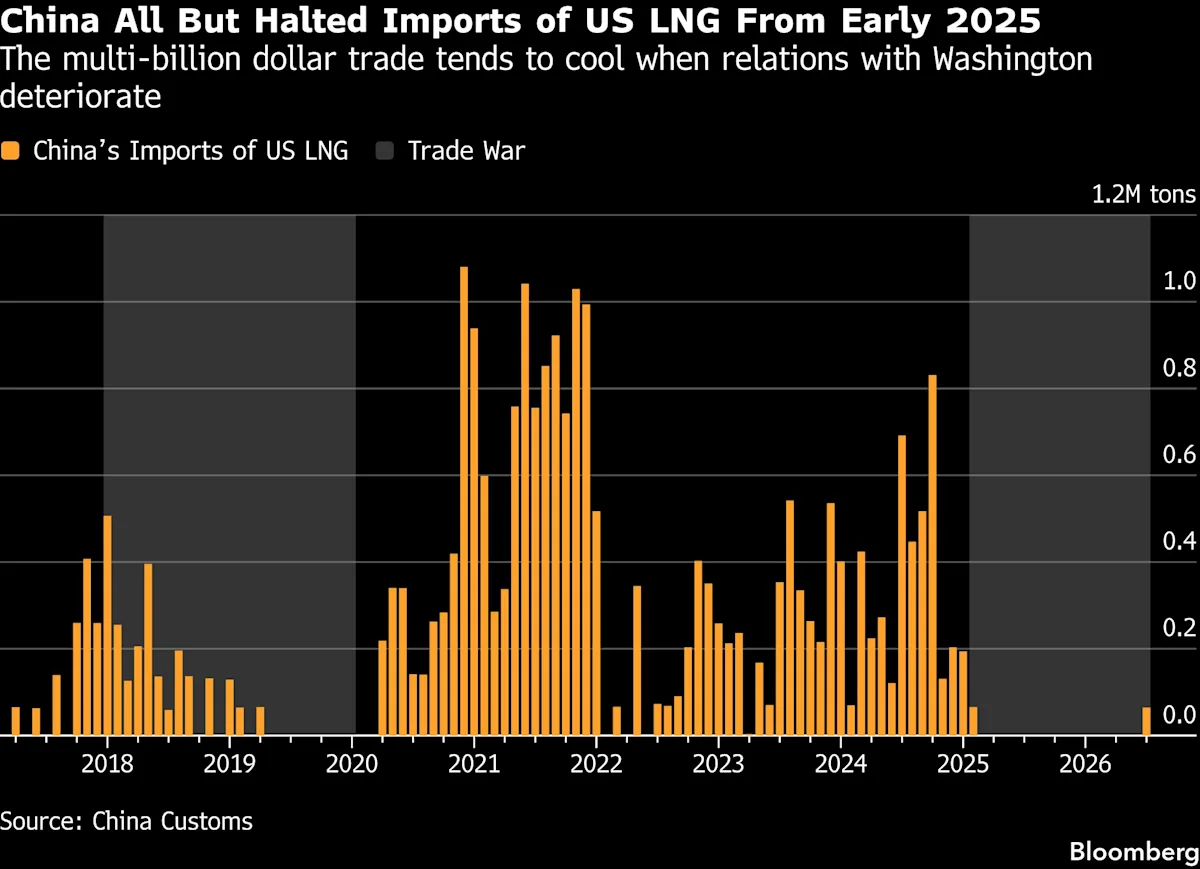
China’s leader Xi Jinping will arrive in Washington this week with at least one easy option to score points with the Trump administration — a commitment to revive a $6 billion-a-year trade in US liquefied natural gas.
China’s exports of rare-earth magnets to the US fell last month, ahead of a meeting between the leaders of the countries that will probably involve discussions on flows of critical minerals.
China’s electricity consumption exceeded 1 trillion kilowatt-hours in August as power demand remained robust, the National Energy Administration said.
China criticized the new US law that strengthens sanctions on Russia and extends trade measures on Iran, which was signed late Friday by President Donald Trump.
China outlined a nationwide effort to target false reporting by environmental monitoring institutions at a meeting attended by multiple government agencies, the Ministry of Ecology and Environment said.
This Week’s Diary
(All times Beijing)
Monday, Sept. 21
National Food and Strategic Reserves Administration holds briefing in Beijing on granaries and food security, 10:00
China International Steel Congress in Shanghai, day 3
Tuesday, Sept. 22
Wednesday, Sept. 23
CCTD’s weekly online briefing on coal markets, 15:00
China International Steel Congress in Shanghai, day 5
Thursday, Sept. 24
Chinese President Xi Jinping visits US for summit with President Donald Trump
China’s weekly iron ore port stockpiles
SHFE’s weekly commodities inventory, ~15:30
China International Steel Congress in Shanghai, day 6
US battery maker EnerVenue launches new plant in Changzhou, China
Friday, Sept. 25
–With assistance from Ben Westcott and Michael Hirtzer.
Most Read from Bloomberg Businessweek
©2026 Bloomberg L.P.


 dailynewsnblog