dailynewsnblog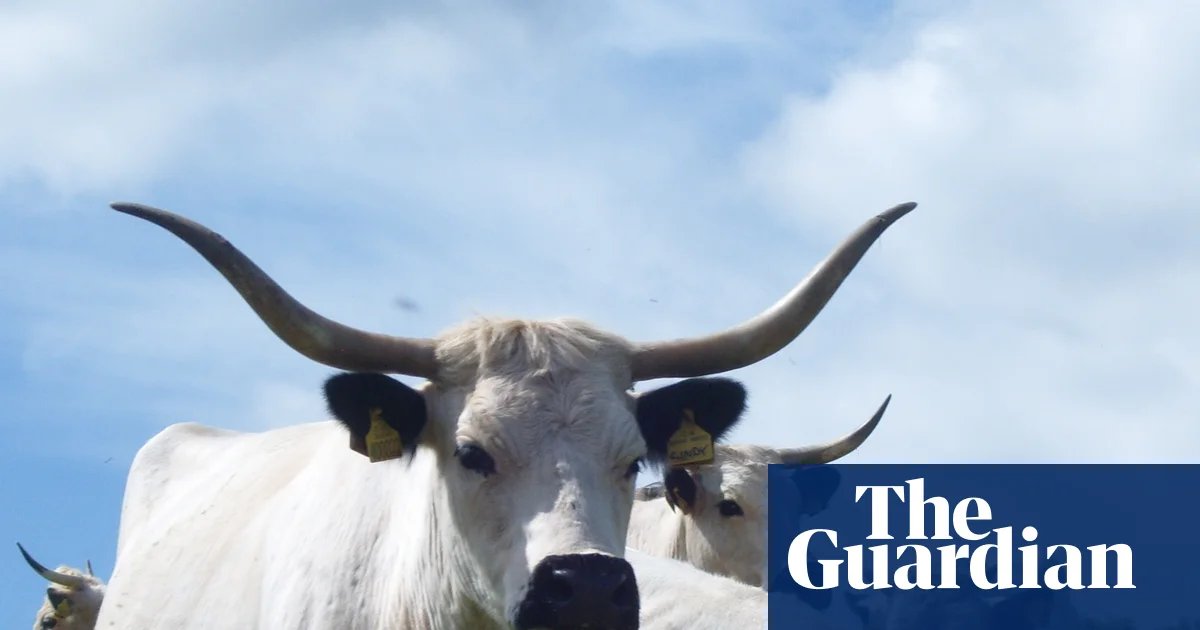
An ancient breed of cattle whose ancestors are thought to have accompanied the Celts as they were pushed to Britain’s fringes by the Romans has been designated as urgently at risk by a UK conservation charity.
Publishing its 2026 watchlist on Tuesday, the Rare Breeds Survival Trust moved white park cattle to its “priority” category as new calf numbers sank last year to less than two-thirds of their 2022 level.
Three other native breeds of rare equine and livestock were also moved from the “at-risk” to “priority” category: original population lincoln red cattle, boreray sheep and soay sheep.
The charity is urging the government to improve support for rare native livestock and equines.
“This isn’t just about giving public money to keep them. It’s about having the sort of environmental policies that recognise the majesty of these animals in the landscape,” said Christopher Price, the charity’s CEO.
White park cattle are an ancient breed, different to the selectively bred commercial animals usually associated with farmed cattle. Price described them as a “semi-wild animal that was partially domesticated”.
The long-horned animal has a long history in Britain. Two thousand years ago, its ancestors are thought to have accompanied the Celts as they were pushed north and west by the Romans. They were then popular through the medieval period, but their numbers dwindled as farming became industrialised.
Winston Churchill recognised their heritage value when he sent a herd to Canada for protection during the second world war.
The charity said one reason for their decline was that there was not a great financial incentive for farmers to keep white park cattle, as many native breeds are losing recognition in favour of larger continental ones.
Nevertheless, some people still love white park cattle. Jan McCourt, who farms them at Northfield farm on the Rutland-Leicestershire border, said: “The breed can produce what I consider the ultimate product in beef, with a very fine and rarely seen type of marbling and a deep, unctuous flavour.”
The white park is also ideal for conservation grazing, where hardy native livestock breeds are used to manage habitats and make them more suitable for wildlife.
Price said white park cattle were an important part of Britain’s biodiversity. The RBST is pushing for “kept” animals (pets and livestock) to be better included in conversations about biodiversity.
“If we want to go and restore our meadows and pasture lands, what better way to do it than to use the animals, species, breeds that helped create them in the first place?,” he said.
The 2026 watchlist suggests other native breeds have a more positive outlook. Populations of a number of animals such as aberdeen angus cattle, manx loaghtan sheep, and leicester longwool sheep are on the up.
A Defra spokesperson said: “Native and rare breeds of livestock provide genetic diversity and are an important part of our rural heritage.
“We will continue to support at-risk native breeds through a range of actions as part of our sustainable farming schemes, including providing funding for their grazing habitats.”