dailynewsnblog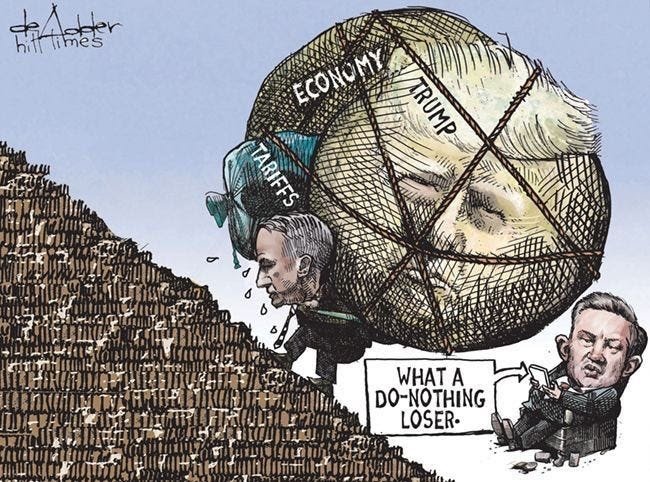

Today in Carney leadership
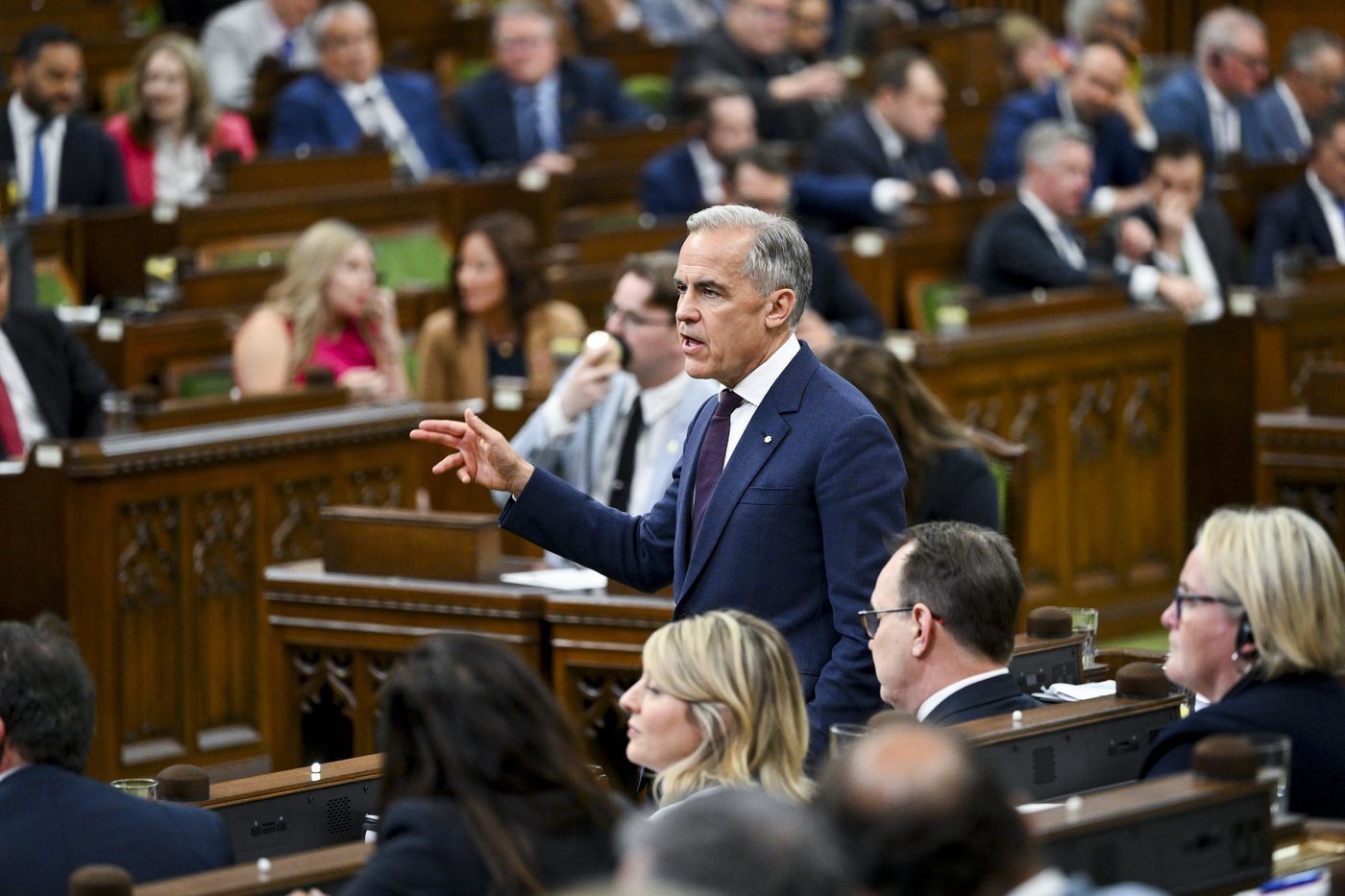
I’m shocked SHOCKED! that Carney gets pissed sometimes at Liberal MPs.
In the Toronto Star, columnist Althia Raj has become the go-to journalist for any Liberal caucus MP who wants to bitch about Carney – watching her on the CBC At Issue panel lately, its been pretty clear that Raj doesn’t like Carney one bit.
Today Raj writes a mish-mash column of complaints – did you know that Carney sometimes yells at people? Oh, the horror….
…Over the course of several caucus meetings now, [gift link] Grit MPs report Carney lashing out at certain members when he doesn’t like the message they deliver. They include Nova Scotia MP Jaime Battiste, a Mi’kmaw from Cape Breton, raising concerns over negative perceptions of the government’s changes to the Indian Act and receiving a stunning rebuke; Winnipeg MP Doug Eyolfson, a physician, being told not to come to the prime minister with his concerns over the lack of federal response to Alberta’s two-tiered health care Bill 11; and Laval MP Angelo Iacono, who wanted the prime minister to visit his riding and was met with Carney insisting he’d been to Laval recently, though he had not. The experiences have left a lasting imprint on several MPs.
“He yells,” said one MP who, like others, spoke on condition of anonymity to avoid retribution from the Prime Minister’s Office. “He punches down at caucus all the time.”
Carney has told his caucus members he doesn’t want to hear their concerns, he wants solutions. While it’s a message that resonates with some, hearing complaints can be useful….
Last week, some MPs felt the prime minister’s message was that he’s not interested in what they have to say.
Carney was making the case that the government is focused on national unity, on the CUSMA talks, on growing the economy; it has a plan, and message discipline is key. “If you don’t agree with our agenda, I don’t want to hear it. If you have criticism, keep them for yourself,” was the way another MP portrayed it….
IDK, but it wasn’t surprising to me that Carney would be impatient if he hears complaints instead of solutions.
Moving on, we so often complain that journalists just accept whatever framing Poilievre and the conservatives dish out – in fact, I complained about it myself just yesterday.
Good line today in Question Period:
Here’s a useful summary of the CRTC and streaming issues:
Today in Alberta Separatism
David Herle: “There’s no independent Alberta. This little landlocked area sitting there in the middle of the continent. They’re either part of Canada or they’re part of the US and they need to get their heads around that. If they think they’re neglected now, they should ask North Dakota.”
[image or embed]
— Scott Robertson (@sarobertson.bsky.social) June 3, 2026 at 9:14 PM
Excellent article in Policy magazine, by Michael Wernick, who was in the Privy Council Office in 1995 when the Quebec referendum happened:
… Back in 1995, voters were asked whether they wanted to leave Canada. Saying yes was supposed to lead to a leap into negotiations on new arrangements. As we have learned, it would have potentially led to a Unilateral Declaration of Independence and an appeal to foreign governments for recognition.
This time, Albertans are being asked in a pre-emptive referendum question whether they want to stay, with a no vote triggering a process of uncertain form and duration. I leave it to the psychologists to address whether it sways the result to be advocating a positive or a negative.
What is hauntingly familiar is the slippery dishonesty and the unilateralism of secessionist advocates. Voters are beckoned with the prospect that secession will not just avenge and cease past injustices and humiliations, it will usher in a new age of abundant resources and remedies to all current ills. It peddles magical thinking regarding finances and economics.
The unilateralism is always breathtaking.
What is to become of the “rest of Canada”? That is their problem to sort out after the divorce. Moreover, the decoupling will be orderly and painless, as the newly independent country gets to decide what to preserve or keep from the country it is leaving. It promises separation with benefits without asking the other partner….
In The Line, another excellent article today from Jen Gearson:
…alienation is a very different beast than separation. The latter is fuelled by the former, certainly — but the movement as a whole has morphed into something else entirely. It’s moved away from a productive kind of politics that channels anger into political coalitions and proactive policy improvements and into a counterproductive fantasy LARP that is training its adherents to believe that any or all of these disagreements can be resolved by a secession free of risks and consequences and trade-offs. We’re watching in real time while this movement devolves into something far removed from the “legitimate grievances” that spawned it, into conspiracism, fanaticism and even outright racism in some quarters.
In short, it’s entirely correct to take complaints seriously. It’s entirely folly to act as if separation is a serious answer to those complaints.
I would argue that it’s dangerous folly to even entertain the idea that playing with separation — even via a vote you expect to lose — is something that can meaningfully improve the lives of ordinary Albertans. A lever only works if you can control it, and I simply do not believe that Alberta’s political class can control this one whit…
Today in tariffs
And Carney knew they were coming:
Hey, turns out Hoekstra was “just following orders” when he sent out Trump’s 51st State tweet so he doesn’t think Canada should be mad at him.
In other news
And here is Hunter Biden for the win:
Pride Update
Excellent article at Balloon Juice by Sister Golden Bear on the history of the Pride flag Do You Have A Flag?
This is the graphic that illustrates it:

The whole article is worth reading.
It is Pride Month.
Throughout this month, I will be sharing the stories of Canadians who fought for LGBTQ rights.
Today it is the story of Canada’s decriminalization of homosexuality in 1969.[image or embed]
— Canadian History Ehx (@cdnhistoryehx.bsky.social) June 2, 2026 at 8:05 AM
It is Pride Month.
Throughout this month, I will be sharing the stories of Canadians who fought for LGBTQ rights.
Today it is the story of The Brunswick Four.[image or embed]
— Canadian History Ehx (@cdnhistoryehx.bsky.social) June 3, 2026 at 8:04 AM