dailynewsnblog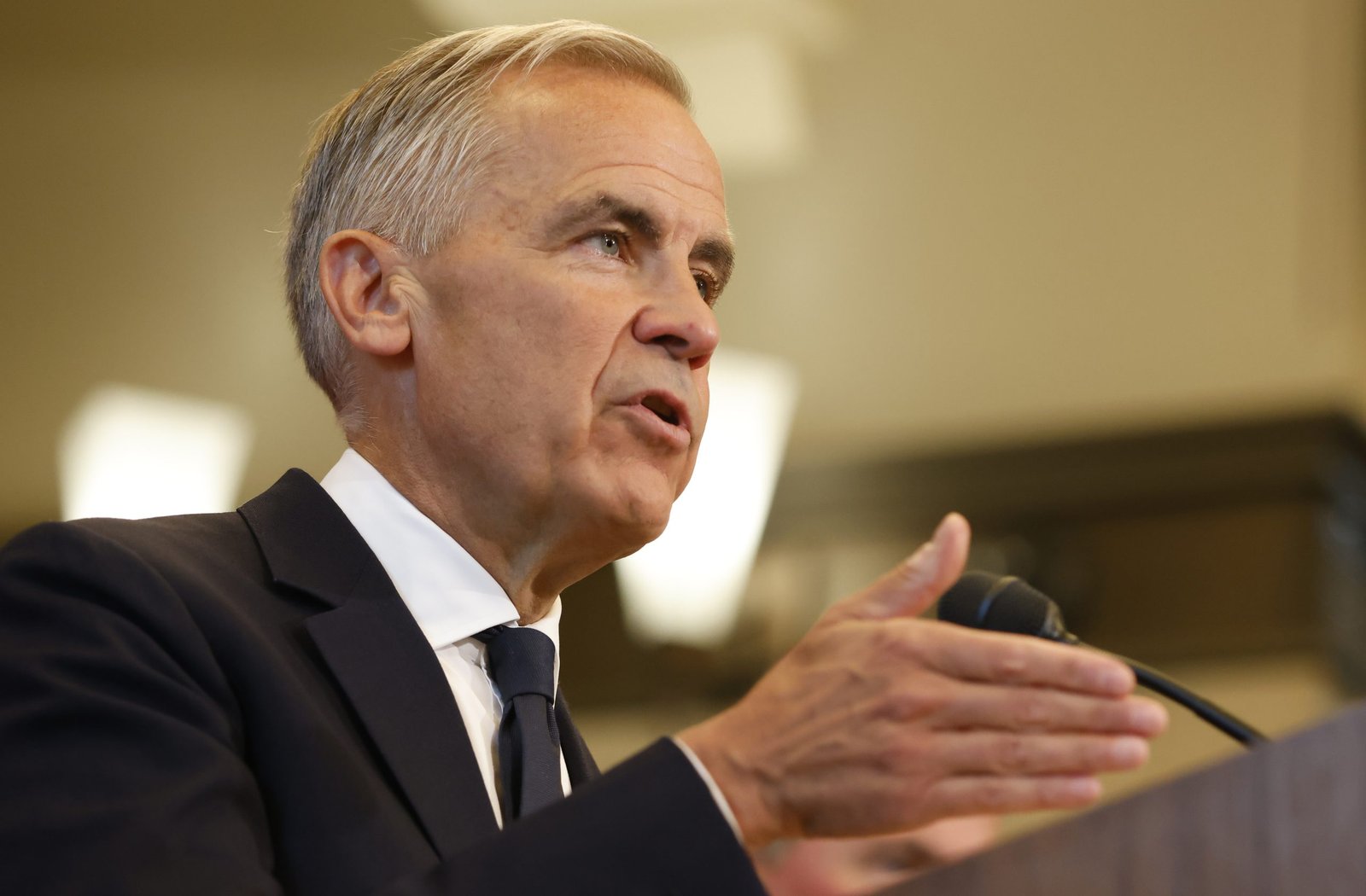
A Liberal victory would give Carney exactly the image he wants at a crucial moment — a prime minister who can take a Conservative seat in a nationalist region of Quebec while staring down Donald Trump at the same time.
While the collapse of Canada-U.S. trade talks may dominate the political conversation in Quebec, another consequential race is unfolding at the federal level.
Prime Minister Mark Carney has called byelections in Beaches—East York, Ontario, North Vancouver—Capilano, British Columbia, and Chicoutimi—Le Fjord, Quebec. While the first two are widely expected to remain Liberal, the three-way race in Chicoutimi—Le Fjord promises to be far more interesting.
The seat was left vacant after Conservative MP Richard Martel was appointed to the Senate. The riding has been Conservative since 2018, but the Tory vote now appears to be weakening.
The political calculation behind the timing of the byelection is hard to miss. The seat in Saint-Hyacinthe—Bagot had been vacant for a couple of weeks before Martel was appointed to the Senate, yet no byelection was called there. Why? One obvious explanation is that Carney has a much better chance of picking up Chicoutimi—Le Fjord.
His ambitions are high. Carney is hoping for a clean sweep, much as he did in April, when the Liberals picked up Terrebonne on their way to securing a majority government. Winning Chicoutimi—Le Fjord would further strengthen that majority, but its symbolic value would arguably be even greater. Taking a Conservative seat in a region where the Bloc Québécois is also deeply competitive would be a remarkable show of strength — a message to both Pierre Poilievre and Yves-François Blanchet that Carney can beat them on their own turf.
And now, it could also serve as an early verdict on his handling of the trade war with the United States.
The Liberals made a strategically significant choice in nominating Daniel Gobeil, a dairy farmer and former president of Les Producteurs de lait du Québec, while promising that Canada’s supply management system would not be sacrificed in negotiations with Washington.
It was a good catch — but potentially a double-edged sword.
Farmers in the riding later learned that the government was prepared to consider administrative changes related to supply management. The details remained vague, and the proposed changes ultimately never materialized. But politically, that may not matter. The mere suggestion that supply management could be part of the negotiations was enough to plant a seed of doubt: is the system really safe in Carney’s hands?
Similar concerns emerged over protections for the French language and cultural sovereignty, adding to the Liberals’ vulnerability in this overwhelmingly French-speaking riding.
Yet the collapse of the talks may have unexpectedly turned that vulnerability into an advantage. An Angus Reid poll found that 85 percent of Quebecers approved of Carney’s decision to suspend the talks rather than accept a bad deal with the United States.
That gives the Chicoutimi—Le Fjord byelection a significance that extends well beyond the riding. It could become the first electoral test of whether Quebecers see the failure to reach a deal as a failure by Carney — or as evidence that he is willing to stand up to Donald Trump.
The challenge for the Liberals remains significant, however, and the race could still go either way.
The Bloc’s influence in the region cannot be underestimated. Last February, the Parti Québécois captured a provincial seat further demonstrating the strength of the sovereigntist movement in the area. The neighbouring federal ridings have also been represented since 2019 by Bloc MPs Mario Simard and Alexis Brunelle-Duceppe, both of whom have built strong local profiles.
Chicoutimi—Le Fjord has long been in the Bloc’s sights. The close races against the Conservatives in 2019, 2021 and again in 2025 are evidence of that. This time, the party’s candidate, Caroline Dubé, brings years of experience in both the community sector and politics.
But the reality of this campaign is that it is increasingly being fought on national issues, regardless of the candidates’ individual profiles. That may ultimately favour the Liberals.
The Saguenay is also among the Quebec regions most exposed to U.S. tariffs. The Bloc has long argued that it is best positioned to defend Quebec’s interests in Ottawa. If voters conclude that Carney has still not demonstrated that he can successfully stand up to Donald Trump, that argument could work in the Bloc’s favour.
Then there are the Conservatives.
Many voters in Saguenay were arguably voting for Richard Martel as much as they were voting for the Conservative Party itself. With Carney moving the Liberals closer to the centre-right on several issues, could some of those Conservative voters migrate to the Liberals? It is certainly possible.
But there is another side to that calculation. It was Carney himself who triggered the vacancy by appointing Martel to the Senate. Some voters may resent being sent back to the polls before the completion of the mandate they gave their MP.
And saying that the timing is less than ideal would be an understatement.
Counting the November 2025 municipal elections, the February 2026 provincial byelection, this federal byelection and Quebec’s Oct. 5 general election, voters in the Saguenay will have been called to the polls four times in less than a year.
The greatest risk for all three parties may simply be that voters have stopped listening.
It is summer, political attention is limited, and roughly 15 percent of voters have already cast their ballots — some before the trade talks collapsed and some after. As in so many byelections, the result may ultimately depend less on the national political drama than on something far more mundane: which party can actually get its voters to the polls.
Still, a Liberal victory would give Carney exactly the image he wants at a crucial moment — a prime minister who can take a Conservative seat in a nationalist region of Quebec while staring down Donald Trump at the same time.
For Carney, it would be difficult to imagine a better display of political power.
Kristina Michaud served as a Bloc Québécois Member of Parliament from 2019 to 2025 and now works as a political analyst and commentator.
The views, opinions and positions expressed by all iPolitics columnists and contributors are the author’s alone. They do not inherently or expressly reflect the views, opinions and/or positions of iPolitics.