dailynewsnblog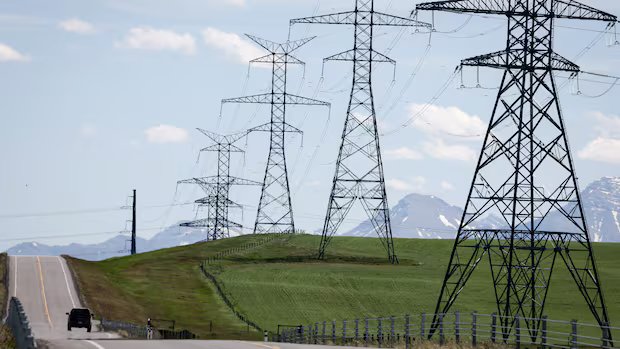

Listen to this article
Estimated 3 minutes
The audio version of this article is generated by AI-based technology. Mispronunciations can occur. We are working with our partners to continually review and improve the results.
Prime Minister Mark Carney will deliver his vision on Thursday to transform Canada’s electricity sector with the ambitious goal of doubling the nation’s grid.
The government is expected to announce it is reviewing and amending the Trudeau government’s controversial Clean Electricity Regulations (CER).
Ottawa is looking at expanding the role natural gas could play for generating baseload power and peaking when electricity demand spikes or during emergencies, a source told CBC News. Baseload power typically refers to a power plant that provides continuous electricity output and ensures grid stability. Peaker power plants respond to fluctuations in grid demand.
CBC News is not identifying the sources because they were not authorized to speak publicly about the government’s plans.
The Trudeau government finalized the Clean Electricity Regulations in 2024 with the goal of achieving deep emissions reductions in the electricity sector by 2050.

Mark Carney is preparing sweeping changes to speed up approvals for natural resource projects, including pipelines, according to federal sources. A new framework could be announced this week.
More than 80 per cent of Canada’s power grid is non-emitting thanks to hydro-electricity generation, nuclear and renewables like wind and solar.
But the previous Trudeau government feared that percentage could narrow as electricity demand grows and provinces turn to natural gas power generation to fill the gap.
The federal electricity regulations were supposed to have the biggest impact in Alberta.
Ever since Ottawa signed an energy deal with the province in November, those regulations have been in jeopardy. The agreement committed to immediately suspending the CER in Alberta “pending a new carbon pricing agreement.”
CBC News has reported that both the federal government and Alberta have recently reached a deal on pricing carbon emissions.
Major Projects Office may get involved
Multiple sources said Ottawa will recognise that it has a greater role to play in building transmission infrastructure that connects provincial and territorial grids to one another through what the industry calls massive transmission intertie.
Sources said the government is looking at if the Major Projects Office could get involved in this massive transmission infrastructure expansion.
The government is also considering referring several grid interconnection projects to the Major Projects Office for analysis to see if they could be designated under the Build Canada Act as projects in the national interest so they can be fast tracked, a source with knowledge said.
Those projects that could be referred include interties between B.C. and Yukon, interties between the Atlantic provinces, as well as interties between Quebec and Newfoundland and Labrador.
According to sources, no new money is expected to be announced to fund these projects. But a source said the existing clean electricity investment tax credit could also be expanded.
A source said the government will be putting a call out to move toward more energy efficient methods to try to bring down costs for consumers.
CTV News has also reported details ahead of the announcement.
Sources told CBC that the government’s plans will be up for consultation. The prime minister is expected to announce a consultation document on Thursday asking Canadians, stakeholders and provinces and territories to start weighing in.