dailynewsnblog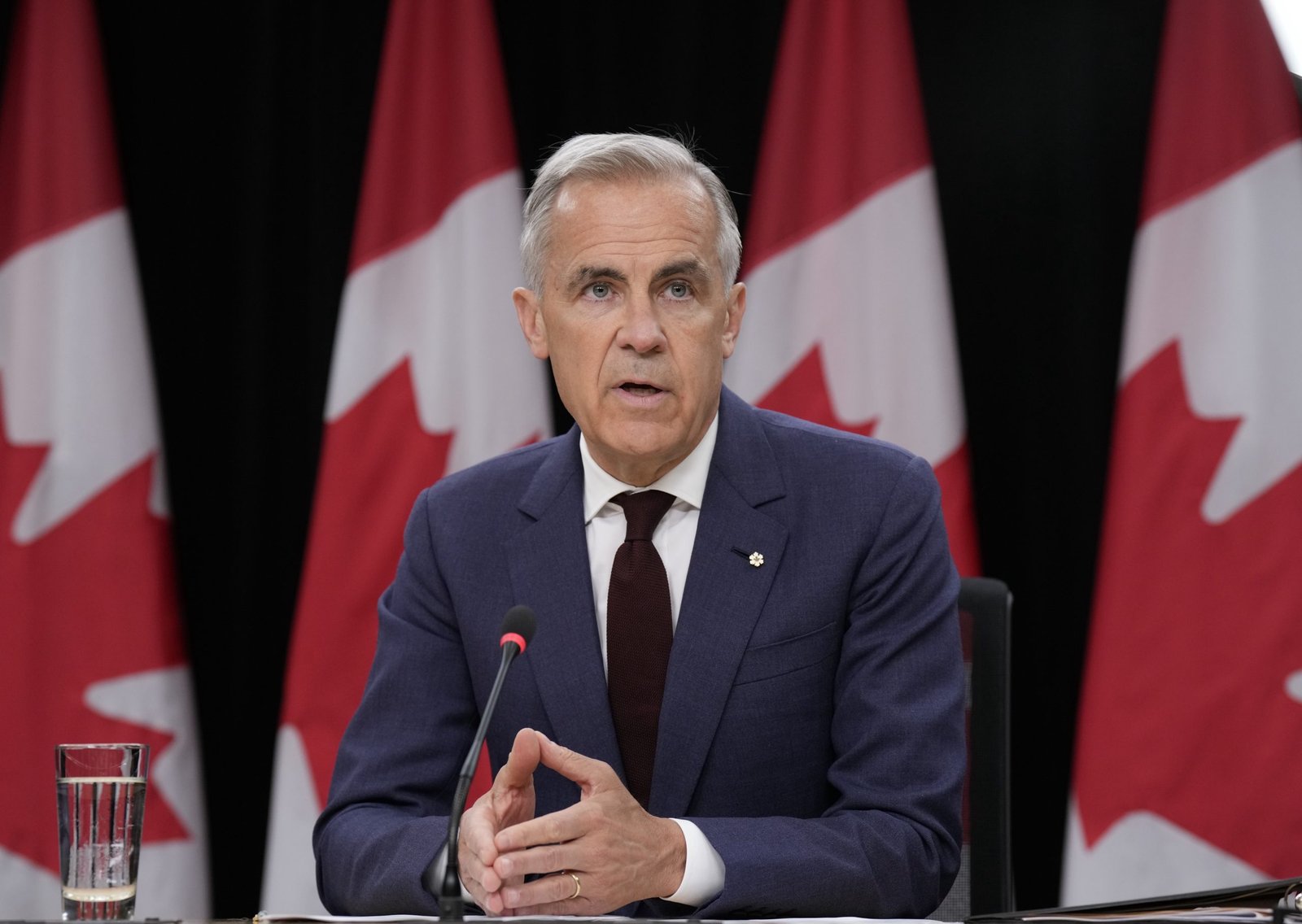
“Where we see opportunities, where that’s the best use of the dollar, we will look at that, and certainly when the province brings that and brings ideas and brings an opportunity to market… that makes sense to look at,” he said.
Prime Minister Mark Carney on Thursday defended his government’s decision to partner with B.C. in purchasing unsold condos to convert to rent-to-buy affordable housing units, but clarified that Ottawa isn’t examining any possible acquisitions just yet.
Carney appeared before the National Press Theatre in Ottawa to highlight the Liberals’ legislative achievements in the recently concluded spring sitting of Parliament where he faced questions over his government’s new housing pact with B.C. that critics have derided as a bailout for wealthy condo developers.
He provided some additional insights on the financials of the deal, saying Ottawa had pledged to cover 10 per cent of the costs of the $1.5 billion program.
But he stressed the program was devised by the B.C. government and wasn’t a pitch to his office from desperate condo developers.
“We start, as we always do, with Canadians. We don’t start with developers. What we care about is affordable housing… in this case for the people of British Columbia,” Carney told reporters.
Opposition parties have slammed the Liberals for the agreement with B.C., arguing it amounts to a handout to developers who miscalculated the market’s appetite for expensive housing.
NDP parliamentary leader Don Davies said the deal forced taxpayers to absorb the cost of poor financial decisions by the private sector.
“It looks very much like it’s a bailout of wealthy developers who guessed morning, and that old phrase, ‘private profits and socialized losses,’ seems to be very much in the air right now,” he said.
“Where these developers were making oodles of money hand over fist selling condos to foreign investors and making it out like bandits, they kept all those profits. Now that they’re stuck with a product that is too expensive, and nobody that lives here wants, they want the government to come bail them out.”
Conservative Leader Pierre Poilievre said Carney’s deal with the province sent the wrong signal to developers, who otherwise would have resorted to dropping prices to recoup some of their investment.
“The government inflated the housing market into a bubble, and now the bubble burst. So, who’s going to pay the price? [Carney] wants you, the welder, the waitress, the barber, the small business person, to pay through your taxes to bail out his developer friends,” he told reporters at a separate press conference in Ottawa on Thursday.
“He says that this is a policy to make housing affordable. How does bidding up the cost of condos and competing with home buyers to buy them make it more affordable? It’s exactly the opposite. He’s making home ownership even more difficult by forcing taxpayers to pay for their taxes to bid against themselves when they try to buy a home.”
Carney said Greater Vancouver has an abnormally large stock of unsold condos and that could present opportunities for governments to quickly bring online new affordable housing units.
“Where we see opportunities, where that’s the best use of the dollar, we will look at that, and certainly when the province brings that and brings ideas and brings an opportunity to market… that makes sense to look at,” he said, noting that Ottawa hasn’t committed to any purchases at this time.
A recent report from the Canada Mortgage and Housing Corp. (CMHC) found the number of unabsorbed condos in Greater Vancouver had increased by 76 per cent since last May, and now total nearly 4,400 units. The agency used the term absorbed rather than sold because it covers occupied units and also those subject to a binding deal or withheld by developers.
Carney said the Vancouver area’s absorption rate sits around 60 per cent, compared to the 80 per cent average in a “normal market.”
A recent report from TD Economics predicted condo sales in Vancouver would actually pick up in 2027 because of falling prices, though expected prices to remain above pre-pandemic levels.
Foreign home buyers ban set to expire soon
Davies attributed the glut of condos in Vancouver to Ottawa’s ban on foreign home buyers, but worried that it won’t be renewed by the Carney Liberals when it expires at the end of the year. He noted that Carney has already repealed a tax on vacant housing units brought in by Justin Trudeau.
“I’m not praising the Trudeau government — I don’t think they went anywhere nearly as far as they should have. But the small steps that they did take that were helpful seem to be being rejected by the current Carney government,” said Davies, who represents a Vancouver riding.
“I think that’s just going to reignite the housing crisis, just when it was starting to maybe soften up a bit.”
Conservative Leader Pierre Poilievre said he also supported keeping the ban on foreign buyers.
“Any policy that’s seeking to bail out bankers or developers is the wrong one,” he said in a response to a question from iPolitics.
“Mr. Carney says he wants an innovative financial solution to make expensive empty condos into affordable occupied ones. I have that innovative solution. Let the prices drop.”
Housing Minister Gregor Robertson said earlier this year that the ban was under review.
His office didn’t immediately respond to a request for comment on Thursday.