dailynewsnblog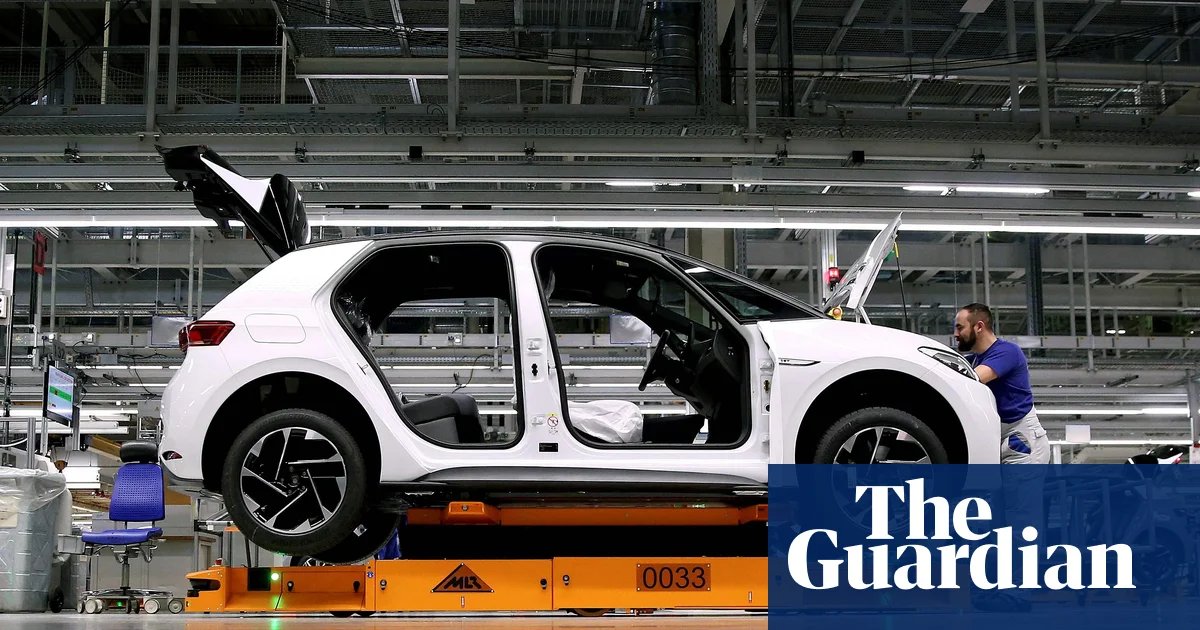
The EU and UK car industries are urging the European Commission to adjust the Brexit trade deal and suspend, for a second time, tariffs on imports of electric vehicles.
They have expressed concerns that they will not be able to meet the conditions set for 1 January 2027 for tariff-free sales. This is because of strict rules of origin over what products can qualify for tariff-free trade under the EU-UK Trade and Cooperation Agreement which has applied since 2021.
Under the 2020 Brexit deal, 55% of a car’s value had to be made in Europe by 1 January 2027 to avoid tariffs, but 70% of the battery pack and 65% of the battery cell also had to be made in Europe.
It was originally envisaged that 30% of battery packs and battery cells would be made in the EU or the UK within years of the deal – with the rules of origin regime incentivising investment in domestic battery manufacturing. By 2023, it was clear this was not the case, partly because of Covid and partly because of shortages of semiconductors caused by Russia’s invasion of Ukraine.
Under mounting pressure from the car industry, the European Commission agreed to suspend the rules for three years until the end of this year.
But with seven months to go, the industry has told the commission that it cannot meet the “made in Europe” battery targets this time either.
Jonathan O’Riordan, international trade director at ACEA, the European Automobile Manufacturers’ Association, said the industry had forecast that 60% of batteries across all segments, from cars to trucks, would be made in Europe by 2027 when the tariff schedule was first suspended in 2024.
It is now estimated that by 1 January 2027 “just under 20%” of batteries will be made in the EU, said O’Riordan.
In the UK, the level is higher, but still below targets, according to industry estimates.
In Brussels on Friday, ACEA’s director general, Sigrid de Vries, said “the battery drive train development in Europe was far too slow” and they needed to see a “policy shift” at the European Commission to accelerate the transition.
Mike Hawes, chief executive of the UK’s Society of Motor Manufacturers and Traders (SMMT), said: “Battery supply chains are still not ready to meet these stringent requirements, which were based on assumptions that have not materialised despite major investment.”
He added: “The UK and EU must now find a pragmatic solution that avoids self-defeating tariffs on the very vehicles consumers are being urged to buy, while safeguarding investment in domestic battery capabilities.”
Struggles in the EU and the UK to ramp up battery production have not just been hampered by the stranglehold China has on critical raw materials, including lithium and the refined version needed for battery cells.
“The cost of battery manufacturing is very high, still 30% higher than in China,” said O’Riordan.
While the European Commission has introduced several laws to help promote production, setting up local industry is costly and time-consuming.
To get from opening a mine to producing battery-grade lithium can take several years. “To open up a mine and build a fully fledged production chain – that’s maybe $750m,” Stefan Scherer, the boss of Europe’s only lithium factory, has said.
Hawes said: “With wider geopolitical pressures and the EU’s ‘Made in Europe’ push adding further strain, both sides must lock in a bilateral commitment that protects our long-term automotive partnership and Europe’s wider competitiveness.”
A spokesperson for the European Commission said: “Discussions on these and related topics can take place within the framework of ongoing EU-UK negotiations”, adding that it was “in constant contact with stakeholders” in the EV sector “to assess their preparedness to meet the rules of origin”.
The industry’s pleas come amid fears that over-production in China and the favourable exchange rate is causing a series of rolling crises for manufacturing and will ultimately lead to cannibalisation of European industry.
European leaders will meet on 18 June and China is one of the items on their agenda.