dailynewsnblog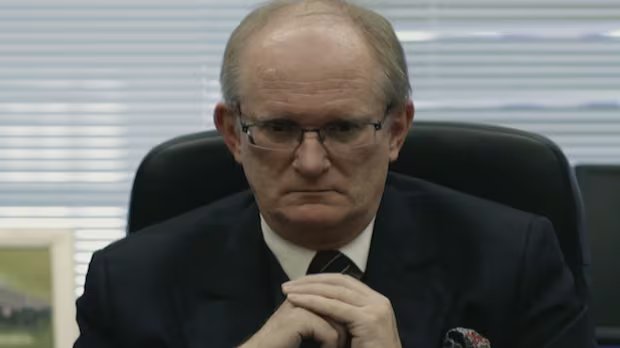
One by one, the pins have been knocked out from under West Vancouver businessman Fred Sharp. He was ordered to pay the equivalent of more than $70 million to the U.S. government and $2 million to Quebec’s securities regulator for his role in schemes to manipulate share prices. He’s banned from stock markets in Canada. His bank and brokerage accounts were frozen and ordered to be seized. Known as the Canadian mastermind in the Panama Papers, Sharp has lost case after case in court.
But Sharp still has his freedom: Despite a push within the Canada Revenue Agency years ago to criminally investigate him, he’s never been charged in Canada. And while the U.S. Justice Department indicted him two years ago for securities fraud and conspiracy, there is no public evidence of an effort to extradite him.
Former financial crime investigators who spoke to CBC News say it’s not unusual for Canadian authorities to prefer that people accused of committing cross-border white-collar offences out of Canada be charged and tried in the U.S., because of the uphill battle to prosecute such cases in Canada.
“There is a belief that criminal cases, including complex white-collar cases, can be dealt with much more efficiently in the United States,” said Peter German, a lawyer, anti-money laundering expert and the RCMP’s former head of financial crime.
But that requires the defendants be arrested and brought to a Canadian court for an extradition hearing, and — five years after Sharp was first charged in the U.S. — that has not happened. It’s not clear why.
Canadian kingpin in Panama Papers
When the Panama Papers were publicly revealed 10 years ago this month, Fred Sharp emerged as the leader of a Vancouver-based organization that helped wealthy Canadians move tens of millions of dollars through tax havens. A self-styled private banker with offices in the city’s downtown, Sharp was the Canadian agent for Mossack Fonseca, the Panamanian law firm at the centre of the huge leak of financial records.
Documents in the leak showed his business, called Corporate House, helped register or administer more than 1,100 offshore entities for clients. A CBC investigation at the time found his company was known as the “go-to” investment firm for wealthy Canadians wanting to keep assets private and offshore to minimize their tax burden.
It’s been mostly downhill since then for the former lawyer and occasional short-film actor. The Canada Revenue Agency started auditing him and several clients and employees shortly after the Panama Papers revelations. Sharp and his associates contested those audits, filing more than 90 lawsuits against the CRA, but lost in Federal Court and on appeal.
A year later, Quebec’s stock-market regulator, the Autorité des marchés financiers, or AMF, filed allegations that Sharp and four other men had engaged in an illegal, multimillion-dollar pump-and-dump scheme on the shares of a mining company called Solo International. Sharp and three others challenged the AMF’s jurisdiction all the way to the Supreme Court of Canada and lost, and last month the AMF’s tribunal found against them and imposed fines totalling $3.6 million.
In audio recordings presented as evidence at the AMF hearings, Sharp can be heard instructing his private banker in Switzerland to take steps that seem to have helped run up the price of Solo’s stock — which Sharp and his associates clandestinely almost fully controlled, the tribunal found.
Joven Narwal, a Vancouver-based lawyer for Sharp, said the tribunal’s ruling will be appealed.
Then in 2021, the U.S. Securities and Exchange Commission (SEC) and the FBI filed civil and criminal fraud charges against Sharp and several others from British Columbia, alleging a long-running conspiracy to pump and dump dozens of penny stocks trading on U.S. markets.
They alleged the scheme involved Sharp and associates setting up and running a network of offshore shell companies and accounts around the world that they rented out to clients. Secretly colluding, the shell companies would each acquire a stake in a given publicly traded company that was below the ownership threshold — usually five per cent of shares — requiring they publicly disclose their holdings. But then the shell companies would collaborate to pump up the stock’s price and offload it to an unsuspecting public.
The fraud netted more than a billion dollars in profit between 2011 and 2019, according to the SEC.

Sharp never contested those civil-fraud allegations in U.S. court and a default judgment was entered against him in 2022, in which a judge ordered him to pay $52.9 million US in fines, interest and repayment of ill-gotten gains (known as “disgorgement”).
“Over a decade, Sharp functioned as the mastermind of a network of services designed for the sole purpose of facilitating fraud. His schemes were planned as ‘masterly stock manipulations,'” the SEC said in a court filing at the time, quoting what it described as Sharp’s own writing.
The U.S. court’s findings included that Sharp provided an encrypted communications system, using devices dubbed “xPhones,” to his clients, operating on servers based in Curaçao, and that he told one client in an xPhone message that Corporate House’s offering “is comprehensive; it is not limited to trading. It includes payments, loans, private placements and keeping clients out of jail.”
The SEC then went after Sharp’s and his associates’ assets in British Columbia. Sharp appealed, lost, and is now once again attempting to appeal to the Supreme Court of Canada.
“Mr. Sharp has availed himself of the lawful means open to him to challenge these proceedings, as any person in his position is entitled to do,” his lawyer Narwal said, referring to all of Sharp’s various appeals.
The SEC wouldn’t say how much of its $52.9-million US order against Sharp it has now collected. Quebec’s AMF said it is taking steps to collect on the civil fines it obtained against Sharp and his co-defendants.
No record of extradition proceedings
Despite his declarations about staying out of jail, several of Sharp’s alleged associates or clients — including two Canadians who are fighting extradition in B.C. — have been arrested and at least one of them has already served time in U.S. prison.
Roger Knox, the British founder of a Swiss asset-management firm called Wintercap, was detained in Mexico City in 2018 and flown to Boston to face securities fraud charges. He pleaded guilty and became a co-operating witness for U.S. authorities against Sharp and others, testifying that Sharp “offered people, banker clients, brokerage accounts to deposit shares where they did not have to declare them to either the regulators or the Canadian tax authorities.”
Knox testified he visited Sharp at the latter’s vacation home in Puerto Vallarta, Mexico, for four or five days in spring 2018.

Sharp’s principal residence is in West Vancouver, one of Canada’s wealthiest municipalities.
CBC News could not find any record of extradition proceedings against him in British Columbia Supreme Court, and neither the Canadian nor U.S. Justice Departments would say whether a request has been made for his extradition.
Through his lawyer, Sharp did not reply to questions about the U.S. criminal charges and any efforts to extradite him.
Commenting generally and not about the Sharp case specifically, German, the lawyer and expert in financial crime, said there could be various reasons the United States would not immediately request to extradite someone it has indicted, including factors like priorities and resources.
“Oftentimes, when it comes to securities cases in the U.S.,” German said, “a decision is made by justice to go after money rather than people.”
Got a tip on this or any other story? Contact reporter Zach Dubinsky: zach.dubinsky@cbc.ca or 416-205-7553.