dailynewsnblog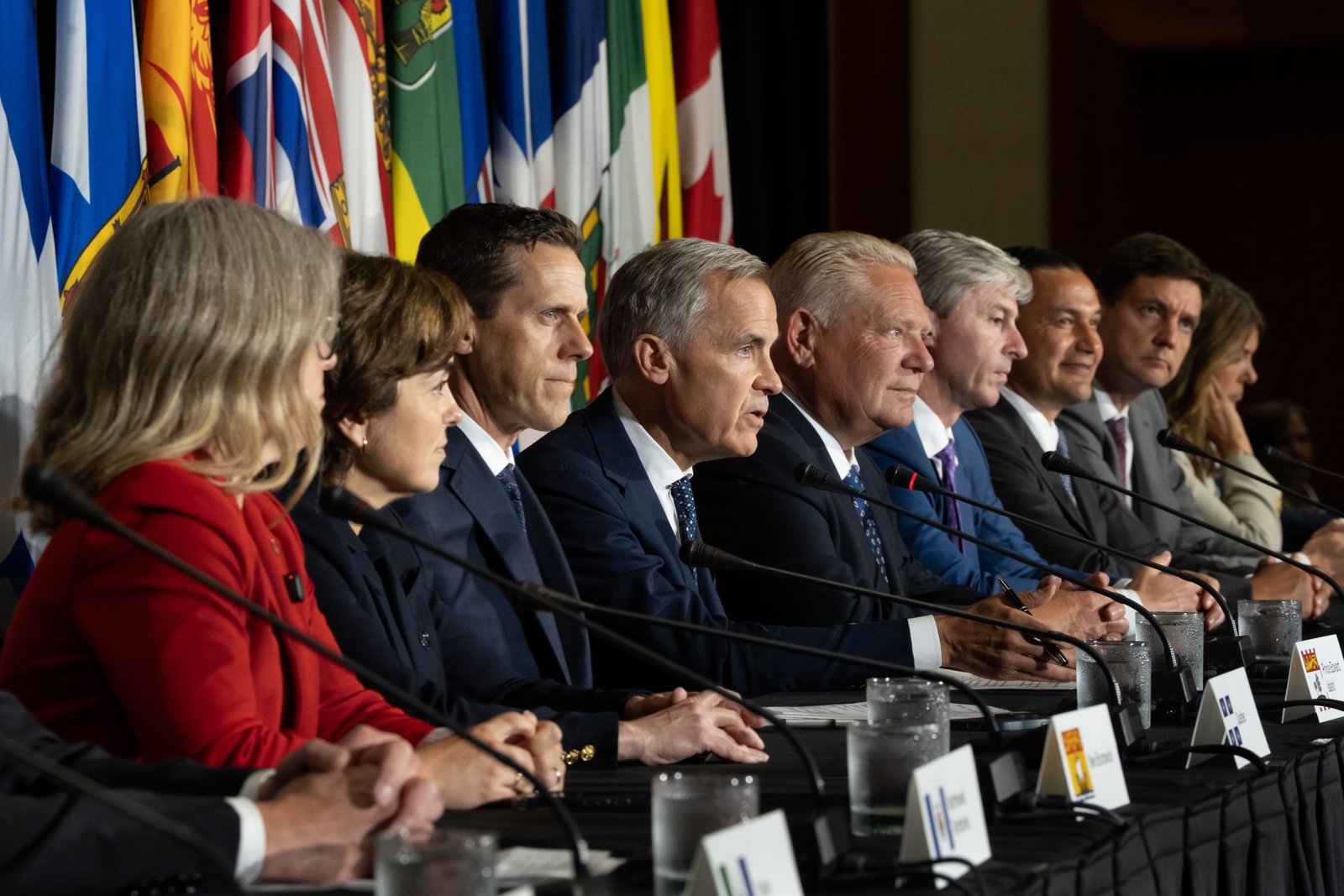
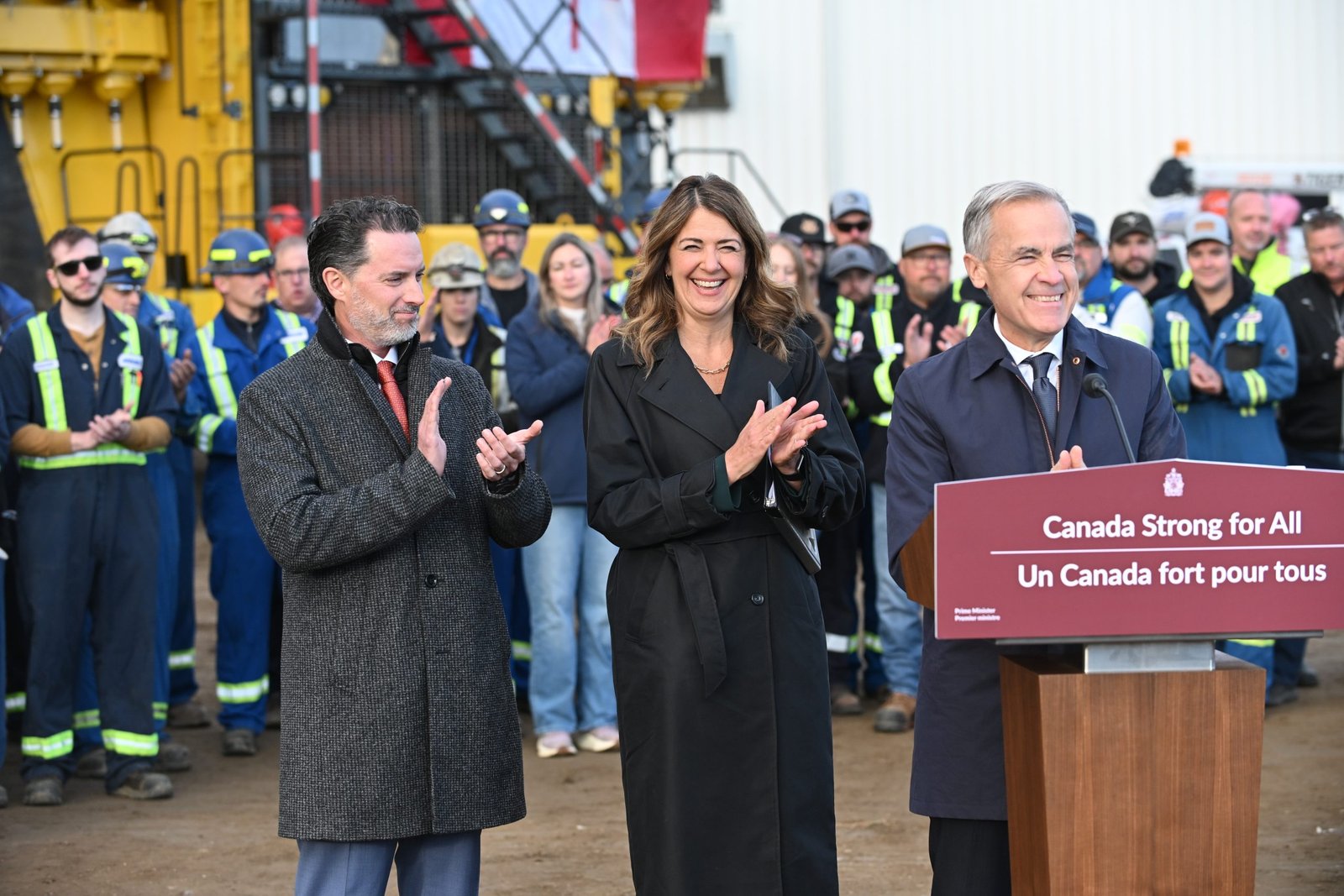
“We need to do what’s intelligent and hit where there’s sensitivity,” Québec Premier Christine Fréchette said Monday alongside Prime Minister Mark Carney.
Prime Minister Mark Carney and at least two premiers won’t rule out targeting energy and critical minerals as Canada weighs going beyond the dollar-for-dollar counter-tariffs already announced in response to 50 per cent U.S. duties on roughly $28 billion of Canadian goods.
The U.S. tariffs exclude energy, potash and some critical minerals, underscoring their importance to American industry.
Ontario Premier Doug Ford said Monday that “everything’s on the table,” including electricity and critical minerals, but that any escalation should be coordinated with Ottawa and the other provinces. That marks a shift for Ford, whose province acted on its own last fall when it ran a U.S. television ad using Ronald Reagan’s words against tariffs, a move that prompted Trump to break off trade talks.
“I can’t do this alone, folks. I need every premier playing on Team Canada, and I’m confident that every single premier will be part of Team Canada,” Ford told reporters. “No matter if it’s our electricity that we ship down there, but many other provinces’ electricity, and other areas that we can really put pain on the U.S. no matter if it’s the oil or if it’s potash or if it’s uranium.”
Ford imposed a 25 per cent surcharge on electricity exports to Michigan, Minnesota and New York last March, then dropped it after a single day when Trump threatened to double tariffs on Canadian steel and aluminum. On Monday he said Ontario could raise power prices again.
“That electricity surcharge is gonna be on the table,” Ford said, though he added that he would hold off for now. “I don’t want to escalate it anymore, but we need to fight back.”

“What I find ironic about this is we’re actually giving electricity to companies to make products to compete against us. That needs to stop. And we’re gonna address that.”
Coordination needed with Québec: analyst
Last year, Canada sent 35 terawatt-hours of electricity to the U.S., representing less than two per cent of total U.S. electricity generation and adding $3.4 billion to the Canadian economy, according to RBC.
But some states are more dependent on Canadian power than others.
Ontario supplies six per cent of Michigan’s electricity needs, much of it is pushed out to neighbouring states, mainly Ohio and Indiana. New York, meanwhile, is reliant on Quebec and Ontario for six per cent of its power.
Ford said the retaliation should target Republican-held states where economic pressure could have political consequences ahead of the U.S. midterm elections.
RBC’s head of climate research, Myha Truong-Regan, writes that Ontario and Quebec would need to have a coordinated strategy “if electricity is going to be an effective bargaining chip with the U.S. administration.”
READ MORE: Canada vows dollar-for-dollar tariff retaliation, suspends trade talks with U.S.
Quebec Premier Christine Fréchette said that Canada should respond by hitting “where there’s sensitivity” while adding she had not yet considered the measures Ford is proposing.
“But nothing’s excluded because this is a new phase that we’re entering now,” she said.
Quebec has less room to manoeuvre, as Hydro-Québec has supplied New York for more than a century and is locked into a 20-year contract to deliver up to 900 megawatts to the state’s grid operator through 2030, which may limit its ability to add surcharges or curtail exports.
Québec solidaire, campaigning in the provincial election, said it would raise Hydro-Québec’s export rates to pressure Washington, part of a tariff-response plan unveiled by party leader Ruba Ghazal on Monday.
Carney insists Canada has leverage
Meanwhile, Prime Minister Mark Carney travelled to Lévis, Que., to announce an $11-billion shipbuilding contract with Davie, repeatedly framing the deal as a reminder of “the many things the United States needs from Canada.”
He quipped that the U.S. has “a handful, and I’m being generous” of icebreakers to Canada’s 20, with the expertise to build more concentrated here.
Asked about retaliation, Carney said the initial focus should be on building the economy, but rejected Trump’s claim that the U.S. needs nothing from Canada.
“We provide them with energy. We provide them with critical minerals. We provide them with key products in their supply chains for the automotive industry and other industries,” he said.
“So we’re staying calm. We’ll stay positive… And yes, if we need to do more, well, we’ll see.”

Posting to Truth Social on Monday afternoon, U.S. President Donald Trump repeated his frequent claim that Canada could not survive without the U.S. and wrote, in part, “much of the Electricity, Oil, and Gas that Canada gets is transported through the U.S.A. Someone should get these clowns to “fall in line” or, the consequences for Canada will be far WORSE!”
Some Western Canadian crude does reach Ontario and Quebec through pipelines that cross the U.S., such as Enbridge’s Line 5, which carries more than half a million barrels of crude oil and natural gas liquids daily from Superior, Wis., through Michigan to Sarnia, Ont.
Canada supplied about 63 per cent of U.S. crude oil imports in 2025 and nearly all of its imported natural gas, according to the U.S. Energy Information Administration.
But oil-rich Alberta has no interest in seeing its energy used as a weapon, with Premier Danielle Smith saying earlier in July that withholding energy exports is “not going to happen,” and warning again on Saturday that retaliation would be costly.
“I know emotionally it feels good to retaliate, I get that,” she said on her radio show. “But when retaliation happens, it means that everybody who is buying products from the United States is now going to face upwards to 50 per cent tariffs.”

Not everyone in the province agrees. In an open letter to constituents Monday, Airdrie-Cochrane MLA Peter Guthrie, leader of the Progressive Tory Party of Alberta, accused Smith of weakening Canada’s position.
“You don’t have to use every lever available,” he wrote, “but you certainly don’t surrender your leverage in advance.”
Ford hopes critical minerals could provide another source of leverage. He said Ontario supplies high-grade nickel used by the U.S. military and manufacturing sectors and suggested restricting access to such resources could form part of Canada’s response if the dispute escalates.
He said that measures involving electricity, fuel, potash, uranium and other strategically important exports would be most effective if provinces and Ottawa move together.
“A couple premiers have a lot of power to protect Canada — massive power,” Ford said. “I can’t speak for them, but we need everyone to be on Team Canada and throw everything and the kitchen sink at them.”