dailynewsnblog

A medal awarded to a high-ranking Royal Canadian Air Force officer is raising questions about this country’s involvement in the U.S.-Israel war with Iran.
Late last month, the Government of Canada announced that Col. David K. Turenne, a former CF-18 fighter pilot, had been approved for the Meritorious Service Cross. That medal recognizes military deeds “performed in an outstandingly professional manner, according to a rare high standard that brings considerable benefit or great honour to the Canadian Forces,” according to its official description.
Turenne won it “for extraordinary leadership and diplomatic skill as director of the Combined Air Operations Center during the Israel-Iran conflict, synchronizing multinational air operations and enabling the safe evacuation of 10,000 personnel from the Al Udeid Air Base, Doha, Qatar, June 2025,” according to the official July 26 citation.
Turenne’s actions came during the Twelve Day War in June 2025 involving Israeli airstrikes on Iranian military and nuclear facilities, backed by U.S. political and operational support.
Kened Sadiku, who speaks for National Defence, said Monday that an interview with Turenne “won’t be feasible.” Sadiku promised more information Monday about what the air force colonel did to win the medal, but didn’t respond before publication deadline.
This is the first time Canadians are hearing about Turenne’s involvement in the conflict, which raises questions about what Canada may have been doing since war broke out again in the region in February.
When asked this past spring, Prime Minister Mark Carney said the Canadian military was not taking part in U.S.-Israel attacks on Iran.
“We are not a party to those actions,” Carney told reporters this past March during a news conference in Australia.
When asked in March if Canada might reconsider if the conflict spreads, Carney said, “one can never, categorically, rule out, participation. We will stand by our allies if it makes sense.”
Around the same time, the Department of National Defence said Canadian military members serving on exchange with U.S. forces in the Middle East remained in their posts but had been assigned other duties outside of the campaign against Iran.
During the March news conference in Australia, Carney described the Iranian regime as one that had “oppressed its people” for almost five decades, killed its own “in large numbers, even in recent weeks,” “exported terrorism for decades across the Middle East for decades,” and killed “scores of Canadians” when the Islamic Revolutionary Guard Corps shot down Ukraine International Airlines Flight 752 from Tehran to Kyiv on Jan. 8, 2020, shortly after takeoff, killing all 176 occupants on board.
Canada has seen a “decline in transparency about a number of different aspects of defence” in recent months, said David Perry, who heads the Canadian Global Affairs Institute.
“They don’t post as much information; they’re not as communicative about it,” said Perry, a defence analyst.
“There are probably also some specific sensitivities to things in the Middle East given the dynamic there and the relationship with the Trump administration,” he said.
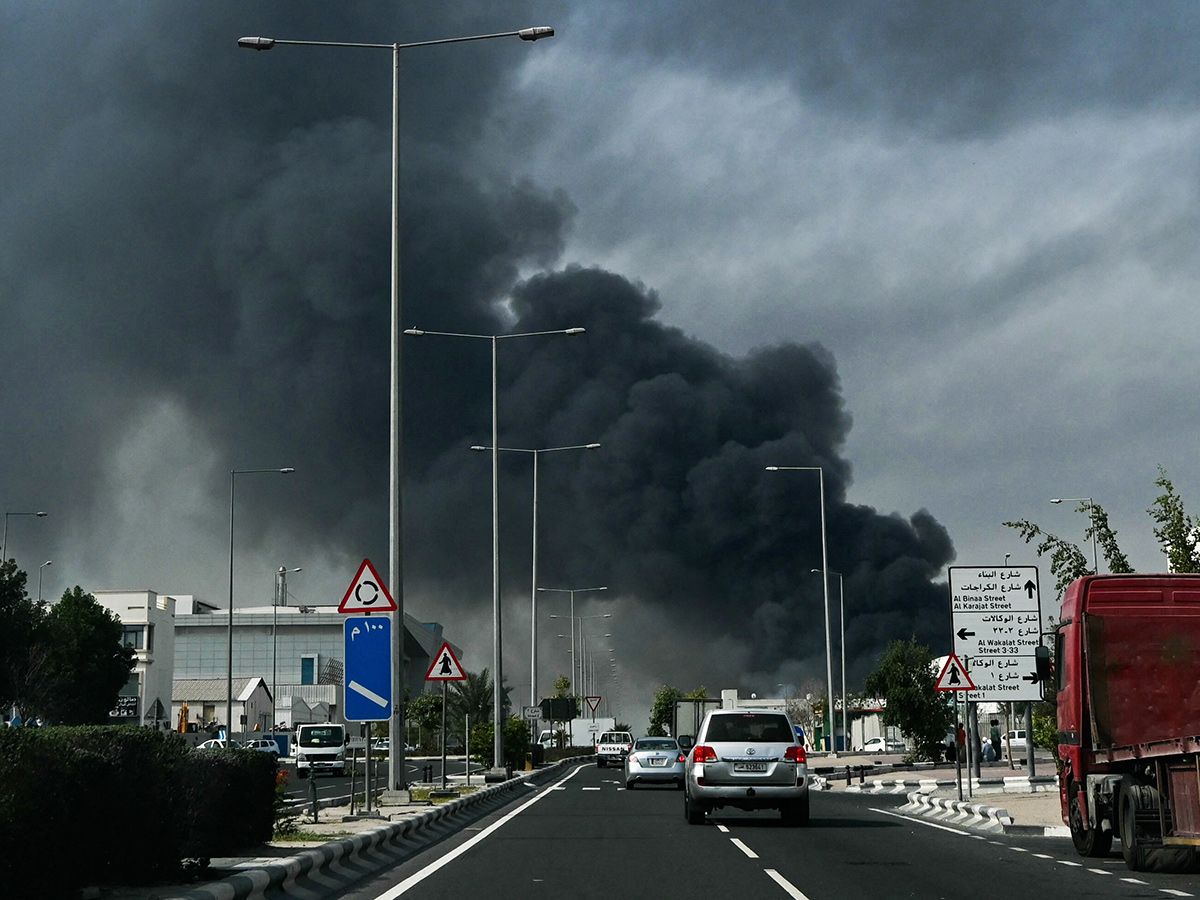
Perry pointed out that National Defence didn’t want to talk about whether or not Canadians were posted in Kuwait after an Iranian missile slammed into a Canadian airbase nicknamed Camp Canada in Kuwait on March 1, 2026, even though the department’s own website flagged the country as a spot where Canadians were conducting operations.
“From my vantage point, the lack of transparency is generally counterproductive,” he said. “But in some cases around the Middle East it’s become just silly is the best way of putting it.”
The Canadian government has an obligation to let Canadians know what their military is doing, Perry said. “If we’ve got people over there that are doing things worthy of receiving fairly significant citations and awards, then we should be able to explain to people what it was that got them the awards and talk about it.”
Turenne’s actions to evacuate thousands of military personnel from Qatar “were indeed a big deal,” retired major-gen. Scott Clancy said Monday.
As initial strikes on Al Udeid took place last summer, U.S. Central Command decided to move its Combined Air Operations Center (CAOC) “back to the U.S. because it posed not only a significant threat to the hundreds of staff and support working there being in the region within striking distance of Iran,” Clancy said, noting that their presence in Qatar would also draw fire to an allies’ territory.
As the CAOC director, Turenne’s job last summer would have been to coordinate the move to Shaw Air Force Base in South Carolina, “as well as sustain the mission in theatre,” said Clancy, who was director of operations for the North American Aerospace Defense Command (NORAD) in Colorado Springs until 2021.
“This is a highly complex operation involving well over a thousand folks, as well as all of the equipment and logistics to move them, all while splitting forces to sustain the operation while moving.”
Removing “that target availability saved a significant loss of life as it would have represented the most lucrative and highest payoff target for Iran and they would have used every resource — ballistic missiles, drones, cruise missiles, and terrorist attacks — to strike it,” Clancy said.
Clancy has met and worked with Turenne in the past.
“I have found him to be an officer of the highest calibre and competence,” said the retired major general. “Not only have I been impressed with his competence as an expert in airpower application, but he is a leader of great empathy and professionalism.”
What the medal for Turenne says about Canada’s role in the U.S.-Israel war on Iran “is complex,” Clancy said.
“The Canadian government, and by extension the Canadian Forces conducted no planning, execution nor subsidiary operations to support the U.S. or Israel in the conflict,” he said.
“However, we have officers on exchange throughout the world, including extensively with the U.S., which remains our closest and most important military ally,” Clancy said.
“Although the Canadian population has distanced themselves from the U.S.,” he said, the relationship between the two militaries “has done nothing except flourish.”
Clancy’s keen on developing Canada’s military capability and meeting our defence commitments.
“For decades I have been staunchly advocating for exactly these things in lock step with our American allies,” he said. “As well, in order to effectively lead, to be the professionals that we are demanded to be by the Canadian population, you need to have the experience of the best, and for Air Forces that is the (United States Air Force), and by extension the air forces that are being employed in combat worldwide.”
Canada’s participation in Central Command CAOC goes back to the conflict in Afghanistan, Clancy said, noting it’s recognition by the U.S. “as to the key role that Canada plays as an ally, as well as the competence of the multiple senior officers that have served there.”
Ceasing the participation of Canadian exchange officers with U.S. forces that are about to engage in combat would hurt the trust between the two militaries, he said.
“We would never be welcomed back and we would lose that professionalization ability which could cripple our ability to fight the next conflict,” Clancy said. “Furthermore, the ability of Canada to influence U.S. global military operations is also present when we have presence there.”
When Clancy was directing operations at NORAD, he said his U.S. counterparts engaged him “on the conduct of the highest levels of deterrence being conducted by the U.S. globally and I was in a position to shape, enable, influence and even inform. This all goes away if that individual does.”
Although Canada might not agree with the timing of the conflict with Iran, “striking at this awful regime, specifically responsible for the October 7 attacks, thousands of strikes by Hezbollah and Hamas, and the indiscriminate bombing of civilian targets either through their proxies or directly themselves is ample rationale in my mind to allow this individual to continue to serve there,” Clancy said.
When Canadian officers are on exchange with other militaries, they should serve to the best of their ability as if they “were part of that nation’s forces and demonstrate the professionalism and leadership of Canadians,” said Michel Maisonneuve, a retired Canadian lieutenant-general, who served as assistant deputy chief of the defence staff.
“I was on exchange as a lieutenant with the French Army 1978-1980 and would have fought with/for them against the Soviet hordes with no reservation,” Maisonneuve wrote Monday in an email.
Our website is the place for the latest breaking news, exclusive scoops, longreads and provocative commentary. Please bookmark nationalpost.com and sign up for our daily newsletter, Posted, here.