dailynewsnblog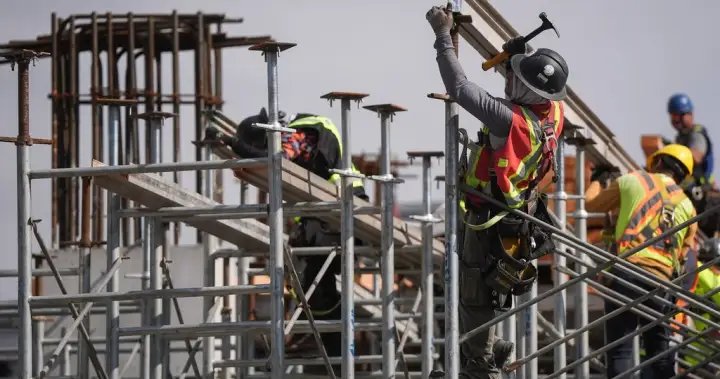
Canada’s provinces and territories plan to create a single nationwide standard for workplace training that Ontario’s labour minister touts as a “one Canada, one standard” plan.

The plan will see the 13 jurisdictions work to harmonize training for working at heights and mobile lifts by Jan. 1, 2027.
The proposal was put forward by Minister David Piccini and endorsed by all provinces and territories, along with the federal Secretary of State for Labour John Zerucelli.
“I think it was a fundamental recognition that a certification earned anywhere should mean something everywhere and that provincial borders shouldn’t be provincial barriers,” Piccini told Global News in an interview on Monday.
The provinces and territories will also consult on training for hoisting and rigging, plus trenching and shoring, by the same date. In addition, work will be done on certifications for construction supervisors and entry-level workers by May 2027.
Due to retraining requirements, a construction project in need of 1,500 out-of-province workers could lead to as much as $270,000 in costs and about 10,500 hours in lost productivity, according to an Ontario government official, who spoke on background.
Piccini told Global News that factors like U.S. tariffs mean action must be taken amid the push for nation-building projects.
“We were really united in our shared commitment to nation build and to put forward a proposal of one Canada, one standard for health and safety harmonization,” Piccini said.

Canada’s Building Trades Unions (CBTU) encouraged harmonization during Friday’s meeting, telling the ministers a “political momentum” was needed to ensure it happens quickly.

Get breaking National news
Get breaking Canada news delivered to your inbox as it happens so you won’t miss a trending story.
“We all know that in the current economic and geopolitical context, Canada needs to build a more diverse, resilient and efficient economy. Governments, private and public sector organizations, and unions: we all bear part of the responsibility for driving this progress forward,” said CBTU executive director Sean Strickland.
Strickland went on to note Canada’s premiers had committed to advancing labour mobility by prioritizing health and safety standards in the construction industry by fall 2026.
Zerucelli told Global News that training for working at height and mobile elevating work platforms were chosen as the ones to harmonize first because of stakeholders, including the workers themselves.
“Everybody has different working-at-heights regulations, it’s something that people can gravitate to and it’s something that stakeholders themselves said would be a challenge,” Zerucelli said in an interview. “It was driven by workers about something that they were seeing, about the costs that were connected to construction companies, to unions, to workers.”
Labour ministers from multiple provinces and territories stand for a photo during a meeting April 10 on harmonizing workplace training standards.
Ontario Ministry of Labour
Harmonization does have its limits, according to the Canadian Construction Association, if underlying issues aren’t also tackled.
“While these efforts could result in some reduction in training costs for employers, those savings are likely to be eclipsed by the rising costs of construction materials and business operations as a result of domestic and international economic circumstances,” said Rodrigue Gilbert, president of the association, in an emailed statement.
He went on to say the industry is facing a shortage of approximately 108,000 workers over the next 10 years and urged the government to streamline entry into the sector.
Piccini said he recognizes some may be concerned the move could “weaken” standards, but said even these first steps move things forward.
“How do you eat an elephant? One bite at a time,” he said.
The ministers will meet again in the fall in Nova Scotia and then in Saskatchewan in the spring to discuss the progress made.
© 2026 Global News, a division of Corus Entertainment Inc.