dailynewsnblog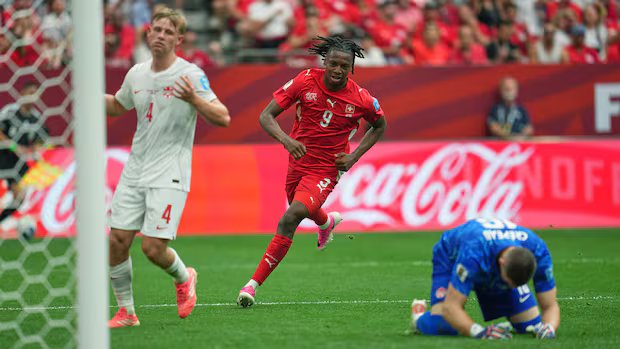
It’s almost painful, sometimes, how so much can hinge on so little.
Canada’s men lost to Switzerland 2-1 in a sweltering B.C. Place on Wednesday afternoon, ending their hopes of continuing their historic World Cup campaign at home.
The win gave the Swiss first place in Group B, a week’s rest, and a preferable Round of 32 game in Vancouver. Canada slipped to second with its first loss of the tournament and will now head to Los Angeles for Sunday’s matchup against the second-place team in Group A, almost certainly Korea.
The fate-turning goal came early in the second half, when Canada’s otherwise impressive backline was pulled too far to the left during a relatively innocuous-seeming Swiss attack. The shift left Rubén Vargas, among Switzerland’s most lethal finishers, wide open in the box.
When the ball came across to him, Canada’s wild scramble to the right came too late, and he made no mistake with his chance.
That was it. That was all it took for fates and paths to start to change.
With Canadian substitutes waiting to come on, Johan Manzambi scored Switzerland’s second goal in the 57th minute after more uneven coverage.
Maxime Crépeau got a piece of it and would have liked to have done better, but his disappointment after felt more global than specific. Canada had needed only a draw to win the group; even a draw suddenly felt out of reach.
Promise David, who in May had foretold in an interview with CBC that he would score in Vancouver — “I have this weird thing where I can call out goals before I score them,” he said — came on as a substitute and kept his word before the stadium announcer had a chance to announce his arrival in the game.
That lit up the capacity crowd and Canadian hopes for a late equalizer, but it didn’t come, even as a relentless pressure and an ovation of appreciation for it did.
At the same time in Seattle, Bosnia-Herzegovina beat Qatar, 3-1, to finish third in Group B and eliminate the Qataris.
Now head coach Jesse Marsch, who had been open about his desire to stay in Vancouver, will need to rally his team for its mission to Los Angeles instead.
It’s important, just now, for him and his men to remember that they have still made history, and they can still make more. It will just be a different one than they had allowed themselves to imagine.
Before this World Cup, Canada had never earned a point. During a glorious two-week run at home, they took four, including last week’s spectacular dismantling of Qatar.
If Wednesday’s loss felt like a down note — and it really did feel like it was end of something before it started to feel like the beginning of something else — it’s only because Canada is finally playing World Cup games that matter.

Less than an hour before kickoff, Ismaël Koné was wheeled down the tunnel and emerged to loud cheers at a still-filling B.C. Place. He waved to his supporters, the way he had waved to them last week, when he had been wheeled past them in the other direction, with a freshly broken leg.
Once his wheelchair reached the bench, he asked to come out of it. Now repaired but still healing, he was handed a pair of crutches, and he made his way to a row of blue coolers. Someone wiped one down with a white towel, and he sat down on it, doing anything he could to look and feel a little more like normal.
Nothing felt normal. Canada’s men had no precedent to rely upon, no happy history they could mine for inspiration. They were about to play the most important game of their lives, and there was no lie they could tell themselves to make it feel otherwise.
The first half, perhaps expectedly, was nervous and physical, steeped in the sort of tension that invites headaches.
The Swiss dominated possession and had the first good chance, when Breel Embolo was set free on a breakaway in the 11th minute. Crépeau came out and made himself big for a brave, stunning save that he would do better to remember now than the goals he later allowed.
Canada’s defence, once again, had played with poise and determination, and their early steadfastness allowed the depleted midfield — Nathan Saliba started for Koné, and Mathieu Choinière took Stephen Eustáquio’s place — to grow into their surprise roles. Canada even earned some reasonable attempts after the game started to settle into a chippy, sweat-soaked duel.
But Switzerland, ranked 17th to Canada’s 29th in the world, is not Qatar, and their many superiorities — their technical ability, their organization, their experience, their health — began to show, providing a lesson that’s maybe come right on time.
Dreams might come true at the World Cup, but they can also disappear in short order. And the teams that get to realize theirs are sometimes the quickest to find a new one.