dailynewsnblog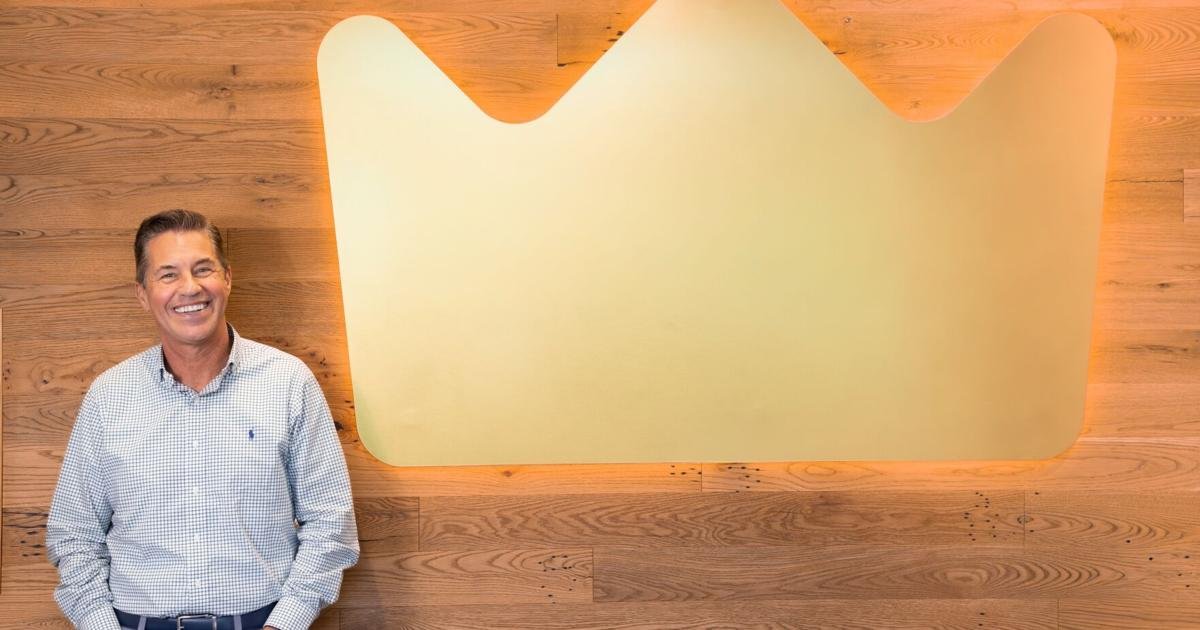
Tom Curtis has been second before — but not for very long.
The president of Burger King in the U.S. and Canada is in the midst of revamping the company he’s been running for the last five years in a bid to reach North America’s burger throne.
So far, his plan is on track.
Since being named president in 2021, the restaurant chain has upgraded stores, changed its menu, improved relations with franchisees and invited feedback from customers via a dedicated phone line.
“We’ve had over 71,000 incoming calls, and one of the first ones I took was from a Canadian from Richmond Hill, who wanted to tell me about his local restaurant, which he wasn’t satisfied with,” Curtis says. “Now, Mike and I are pretty good friends; he’s sent me messages on LinkedIn about the transformation.”
And the numbers suggest it’s working.
The chain has already seen a four per cent spike in sales in Canada in the first quarter of the year, during which time the industry experienced a two per cent decline.
Burger King has also recently upgraded the Whopper and made changes to its french fry, onion ring and chicken nugget recipes — all without increasing prices.
Ottawa native Matt Milton, who cut his tech teeth at IBM before joining Microsoft last summer,
The Ashville, N.C. native joined the industry as a student delivering pizzas for Dominos. After earning a BA in economics from Emory University, Curtis bought his first of seven Domino’s franchises before moving into the corporate office in 2006.
As Domino’s skyrocketed from a distant second behind Pizza Hut to the world’s top purveyor of pies, Curtis sought a new challenge at Burger King, where he was hired in 2021. Now, he’s looking to drive another second place brand to the top of North America’s hamburger food chain.
Burger King was founded in Miami in 1954 and arrived in Canada in 1969. Today, the chain has nearly 20,000 locations, including 377 in Canada.
The Star spoke with Curtis from Burger King’s head office in Miami about menu upgrades, how Canadian tastes are inspiring global recipe changes, and how he plans to win over the 11 million Canadians that have never set foot in one of his restaurants.
Did you always want to work in the restaurant industry?
My dad told me that becoming a doctor would make me rich, so that’s what I originally studied, until I started organic chemistry my freshman year and quickly learned that I had to find something I was passionate about, not just something lucrative.
I had been working in restaurants since I was 15, starting as bus boy at a truck stop in Asheville. By then, I was working as a delivery driver for Dominos to pay for school, and I always loved the restaurant environment and camaraderie.
How long did you work for Domino’s?
I started working for Domino’s in 1984 as a delivery driver.
After I graduated, my dad said it was time to get a real job, so I went to work for Prudential Financial for a few months, but I really didn’t like cold calling. It turns out high-net-worth individuals weren’t interested in the financial advice of a 24-year-old.
I was still working for that Domino’s part time and learned they had an entrepreneurship program for people like me with no money. They basically helped finance your first franchise at the wonderful interest rate of, like, 18 per cent.
I opened my first restaurant in 1987, and was a Dominos franchisee until 2006.
What happened then?
I ended up owning seven restaurants in Connecticut and intended to be a franchisee my entire life, but by the early 2000s I was looking to do something different. My wife felt I was too absorbed in these restaurants and suggested I find something that offered more balance.
I had always wanted to be a teacher, like my dad, and I thought maybe I could teach other Domino’s franchisees how to be successful.
We quickly learned that it wasn’t being an owner that made me work so much, it was my passion for what I did. My wife came to realize that she’d rather see me happy and working hard than unhappy and not willing to put so much energy into what I do.
I started consulting for franchisees in Maine, New Hampshire and Vermont in 2006, and then more urban areas in the Northeast, then became director for the Northeast.

After 186 years, Canada’s oldest privately held company must be doing something right. Bernard
From there Domino’s asked me to run a project in Seattle, where we tried different things to help Domino’s become the number one pizza brand, because we were a distant second to Pizza Hut.
We added a bunch of things to menu, all of which failed, but we also remodelled the restaurants and built out the market. From there I became vice president for the Western United States, and ended up at the head office in Ann Arbor in 2011, where I had various roles until ultimately becoming executive vice president of global operations.
Why the switch to Burger King?
Before 2010 Domino’s wasn’t very relevant, and over the decade it became the number one pizza brand on the planet. As we entered the 2020s, I realized that being number one wasn’t as much of a thrill.
Back in the 1970s and 1980s Burger King had a great brand story with flame grilling and the Whopper and “having it your way,” but the brand had been in decline since. The buildings were tired, the experience was substandard, and like many I had stopped going after loving it as a kid.
When I got the call from Burger King, it was an exciting prospect. I was fortunate to be part of something transformational at Domino’s and wanted to experience that again.
What has that effort looked like?
When I first came here, I had to build an operational plan as COO, and was then made president a few months later, and was able to bring that plan to life.
At its heart was respect, admiration and understanding of franchisees. The relationship had become very transactional — both sides were just looking to get as much as they could from the other — but the best relationships are where you’re trying to give more than you get.
That’s what I said to our franchisees and they kind of poo-pooed it, but we have lived that philosophy since. Often franchisees need help, such as financial assistance, while they’re going through a difficult period. If they love Burger King, if they love their community, and if they spend time with their teams, we’ll give them the assistance and won’t necessarily expect anything in return.
That creates a willingness by franchisees to go the extra mile for the brand, and that dynamic has really propelled us forward in the last few years.
How has growth differed on this side of the border?
In 2022 and 2023 Canada was the faster growing market, but in 2024 and 2025 the United States pulled ahead. We were still doing better than our average competitor, but we were not satisfied.
We spent most of 2025 figuring out how to elevate the menu on both sides of the border, which we rolled out at the start of this year.
In the U.S., the turnaround is based on nostalgia. In Canada, it’s based on reaching the 11 million Canadians who’ve never been to Burger King. We needed to have a big enough message to get them to try it.
Through the research we determined how to elevate not only the Whopper, but also the french fries, onion rings and chicken nuggets.
What we learned is Canadian consumers want more of a restaurant-style onion ring that uses the whole onion, and a thicker cut chicken nugget in tempura batter. We also found Canadians wanted more of a shoestring french fry with a little bit of potato skin at the end.
What’s new with the Whopper?
One of the ways that we elevated the Whopper was putting a creamier, more premium mayo on it, which we found in Canada. So, the mayonnaise didn’t change in Canada, we just took it to the U.S.
The more important elevation is a premium glazed bun. It’s fluffier — and frankly more expensive — and people have really noticed.
The other important change was more expensive packaging. We now have a half-wrap, and a box. The half wrap holds it together when you’re in the car, where a lot of people eat fast food, and the box prevents it from getting smooshed at the bottom of the bag.
Both have made a big difference, and both were inspired by our listening campaign, where we invited feedback from customers. We’ve gotten over 71,000 calls, and I personally answered 1,800.
Have the menu upgrades increased prices?
A lot of these ideas added costs.
We discussed taking the patty size down, given that beef prices are at an all-time high, but if we’re going to be number one, we need to have a premium product. We ultimately felt that in a world of shrinkflation, the best way to win was to do the opposite.
Ultimately our franchisees voted and agreed to hold prices on the Whopper, and I could not be more appreciative of their willingness to bear the higher costs themselves.
Did it work?
The only way to outrun inflation is by growing foot traffic. Sales were up four per cent in the first quarter of the year, despite a slowdown in the industry. That sounds to me like success.