dailynewsnblog
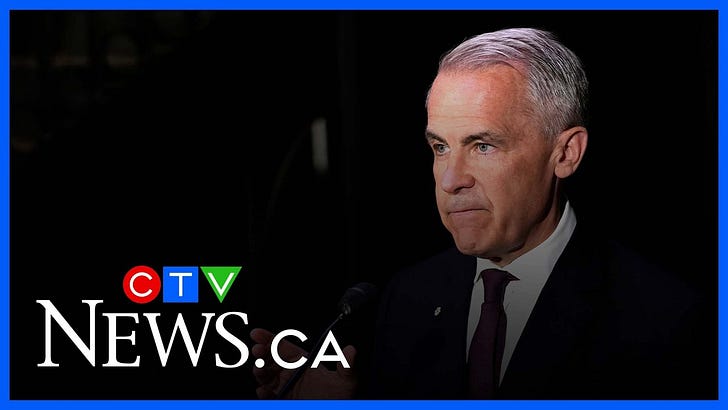
It is cliché to say that governments only plan as far as the next election, but it is often true, so when the Carney government announced this week that we will finally be establishing our first national sovereign wealth fund, it should be a very big deal for a very long time.
I say it should be rather than it is because the source of Canada’s funds differs from the world’s best known fund, Norway’s Government Pension Fund Global. Norway, with a national population similar to the province of Alberta, has been putting profits aside from its oil since 1990. In just 36 years, the fund has grown to 20 trillion Norwegian Krone, about $3 trillion Canadian dollars — comparable to Canada’s entire GDP.
In Canada, our natural resources are provincial, and we have a long-running habit of nationalising the investment and expenses while privatising the profit from their exploitation. Alberta alone has an estimated 170,000 abandoned oil wells, over 10,000 of which are classified as orphan wells, whose cleanup will ultimately fall back on the government. Capitalists like to call this type of expense redirection “externalising” — that is, the profits are internal in the moment, while the residual expenses are left to an external entity, generally the government which, of course, is all of us.
Staying with Alberta, the province built a sovereign wealth fund starting in 1976 using small amounts of their resource royalties, then promptly squandered it. The “Heritage Savings Trust Fund” has not grown appreciably over the 50 years since its inception, when inflation is factored in. Counting only inflation, the $2.1 billion initial investment deposited in its first year alone would be worth $11.1 billion today. With oil revenues being fed in only until 1987, the fund reached less than $19 billion by 2022. After a half a century, it now holds about $32 billion in assets, much of the recent growth of which is from direct financial contributions from the government, rather than from any particular long term strategy.
Norway’s fund started 14 years later based on similar rates of oil production with a population of similar size and is worth 100 times as much as Alberta’s. The only real difference is attitude, and Alberta offers a cautionary tale.
From the get-go, it is clear that the “Canada Strong Fund” will not be the same as Norway’s Government Pension Fund. The federal government does not have direct access to resource royalties. It is also clear from who is creating it that the inspiration comes from a far more practical — and profitable — place.
While the Conservatives regularly deride Prime Minister Carney for his background at Brookfield Asset Management while also investing in the same, this is one time that private corporate experience may truly benefit the public.
With an initial investment of $25 billion over three years in borrowed public funds, the Prime Minister appears to be intending to create a public version of Brookfield. While it might be remarkably profitable for the government simply to hand over $25 billion to Brookfield to invest on the public’s behalf, and no doubt there have been internal joking about saving time, energy, and money by doing exactly that, it would obviously not fly.
From the government’s own press release explaining the fund:
Designed to give all Canadians a direct stake in the Build Canada agenda, it is a Government of Canada fund, but, more importantly, a fund that belongs to all Canadians. The Fund will invest in strategic Canadian projects and companies alongside other investors—with a clear objective to achieve commercial returns to build the wealth of Canada.
The gamble is that the fund will make money at a faster rate than the interest we are paying on the initial investment. It is also being set up in a way that Canadians can invest in it directly, not only through the collective, growing the fund and its power. In other words, it really is intended to be a public version of Brookfield.
While the whole idea of “passive” or “investment” income is a myth I will come back to in a moment, the idea that Canada will deliberately and consistently put money aside to create a national endowment fund is nothing short of exciting, and the risk is far more political than it is financial.
The key will be putting in safeguards to make sure that future governments don’t look at the fund as a kitty to be raided rather than a growing fund from which the profits are meant to be invested more than spent. I have great faith that Mark Carney will be a conscientious steward of this fund. I have no doubt, on the other hand, that a subsequent Prime Minister Pierre Poilievre would drain it into general revenues in an election year and claim to have balanced the budget.
We also have to consider that investment income, passive income, or whatever other term you want to use for it is, for the most part, not a real thing. That income comes from the extracted value of the labour or resources of others. Somewhere along the chain of money is someone doing the work and keeping less than its value, or there will be nothing to kick upstairs to the investor. This, and borrowing non-existent money through fractional reserve banking, is at the very core of capitalism.
Rental properties offer passive income for the landlord, but the income for the tenant required to feed that “passive” income is decidedly active. Coca-Cola famously pays more to Warren Buffet in dividends than it does in salary to its own CEO, but every dollar of that comes from a supply chain made up of working people producing and distributing the products coupled with consumers spending money they had to work to earn, to create that money. Resource revenue requires resource development, resource extraction, resource distribution, and finally resource consumption, which actively feeds money back into that system.
Canada is vastly overdue a sovereign wealth fund, and it has enormous potential for Canada if developed and managed properly, in both a business and an ethical sense. It must be future-proofed, with a lifetime measured in generations, not election cycles.
For it to truly create collective sovereign wealth, we have to remember that the most important shareholder in this fund, regardless of private investors who get on board, is the country as a whole. Any wealth extracted through this collective investment must serve the singular purpose of collective benefit over individual profit.
That will be the key distinction between the Canada Strong Fund and private firms like Brookfield.