dailynewsnblog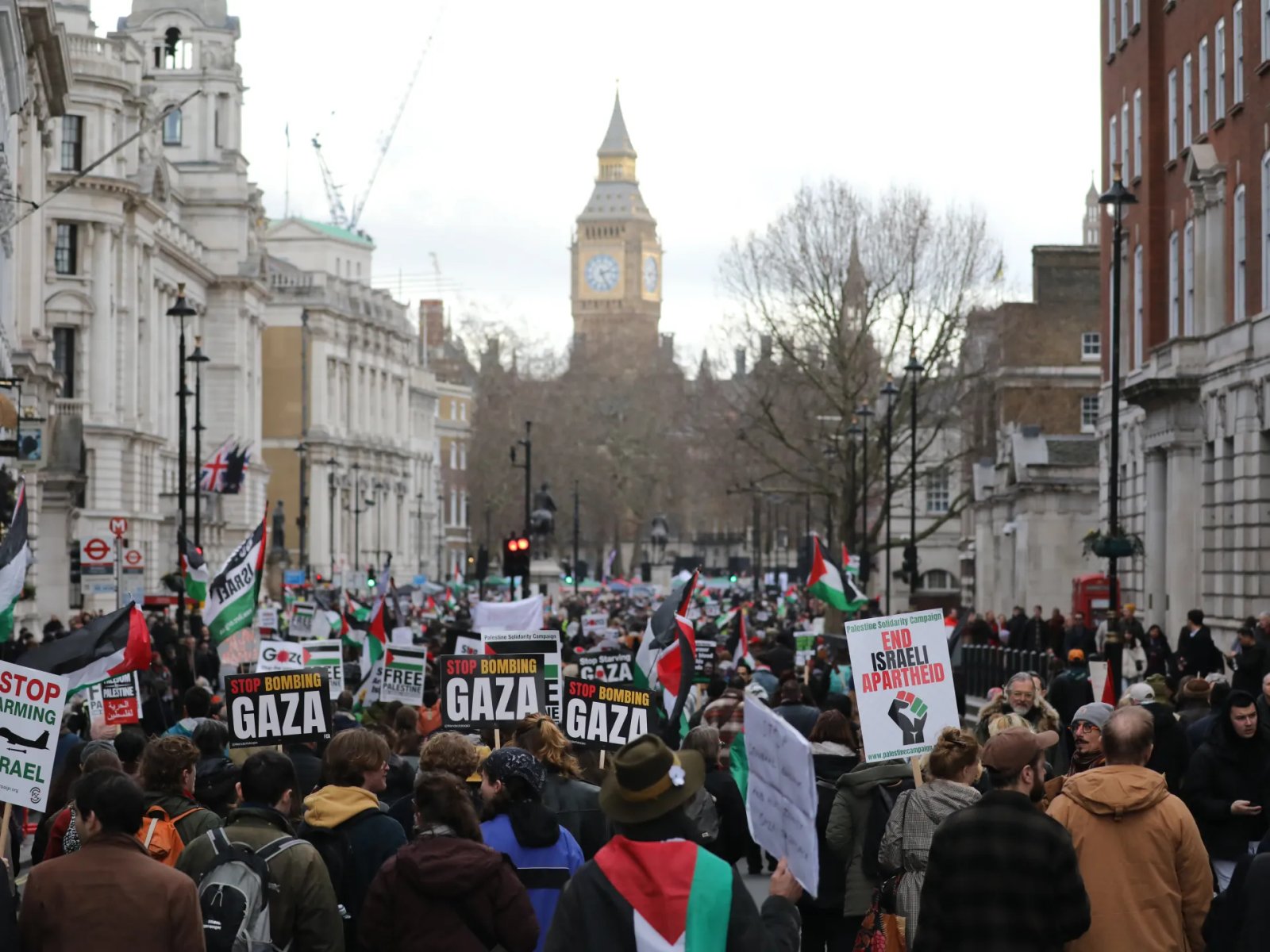
Sir Mark Rowley’s recent comments that some pro-Palestinian demonstrations in London send a message “that feels like anti-Semitism” are the latest sign of a dangerous trend in British public life: the conflation of anti-Semitism with criticism of the Israeli state.
The Metropolitan Police commissioner suggested that some protest organisers deliberately route marches near synagogues in ways that intimidate British Jews. Any genuine intimidation of Jewish communities should, of course, be treated seriously. Anti-Semitism is real, dangerous and rising in Britain and across parts of Europe. It must be confronted clearly wherever it appears.
But Britain is entering troubling territory when protests against the destruction of Gaza, opposition to Israeli state violence, or expressions of Palestinian grief are treated as inherently suspicious, even anti-Jewish, political acts.
The issue is no longer only how Britain combats anti-Semitism. It is whether the country can still distinguish between hatred of Jews and opposition to the policies of the Israeli government.
That distinction matters enormously, not only for Palestinians but for Jewish communities, too.
For Palestinians, there is something painfully familiar about this moment. Many grew up being told that their dispossession was tragic but necessary; that the destruction of their villages, the loss of their homes and their transformation into refugees were justified by somebody else’s need for safety and statehood.
Entire generations of Palestinians were raised inside this logic. Their catastrophe was acknowledged only insofar as it remained secondary to another historical trauma. In much of the Western imagination, Palestinian suffering occupied a different moral category: visible enough to be discussed, but rarely enough to disturb political comfort.
Now, as Gaza continues to be devastated before the eyes of the world, Palestinians in Britain and across the West are finding that even speaking about their grief, anger and loss is increasingly treated as a source of discomfort requiring management.
For more than two and a half years, the world has witnessed scenes from Gaza that many legal experts, human rights organisations and genocide scholars have described using words once reserved for history books: ethnic cleansing, collective punishment, extermination and genocide.
Entire neighbourhoods have been erased. Families wiped out. Hospitals bombed. Journalists killed. Civilians starved under siege. Children pulled lifeless from rubble in numbers so vast that the scale of the catastrophe defies comprehension.
And yet in Britain, much of the political and media conversation has focused less on the destruction itself than on the supposed threat posed by those protesting against it.
Hundreds of thousands of people have marched to demand a ceasefire, an end to British military and political support for Israel, and accountability for what many around the world increasingly regard as crimes against humanity unfolding in plain sight.
Those demonstrations have included Jews, Muslims, Christians, atheists, students, pensioners, trade unionists, Holocaust survivors and people of conscience with no personal connection to the region at all. Yet large sections of Britain’s political and media establishment continue to frame these marches as uniquely menacing, morally suspect and inherently anti-Semitic.
The implication is difficult to ignore: pro-Palestinian speech and protest are to be treated as dangerous regardless of content or context, and therefore as something to be contained, managed or silenced.
There is, of course, a legitimate debate to be had about public order, policing and community tensions. Jewish communities have every right to feel safe and protected, particularly at a time when anti-Semitic incidents have risen. No civilised society should tolerate threats against Jews, just as it should not tolerate anti-Muslim hatred or racism directed at any other community.
But there is a profound difference between anti-Semitism and discomfort. There is a difference between hatred and political dissent. And there is a difference between threatening a community and protesting against a state accused by international organisations and legal experts of carrying out war crimes, crimes against humanity and genocide.
That distinction has become increasingly blurred in British public discourse.
Perhaps most dangerously, the constant framing of pro-Palestinian demonstrations as inherently anti-Semitic risks reinforcing precisely the conflation that political leaders claim to oppose.
To automatically treat protests against Israeli military actions as hostility towards Jews implies that Jewish identity itself is inseparable from the conduct of the Israeli state. That is neither fair nor accurate.
Many Jewish people in Britain and around the world have publicly opposed Israel’s war on Gaza. Many have marched alongside Palestinians. Many are horrified by the scale of destruction and civilian suffering. They understand something fundamental that sections of Britain’s political and media class increasingly struggle to grasp: criticising a state is not the same as hating a people.
Britain ordinarily understands this distinction perfectly well. Criticism of Russia is not treated as hatred towards Russians. Opposition to American wars is not automatically framed as hostility towards Americans as a people. Protest against the Chinese government is not assumed to be anti-Chinese racism.
Only when it comes to Israel does this distinction repeatedly collapse.
That collapse carries consequences.
If people are constantly told that protests against Israeli actions are inherently anti-Semitic, some will inevitably begin associating Jewish people collectively with those actions. Far from protecting Jewish communities, this risks deepening tensions and confusion at precisely the moment clarity is most needed.
Political leaders, police authorities and media institutions therefore carry a particular responsibility to draw careful distinctions, not erase them.
They should confront anti-Semitism directly and unapologetically wherever it appears. But they should also defend the democratic right of people to oppose war crimes, protest mass civilian slaughter and speak openly about Palestinian suffering without automatically being viewed through the lens of suspicion.
Suppressing pro-Palestinian protests will not reduce tensions in Britain. Nor will portraying anti-war demonstrations as uniquely threatening simply because they centre on Palestinian humanity.
What Britain is witnessing on its streets is not simply anger. Much of it is moral horror.
Millions of people across the world have now spent months watching what they believe to be a genocide unfold in real time.
A healthy democracy should be capable of recognising the difference between hatred and the refusal to stay silent in the face of it.
The views expressed in this article are the author’s own and do not necessarily reflect Al Jazeera’s editorial stance.