dailynewsnblog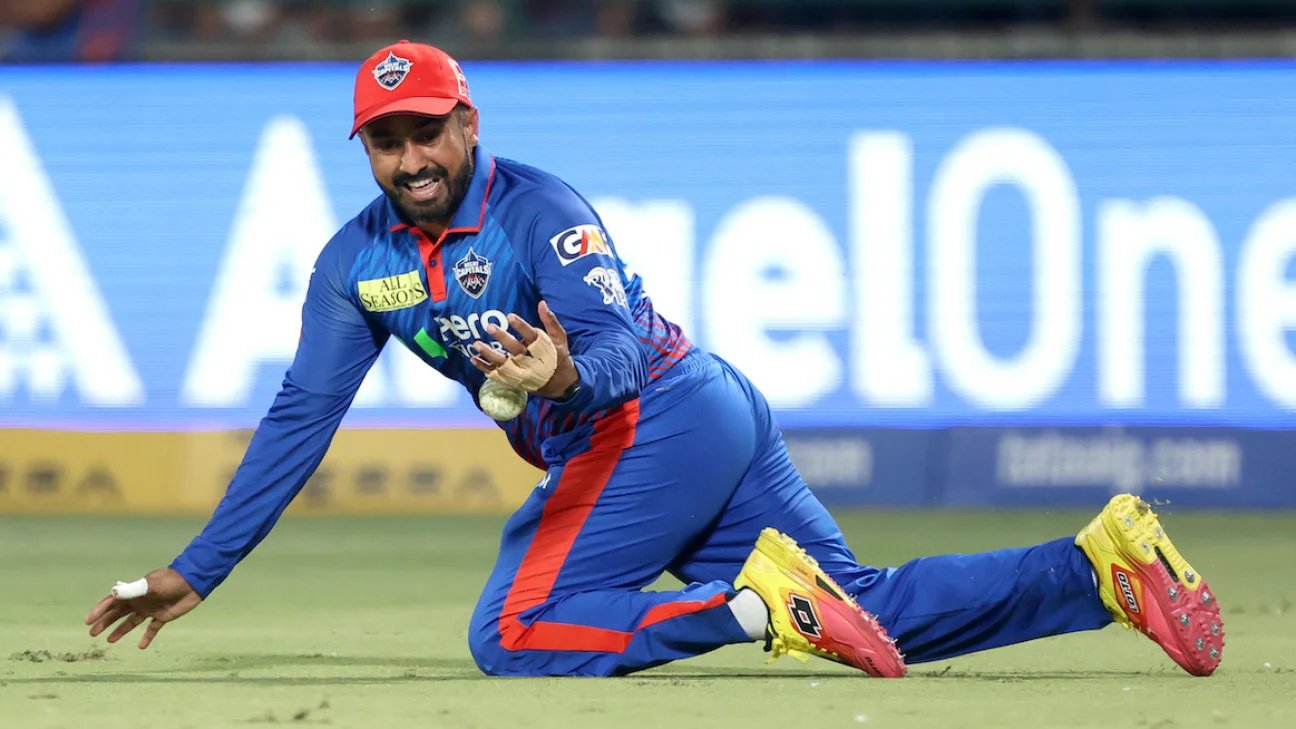
“When you bat and score 200-and-a-lot, you don’t need to be necessarily defensive but have a mindset that ‘this can be scored.’ I saw Natarajan bowl just one over in the powerplay,” Brathwaite said. “They could’ve been a little bit more proactive.
“Get Kuldeep [Yadav] on [early]. He may not get a wicket but he may stem the flow of runs for an over. Natarajan took the pitch out of play. If Natarajan and Kuldeep had bowled three out of the [first] six [overs], and PBKS had scored 65 in the powerplay, PBKS would have so much more to do.”
“They did so much in the powerplay that when Shreyas came in, he could be eight off his first balls,” Brathwaite said. “[That would] never [be] possible if you need to score 19 or 20 per over, then everybody has to come in and go.
I think DC could’ve structured their game a little bit better. You know with 260 [264], you have to go from ball one and have to get ahead in the powerplay. Try to get wickets in the powerplay or bowl your best bowlers in the powerplay to be defensive but also push the required run-rate up to 20-21-22.”
Deep Dasgupta, meanwhile, reserved high praise for the opening stand. Prabhsimran made 76 off 26 balls and Arya 43 off 17. He said the pair were more than just hitters.
“Would you call that hitting? They were playing normal cricket shots. The moment you say hitting, the connotation is that they’re playing fancy shots, trying too hard, trying to muscle,” Dasgupta said on Time:Out. “But the beauty about that opening pair was about how easy they made it look. It seemed like they were playing normal cricketing shots.”
“They have really good options,” Brathwaite added, breaking down Prabhsimran’s approach. “As soon as he hits a good shot, he is ahead of the ball. He knows that the next ball that is coming is going to be a slower-ball. What does he do? On his bike, down the track.
“So he is able to play from the crease, he has the ability to charge, he can walk across and use the pace or he can tonk you back over the head. So as a bowler, when you get into a mindset of thinking ‘I don’t want to bowl this,’ the batter is ready. And that’s the situation that the opening partnership put into that bowling attack.”