dailynewsnblog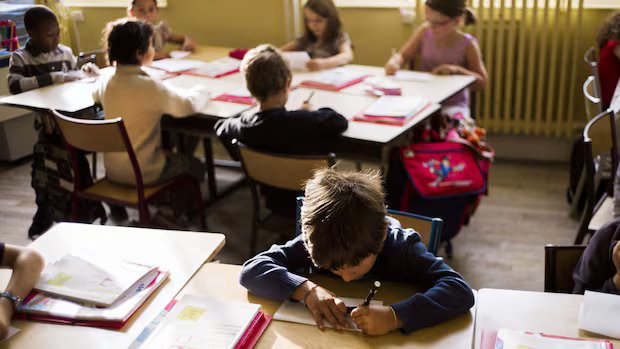
Jessica Sabatini is worried about her six-year-old’s success in school.
Not because he has trouble learning but primarily, she says, because he’s a boy.
“My biggest fear is he isn’t going to feel like he fits in or can be successful in that space,” she said. “And if he doesn’t feel like he can be successful, he will just give up.”
Sabatini lives in Montreal and has three other children — all girls. Enzo is her youngest, and she says even in kindergarten, he was experiencing school differently than her daughters, finding it more tiring and difficult to get through the day.
“It was so much sitting still and doing worksheets,” she said.
She says a recent report out of Quebec confirms part of her fear. The white paper prepared by Quebec Solidaire MNA Gabriel Nadeau-Dubois found the annual high school dropout rate for boys is 27.1 per cent, while for girls it’s 19.9 per cent.

On the standardized French proficiency test in secondary school, boys are below the median for all students, with just over 60 per cent meeting the bar, while it’s over 70 per cent for girls. The report also indicated boys are less likely to get into prestigious academic programs in high school.
The same report showed boys also struggle with learning disabilities or disorders at a higher rate (8.1 per cent) than their female peers (5.5 per cent).
These findings echo research going back decades. A recent New York Times story featured a U.S. study that showed boys falling behind in every metric, sometimes as early as kindergarten.

Catherine Haeck, a Montreal-based economist who specializes in economics and early childhood education and development, agrees boys are often disadvantaged in school and believes “a systemic failure” is happening not just in Quebec, but across Canada and the world.
“We have seen that boys as young as five years old can be observed falling behind their female peers,” Haeck said.
She says schools across Canada need to respond to the differences in needs as early as kindergarten.
“It ’s not good for anyone if one gender is consistently falling behind another,” she said. “There is an impact on their mental health, future job prospects and our economy as a whole.”

Hesitancy to discuss ‘boy crisis’
The “boy crisis” has been widely reported on, but advocates and experts tell CBC there can still be a hesitancy to be seen propping up boys, given the existing inequalities for women in today’s society.
Sabatini is also a teacher and has worked across several provinces and says she has seen first-hand how boys typically struggle more than girls.
“We’ve known for a long time that boys are falling behind in school, but it feels like it just keeps going on and people don’t want to talk about it or do anything to change it,” Sabatini said.
Experts told CBC that traditional school settings are less favourable to more typical boy behaviour, which can mean an inability to sit still for long and a need for higher-energy activities. Others believe the fact that male teachers are in the minority can also impact boys’ engagement.

Toronto parents Cassy Carpino and Carson Sauer worry about sending their son to school in a system they believe is more critical of young boys.
Sabatini says she’s also concerned about the higher rates of attention deficit hyperactivity disorder (ADHD) diagnoses in boys. According to a recently updated report by Health Canada on chronic childhood conditions, boys are diagnosed with ADHD nearly twice as much as girls (10.8 per cent compared to 5.9 per cent).
Sabatini worries that if her son can’t sit still, “if he can’t fit into the box that is expected of him, that he will be labelled or seen as being trouble. That could also follow him through school.”
Experts say one consequence of these challenges is that fewer males end up going to college or university. According to 2023-24 data from Statistics Canada, post-secondary campuses are on average 44.5 per cent men and 55.5 per cent women, with similar graduation rates.
“If boys were graduating as much as girls are graduating from university [in Canada], we would have over 65,000 more boys obtaining a university-level diploma [each year],” Haeck said. “So it’s a huge number.”

Montreal parent and teacher Jessica Sabatini describes her observations of boys in classrooms.
For Soraya Chemaly, the American author of All We Want Is Everything: How We Dismantle Male Supremacy, the “boy crisis” often only refers to areas where girls are doing well but doesn’t include the larger system of “male supremacy” in the workforce.
Despite some gains over the years, women remain in fewer management roles, holding 42.7 per cent of middle management and 30.8 per cent of senior management positions, according to Statistics Canada data from 2021.
Meanwhile, StatsCan reported in 2025 that women still only earned 88 cents for every dollar men earned.

“Regardless of how boys and men operate in school systemically, structurally in our societies, they still maintain power,” Chemaly said. “So as long as that disconnect between performance and power is relevant, then investments in education become less and less important for boys.”
Haeck agrees there can be a reluctance to focus on how boys are doing in school because the fear is that it means holding girls back.
But she says that “helping young boys who might be struggling is good for everyone — these boys become husbands, fathers, friends — and it does not need to come at a cost to girls or young women.”

Changing stakes in era of digital influence
According to recent data from Health Canada, males aged 15 to 24 who reported their mental health as being “very good” or “excellent” dropped from 70 per cent in 2012 to 52 per cent in 2022. Haeck believes that poor mental health in boys is in part due to their diminishing success in school.
Increasing rates of unhappiness and the ever-present influence of the internet can lead some boys to find solace in online spaces like the “manosphere,” where women are denigrated and men are told that the world is against them.
Toronto-based educator Matthew Morris agrees boys are more vulnerable than ever.

A growing body of research suggests that boys are falling behind in traditional school settings in what experts are calling a ‘boy crisis.’ For The National, CBC’s Deana Sumanac-Johnson breaks down the problem, the consequences and what needs to be done to close the gap.
“Boys are definitely disengaging earlier and earlier in schools,” he said. “There is a lot more coming at boys these days. It can feel like they are being bombarded with information. And if they feel like they can’t be successful in school, they will go find validation in other places, and those places aren’t always going to be good.”
Morris believes part of the solution begins inside classrooms, where teachers could emphasize a wider range of skills.
“Boys can be more disorganized or rowdy, [have] trouble sitting still. But what happens at recess is they go out and start teams, organize games and they throw down their hoodies to create nets, and if there is an infraction, they get together and figure it out,” he said. “That’s also organization.”
Haeck advocates for expanded physical education and movement activities, especially in younger grades.
She says Canada can’t resolve larger societal issues like graduation rates and labour inequality without addressing the learning disparities in schools.
“The idea is not to change anything on the women’s side. The idea is to put in place strategies that help boys succeed.”