dailynewsnblog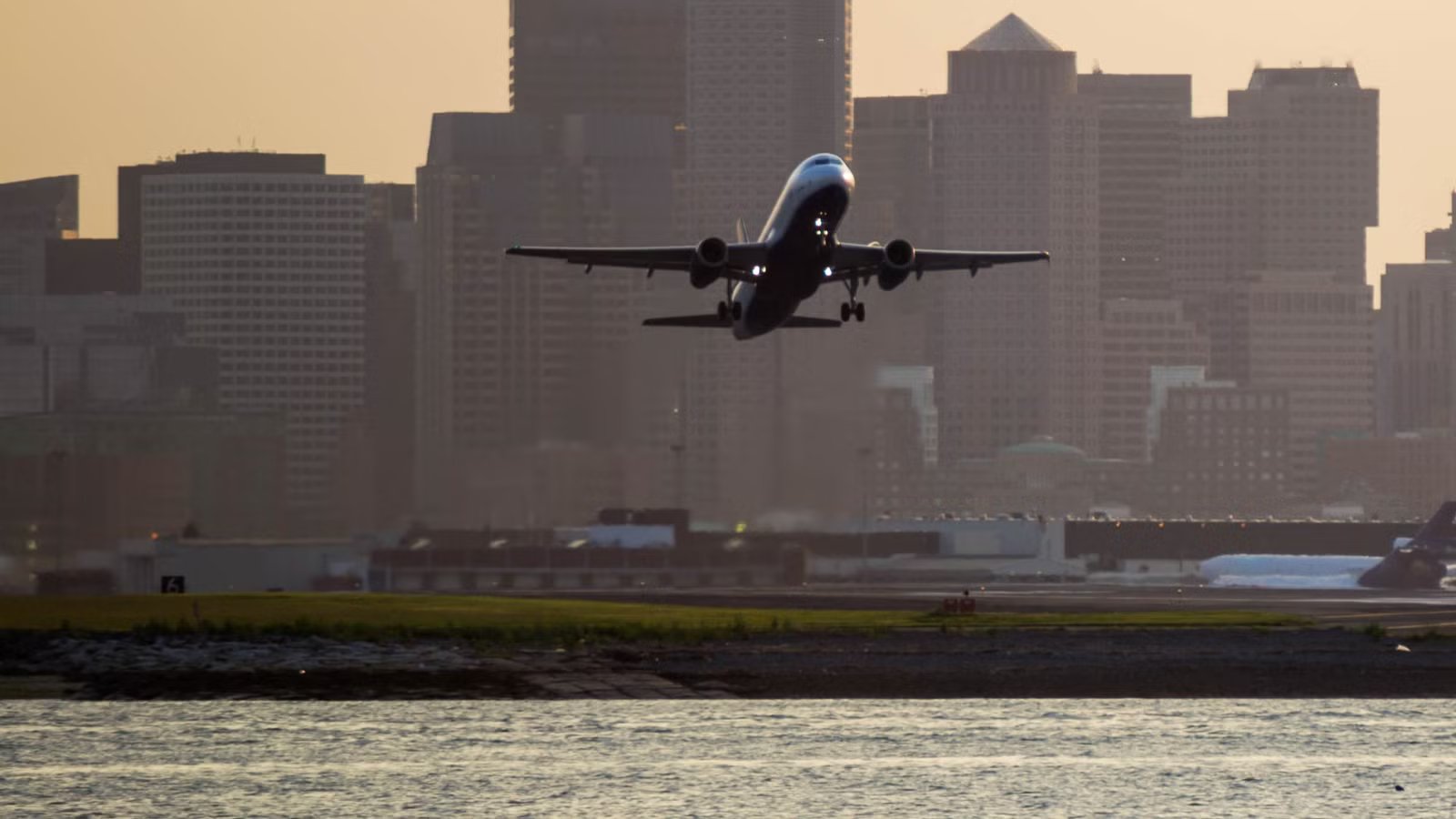
Sail Boston 2026 has brought together an impressive Armada of tall ships, including the famous USS Constitution, also known as ‘Old Ironsides.’ Unfortunately, the international flotilla has caused hundreds of flight delays at  Boston Logan International Airport (BOS) as the vessels cruise under the airport’s approach path.
On Saturday, Old Ironsides led a parade of tall ships past Castle Island in South Boston. The ships’ sail masts are so tall that air traffic control delayed 340 flights and even canceled 18. Massport said the decision was made out of an abundance of caution to avoid a collision between a landing jet and one of the 60 vessels.
Tall Ships Under The Glide Slope

The airport did not close landings at any runway but instead modified the traffic pattern to an alternate circuit with a lower traffic capacity per hour, according to a CBS News report. Massport stated that it was unclear how long the modified landing procedure would be in place. The Federal Aviation Administration also implemented ground delays to keep planes from spending excessive time in the holding pattern. The Boston Globe reported that ATC was able to normalize operations at 4:30 PM on Saturday.
FlightAware showed more than 450 delays total on Saturday, but not all were due to the nautical procession. The beginning of maritime festivities coincided with a fuel supply issue that was separately developing at BOS, which exacerbated the total number of flight disruptions on Saturday and is still ongoing. The persistent issue caused delays on Sunday and Monday as well. The airport informed operators that it is recommended to have additional fuel before arrival to alleviate the strain on the airport and avoid an impact on their own schedule.
There have been no reports since Saturday that any of the sailing vessels from one of the 20 participating nations have interfered with flight ops at BOS. While Saturday’s parade lasted from 10:00 AM to 3:00 PM, the Sail Boston event does not conclude until July 16. The airport has not yet gotten back up to normal ops tempo since the delay program instituted by Massport on July 11. A Massport spokesperson told CBS:
“With some of the ships, the masts would be too tall and potentially interfere with planes landing. [Air traffic control is having planes land using a] different configuration which handles fewer planes an hour.”
Catch what other flight trackers miss
Emergency squawks, holds, NOTAMs — live signals, no signup.
Open tracker
Catch what other flight trackers miss
Emergency squawks, holds, NOTAMs — live signals, no signup.
Open tracker
Short Supply: Boston Logan’s Fuel Trouble

Saturday’s events harkened back to 2012 when a sailboat was cast adrift and ran aground at the end of one BOS runway but fortunately the runway was not closed during this time around. Yet, as the tall ship traffic cleared out late Saturday, Massport faced a secondary issue with Logan’s external fuel supply systemlocated outside the airport campus. The airfield was unable to resupply tanks via the underground pipeline network that refills local supply from off-site reserves. Yahoo News reported that a mechanical pressure loss reduced the refill rate from the depot to a critical level, which left the fuel pumps on the tarmac with little gas to dispense.
The combination of Saturday’s low-capacity runway limits and Sunday’s total fueling halt left aircraft parked at the wrong gates and flight crews timed out past their legal working hours. Aircraft spent so much time stranded at gates that it exhausted the shift times for many personnel before the plane ever moved. Monday morning saw additional delays due to the lingering fuel supply malfunction, but also the impact on pilots and cabin crew hitting their mandated duty limitations.
Grounded By The Letter Of The Law

Under FAA Part 121 regulations, a crew’s legal clock does not start when the wheels leave the ground. It starts at their designated report time at the airport. For a standard two-pilot crew, the maximum allowable FDP caps between nine and fourteen hours, depending on what time of day they clocked in and how many flight legs they are scheduled to fly. On Sunday night, pilots and cabin crew reported for duty, boarded their aircraft, and then sat trapped on the tarmac or at the gates during the ground fueling stop.
By law, if an airline cannot guarantee a flight will take off and land before the exact minute the crew hits their duty limit, the pilots are legally prohibited from pushing back from the gate. Flight attendants are bound by similar strict fatigue-mitigation rules. If even a single flight attendant out of a crew of four timed out on Sunday night, the entire aircraft was grounded until the replacement arrived. That left many carriers on Monday with perfectly functional airplanes parked at gates, but not enough pilots or FAs to fly them.