dailynewsnblog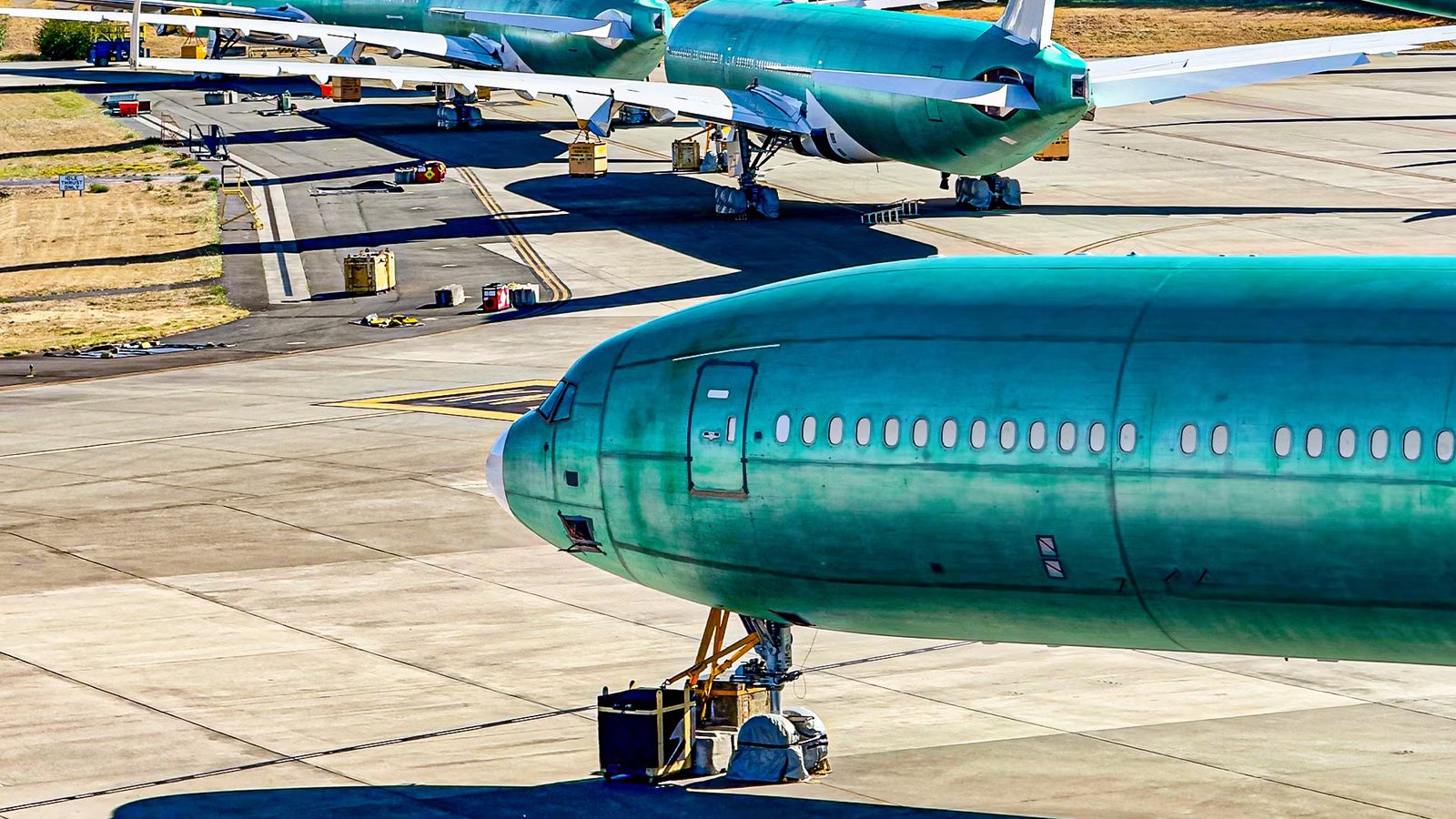
The Boeing 777X was supposed to enter commercial service in 2020. Seven years and approximately $15 billion in development charges later, it still has not been delivered to a single airline. The certification process has been grounded, restarted, and restructured multiple times, shaped in large part by the FAA’s significantly heightened oversight following the 737 MAX crisis.
The latest complication involves approximately 30 777X fuselages sitting in storage at Paine Field in Everett, built during the certification process to earlier design standards that no longer match the configuration Boeing is now certifying. Each requires retrofit work of varying scope before it can be delivered, a process Boeing’s CEO confirmed in May 2026 will take years to complete. Rather than wait, Boeing plans to skip ahead and begin delivering newer production-standard aircraft first, starting with Lufthansa in mid-2027, an approach with no clear precedent at this scale in commercial aviation.
Why Thirty Already-Built Jets Need Years Of Rework

When an aircraft program runs years longer than planned, the engineering does not stand still.  Boeing has been continuously refining the 777X design throughout its extended certification process, incorporating changes to meet evolving FAA requirements and address problems discovered during testing. Each change updates the production standard, and any airframe built before that change was incorporated does not automatically reflect it.
After six years of delays and continuous design evolution, approximately 30 777X fuselages stored at Paine Field in Everett no longer conform to the standard Boeing is certifying. Before any of those aircraft can be delivered, they must go through what Boeing calls change incorporation, a retrofit process that brings each airframe up to the current standard.
The scope of that work varies by airframe age. The oldest jets will require extensive structural modifications. Newer ones need only minor system updates. Boeing has established a dedicated team to manage the process, working through a common configuration baseline before applying final changes. CEO Kelly Ortberg confirmed in early May 2026 that the rework will take years to complete. Rather than hold deliveries until all 30 jets are brought up to standard, Boeing plans to skip ahead and deliver newer production-standard airframes first, beginning in 2027. It is a departure from the conventional first-built, first-delivered sequence used in virtually every previous aircraft program and a direct consequence of the long certification process.
How A Six-Year Delay Turns New Aircraft Into Rework Projects

The 777X program was launched in 2013 with a target entry into service of 2020. That timeline began slipping almost immediately once certification testing started in earnest. Certification efforts began in September 2019 but halted immediately after an extreme pressurization test caused a door to blow off in a hangar under FAA oversight. Test flights started in January 2020, only to be suspended in December due to flight control system flaws.
What followed was a compounding sequence of technical setbacks against a regulatory backdrop that had fundamentally changed. The 737 MAX crashes of 2018 and 2019 had made the FAA substantially more rigorous in its certification oversight, and Boeing’s subsequent manufacturing quality problems on the 787 program added further scrutiny. The latest delay, announced in October 2025, resulted in a $4.9 billion pre-tax charge, bringing the program’s total cost overruns to roughly $15 billion.
The financial structure of the delay caused the stored jet problem. Boeing continued building 777X airframes during the certification process to keep the production line moving and maintain supplier relationships, accumulating inventory against an entry into service date that kept moving. With roughly $15 billion in program charges already absorbed, the 777X must now transition from a financial burden into a long-term revenue generator, an outcome that depends heavily on execution over the next 18 months. The 30 jets sitting at Paine Field are the physical residue of that decision, aircraft built on the assumption that certification was closer than it turned out to be.
Here’s How Much More Range The Boeing 777X Has Compared To The 777-300ER
While the 777-300ER has more range than the larger 777-9, the similarly sized 777-8 can fly 1,375 NM further, while carrying a few more passengers.
Setbacks That Pushed The 777X Off Schedule

The 777X’s certification history is a sequence of technical problems, each one adding time and cost to a program that had little margin for either. The first significant setback came in September 2019, when a door plug failed during a pressurization test conducted under FAA oversight, halting certification before it had properly begun. Test flights started in January 2020 but were suspended by December after Boeing identified flaws in the flight control system that required design changes. Those two problems alone pushed the original 2020 entry into service date back by several years.
Progress resumed but remained unsteady through the early 2020s, with regulatory scrutiny intensifying following the 737 MAX certification failures and subsequent investigations into Boeing’s quality management processes. In August 2024, a routine inspection following a test flight in Hawaii led Boeing to ground its 777X test fleet after discovering damage to the thrust link, a structural component connecting the engine pylon to the wing. Flight testing resumed in January 2025 after a five-month break, during which time upgrades and repairs were made to the affected aircraft.
The GE9X engine has added its own complications. The engine was designed to push efficiency boundaries, which added complexity to certification and durability testing throughout the program. Supply chain disruptions affecting engine component delivery have also contributed to production delays independent of the airframe certification issues. By early 2026, Boeing had entered FAA Type Inspection Authorization Phase 4A, a meaningful step toward final certification, but the program had by that point accumulated a delay of six to seven years against its original schedule, and charges that Boeing’s own Q1 2026 earnings were confirmed at approximately $15 billion.
What The 777X Actually Offers Airlines When It Finally Arrives

The 777-9, the primary variant leading the program into service, is the largest twin-engine commercial aircraft ever built, with a wingspan of 235 feet that exceeds what most airport gates can accommodate. Boeing’s solution was a folding wingtip system that retracts the outer sections of each wing on the ground, reducing the effective wingspan to 213 feet and allowing the aircraft to use the same gates as the existing 777-300ER it is designed to replace. It is the first folding wingtip system ever certified for commercial aviation, and it allows airlines to operate a significantly larger aircraft without infrastructure modifications at their hub airports.
The GE9X engine is the other headline capability. It is the most powerful commercial aviation engine ever built and among the most fuel efficient, delivering approximately ten percent better fuel consumption per seat than the 777-300ER it replaces. For airlines operating long-haul routes where fuel represents the single largest operating cost, that efficiency advantage translates directly into lower cost per available seat mile on the routes where the 777-9’s range and capacity are most useful. The aircraft carries between 350 passengers in a typical three-class configuration and up to 426 in higher-density layouts, with a range of approximately 7,300 nautical miles covering routes from the Gulf to Australia, Europe to Southeast Asia, and transatlantic operations with meaningful payload margins.
The cabin has also been redesigned with wider seats, larger windows, higher ceilings, and improved air quality systems compared to the 777-300ER. For airlines that have been operating the older 777 variant for decades and whose passengers are familiar with its limitations, the interior improvement is a meaningful commercial upgrade rather than an incremental refinement.

Inside The Boeing 777X’s Folding Wing Mechanism
Here’s how Boeing’s engineers have ensured the 777X’s iconic folding wingtips can operate safely and reliably.
The Order Book, Launch Customers, And What The Delivery Timeline Looks Like

Despite years of delays and $15 billion in development charges, demand for the 777X has held up. The order book stands at over 550 aircraft as of early 2026, with customers including Lufthansa, Emirates, Qatar Airways, Etihad, British Airways, Cathay Pacific, and Singapore Airlines. In early August 2025, Cathay Pacific placed an order for 14 additional 777-9s, raising the total number of 777X aircraft ordered worldwide to over 550. Emirates remains the largest customer by a significant margin, with orders covering both the 777-9 passenger variant and the 777-8F freighter version, which is scheduled to enter service after the passenger variant is certified.
Lufthansa is the launch customer and is now targeting delivery in mid-2027, a date Boeing reiterated in its Q1 2026 earnings release. Boeing has formally confirmed this timeline, signaling renewed confidence after a turbulent development cycle, with the FAA having approved Boeing to proceed to Type Inspection Authorization Phase 4A, a crucial stage in the flight testing campaign. The production-standard aircraft intended for Lufthansa completed its first flight in April 2026, which was a necessary milestone before the final certification push could begin in earnest.
What Boeing needs over the next 18 months is straightforward on paper: complete FAA certification, deliver the first aircraft to Lufthansa, and begin working through the order backlog while simultaneously managing the rework program on the 30 stored jets. Each of those workstreams is manageable in isolation. Running them in parallel, while stabilizing a broader production system still recovering from a labor strike and ongoing supply chain pressure, is the execution challenge the program now faces. The 777X has an order book strong enough to generate substantial revenue for decades. The question is how cleanly Boeing can get from where the program sits today to the first revenue flight.