dailynewsnblog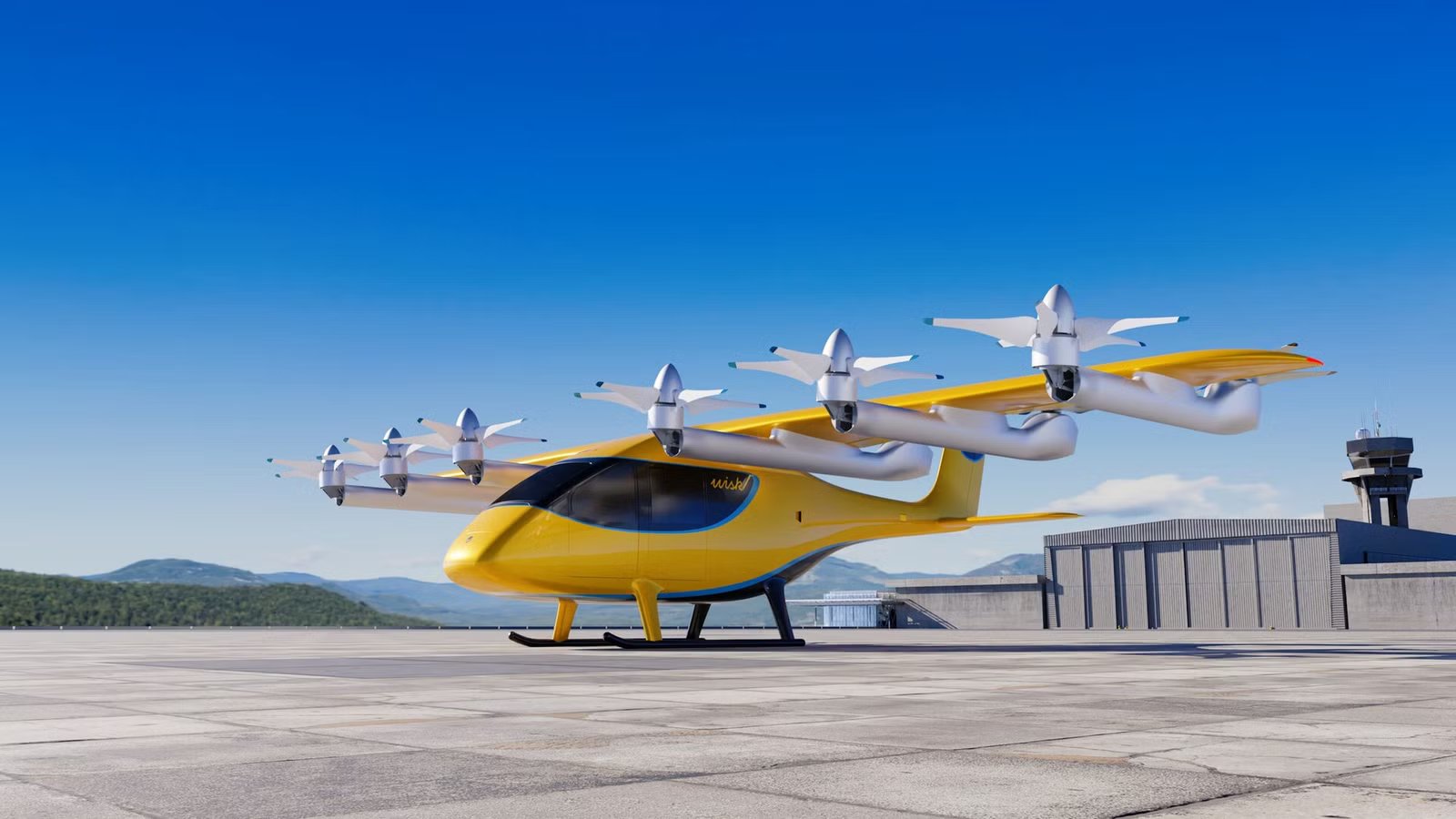
 Boeing is handing over much of its advanced-air-mobility portfolio to Archer Aviation, but it is not simply walking away. Under an agreement announced on August 10, Archer will acquire Boeing subsidiaries Wisk Aero, Insitu and SkyGrid, while Boeing receives a major equity position in Archer, warrants, board representation and continued access to Wisk’s autonomous-flight technology. The companies expect the transaction to close by the end of 2026, subject to regulatory approvals.
The transaction could transform both companies’ positions in emerging aviation. Boeing can concentrate capital on its core commercial and defense businesses while preserving exposure to technologies it has spent years developing. Archer, meanwhile, suddenly expands from a company principally associated with its piloted Midnight air taxi into autonomous aircraft, military drones, aviation artificial intelligence and airspace management.
Perhaps most importantly, it gains a profitable defense company generating more than $200 million in annual revenue. Archer’s shares were trading roughly 12% higher late Monday after rising as much as 25% intraday.
Boeing Hands Three Businesses To Archer

Archer is set to acquire three businesses that bring very different capabilities. Wisk has spent 16 years developing autonomous eVTOL aircraft and has flown six generations through more than 1,700 test flights. SkyGrid provides aircraft-agnostic digital airspace and traffic-management technology, while Insitu produces intelligence, surveillance and reconnaissance unmanned aircraft and has fielded more than 3,500 systems, supporting armed forces in 35 countries. Together, Boeing says the three companies have accumulated almost two million flight hours.
Business | Current Focus | What Archer Gains |
|---|---|---|
Wisk Aero | Autonomous eVTOL aircraft | Autonomous-flight systems, 1,700+ test flights and six aircraft generations |
Insitu | Military UAS and ISR | Profitable $200M+ revenue business, defense customers and 3,500+ fielded systems |
SkyGrid | Automated airspace management | Digital infrastructure for autonomous and increasingly automated aviation |
Unlike a conventional acquisition, there is no headline cash purchase price. Archer’s SEC filing says Boeing will receive new Class A shares equal to 19.75% of Archer’s Class A shares outstanding immediately before closing, subject to adjustments. Boeing also receives two warrants, each covering a number of shares initially valued at $100 million: one exercisable at $13 per share and another at $17.88. The consideration shares are locked up for 12 months, while the warrants generally cannot be exercised if doing so would push Boeing above 19.9% beneficial ownership unless Boeing waives that restriction.
Boeing’s involvement goes much further than owning stock. Provided it maintains a specified minimum ownership position, Boeing can nominate one director to Archer’s board. The companies will cross-license intellectual property, with Boeing specifically retaining access to Wisk’s autonomy technology for current and future commercial and defense aircraft. Boeing has also committed to buy up to another $55 million of Archer shares if Archer launches a qualifying equity offering worth at least $400 million.
There is considerable history behind Boeing putting Wisk and Archer together. Wisk sued Archer in 2021 over alleged theft of trade secrets; Archer denied the claims and countersued. The dispute ended in August 2023 with Boeing investing in Archer and Wisk becoming the intended exclusive provider of autonomy technology for future autonomous Archer variants. Three years later, almost to the day, the former courtroom adversaries are going considerably further: Archer is acquiring Wisk itself.
Boeing Gets To Keep The Upside Without Carrying The Cost

The deal fits neatly into Boeing CEO Kelly Ortberg’s effort to make the company smaller and more focused. Shortly after taking charge, Ortberg said Boeing might sell assets as it concentrated on commercial aircraft and core defense operations, arguing that the company was better served doing fewer things well.
“We’re better off doing less and doing it better than doing more and not doing it well.”
Boeing subsequently agreed to sell Jeppesen, ForeFlight, AerData and OzRunways to Thoma Bravo for $10.55 billion, explicitly saying that transaction would strengthen its balance sheet and allow greater focus on core businesses.
Wisk illustrates why this philosophy is crucial to Boeing in this current moment. Boeing invested $450 million in the autonomous-air-taxi developer in January 2022, before becoming its sole owner in 2023. Yet autonomous passenger eVTOL operations remain commercially unproven. The sector still faces the challenge of certifying entirely new aircraft, scaling their manufacture and demonstrating that the resulting services can operate economically — one reason eVTOL developers have increasingly pursued defense, cargo and government opportunities while waiting for passenger operations to mature.
Boeing has therefore found a way to preserve much of the potential upside without carrying Wisk’s development burden alone. It receives Archer equity and warrants, retains a board presence and keeps access to Wisk’s autonomy technology while Archer assumes responsibility for taking the businesses forward. Boeing Commercial Airplanes product development vice president Brian Yutko said the arrangement benefits both companies:
“This transaction is a win-win for Boeing and Archer. It allows Wisk, SkyGrid and Insitu to accelerate capability development and time to market while ensuring Boeing capitalizes on its investments in these technologies over the past two decades through continued development in our core businesses.
Insitu makes the decision more complicated, however, because Boeing is not merely offloading three cash-consuming experimental projects. Insitu is profitable and generates more than $200 million annually; Boeing has owned it since 2008, when the drone company was already expecting approximately $150 million in annual revenue. Reports emerged in early 2025 that Boeing was considering selling Insitu as part of Ortberg’s broader portfolio review, with analysts then estimating it could fetch around $500 million. Giving up that established business indicates Boeing is pursuing genuine portfolio simplification rather than merely removing Wisk’s development costs.
Archer Just Became Much More Than An Air-Taxi Company

For Archer, Insitu could be just as important as Wisk. Archer generated only $1.6 million of revenue in the first quarter of 2026 while reporting an adjusted EBITDA loss of $172.5 million, and it guided toward another $170 million to $200 million adjusted EBITDA loss for the second quarter. Insitu therefore gives Archer something its Midnight program cannot yet provide: an established stream of meaningful revenue and cash flow while certification and commercialization continue. As Archer’s Founder and CEO, Adam Goldstein put it:
“This is a watershed moment for Archer and the future of physical AI in aerospace and defense. It is the next big step forward in becoming a diversified platform. We also gain the ability to start generating significant revenue immediately in a major growth market.”
The combination also dramatically widens Archer’s technological footprint. Midnight gives it a piloted electric air taxi; Wisk brings autonomous passenger-flight systems; Insitu brings military UAS expertise; SkyGrid supplies automated airspace-management technology; and Archer’s ZEE platform is intended to provide the AI layer connecting those capabilities. Archer is effectively trying to build an aviation technology stack stretching from the aircraft and autonomous flight controls to the software required to manage automated aircraft within increasingly complex airspace.
Market | Archer Capability After The Deal |
|---|---|
Piloted air taxis | Midnight |
Autonomous eVTOLs | Wisk technology and aircraft development |
Military UAS | Insitu + Archer Defense |
Autonomous flight systems | Wisk |
Airspace management | SkyGrid |
Aviation artificial intelligence | ZEE |
Defense aircraft development | Archer/Anduril + Insitu |
That diversification could be particularly valuable in defense. Archer was already working with Anduril on a hybrid-electric VTOL aircraft for the US military, and Insitu immediately adds operational products, customers and decades of unmanned-aircraft experience. Goldstein told Reuters that demand for ISR drones is exceptionally strong, while Archer’s existing defense strategy demonstrates that the company was already looking beyond passenger air taxis for nearer-term opportunities.
But Archer is also inheriting the bill Boeing has chosen not to carry itself. Midnight has still not received FAA type certification for commercial passenger service, while Archer now has to integrate three additional businesses, fund Wisk’s autonomous-aircraft ambitions and continue investing in defense, AI and manufacturing simultaneously. The SEC filing even contemplates a future Archer capital raise of at least $400 million in which Boeing could invest another $55 million. The deal therefore represents both an extraordinary endorsement and a substantial new execution challenge.