dailynewsnblog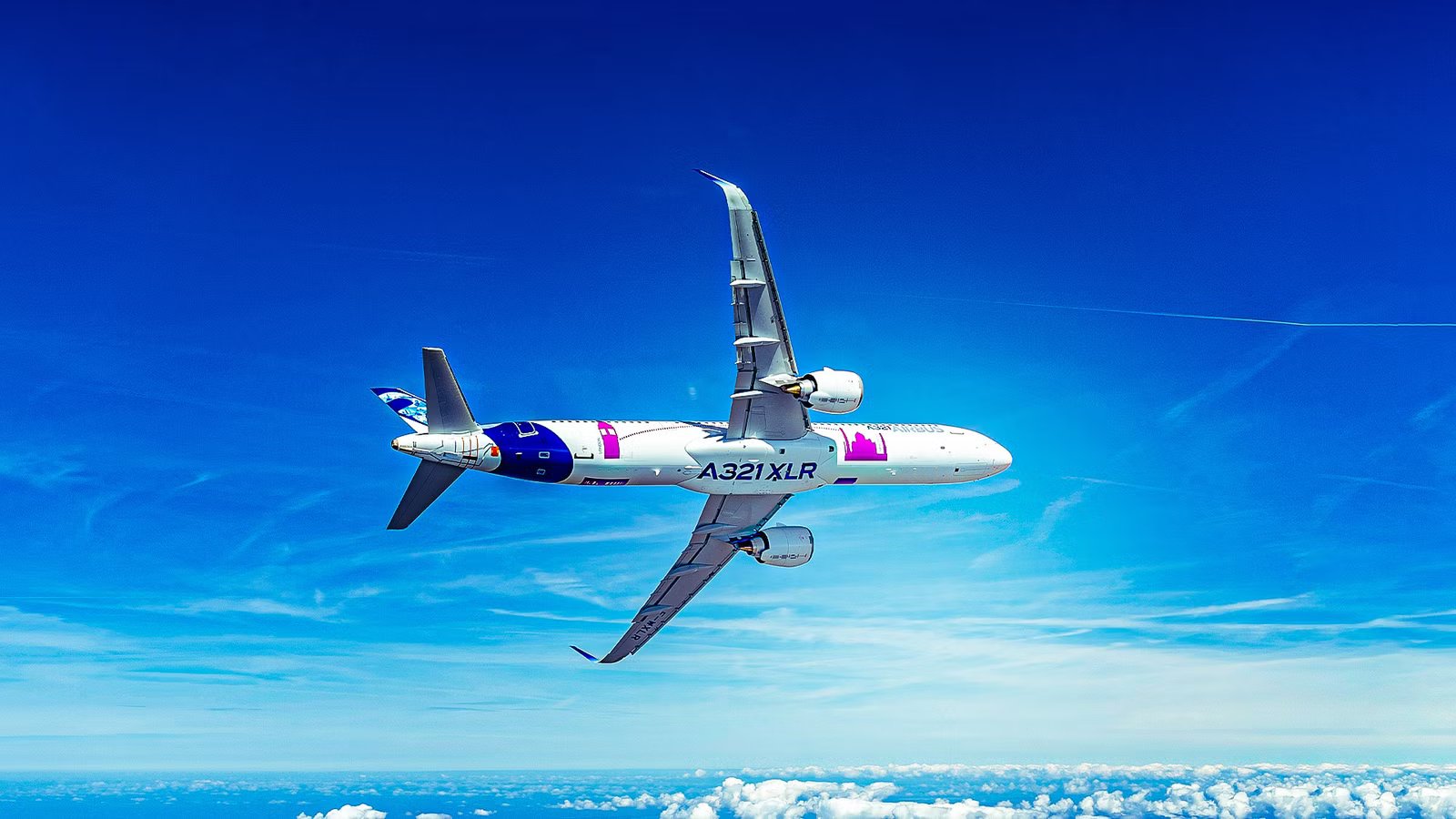
For decades, the Boeing 757 occupied a unique corner of the commercial aviation market, offering airlines the ability to operate relatively small aircraft on surprisingly long routes while maintaining the economics and flexibility of a narrowbody aircraft. From secondary European cities to premium transcontinental services across the US, the aircraft became indispensable for carriers looking to avoid the costs associated with larger widebody aircraft.
However, after Boeing closed the 757 production line in 2004, the industry was left without a direct replacement. Airbus now appears to have filled that gap with the Airbus A321XLR, a long-range development of the popular A321neo family that pushes the limits of what a single-aisle aircraft can achieve.
At the center of the aircraft’s record-breaking range sits one of the most innovative engineering features Airbus has introduced in years: the Rear Center Tank, or RCT. Built directly into the fuselage structure rather than added as a removable module, the tank fundamentally changes the fuel architecture of the A321 family and unlocks routes previously impossible for an Airbus narrowbody.
The Engineering Challenge Behind The Airbus A321XLR

The core problem Airbus engineers faced was relatively simple in theory but extremely difficult in practice. Airlines wanted an aircraft capable of flying routes over 5,400 miles (8,640 km) while still retaining the low operating costs of the A321neo. Existing versions of the A321 family could already fly impressive distances, particularly the A321LR, but the aircraft still fell short of the range needed to fully replace the Boeing 757 on long and thin transatlantic routes .
Adding more fuel sounds straightforward, but the Airbus A321 design had already reached important physical and structural limits. The wing tanks could not simply be enlarged because the wing itself was already near its certified fuel-carrying capacity. Airbus also had experience using Additional Center Tanks, known as ACTs, which are removable tanks installed inside the cargo hold.
However, these tanks came with major compromises because they occupied valuable freight space and still could not carry enough fuel to achieve the range targets Airbus wanted for the A321XLR. The solution became the Rear Center Tank, a permanently integrated structural tank located behind the main landing gear bay in fuselage sections 15 and 17.
Unlike removable ACTs, the RCT forms part of the aircraft’s primary structure itself, and the design allows Airbus to store up to 3,400 gallons of fuel in a space-efficient configuration without heavily sacrificing cargo capacity. The single tank holds more fuel than several ACTs combined and became the defining feature separating the Airbus A321XLR from every previous member of the A321 family.
5 Reasons Why Airlines Are Ordering The Airbus A321XLR Over The Boeing 737 MAX 10
Here are five reasons why some airlines are leaning towards the A321XLR over the MAX 10.
A Fuel System Unlike Any Previous A321

Although the Rear Centre Tank receives most of the attention, the Airbus A321XLR’s range is the result of an entirely redesigned fuel architecture spread across several sections of the aircraft. Airbus retained the traditional wing tanks but paired them with an enlarged center wing box capable of holding around 2,100 gallons of fuel. Combined with the RCT and an optional forward Additional Centre Tank, the system gives the aircraft a total fuel capacity far beyond earlier A321 variants.
Catch what other flight trackers miss
Emergency squawks, holds, NOTAMs — live signals, no signup.
Open tracker
Catch what other flight trackers miss
Emergency squawks, holds, NOTAMs — live signals, no signup.
Open tracker
In its standard configuration, the aircraft carries approximately 8,700 gallons of fuel. Airlines can increase that figure to somewhere between 9,500 and 10,300 gallons when the optional forward ACT is installed. The numbers are significant because the Rear Centre Tank alone accounts for roughly 39% of the aircraft’s entire fuel capacity, highlighting just how critical the system is to the aircraft’s long-haul ambitions.
The arrangement also improves operational flexibility compared with older ACT-based systems. Previous long-range Airbus A321 variants, operated by the likes of JetBlue, often forced airlines to choose between carrying passengers or cargo because removable tanks consumed so much lower-deck space. By integrating the tank directly into the structure, Airbus preserved much more cargo volume while still dramatically extending range. That capability is especially important on transatlantic flights.
The redesign also required Airbus engineers to rethink weight distribution and fuel management procedures throughout the flight envelope. Fuel must be transferred carefully between tanks to maintain the aircraft’s center of gravity within acceptable limits during long sectors, and while passengers may never notice the complexity behind the scenes, the fuel management logic became one of the most technically sophisticated aspects of the A321XLR program.
Why Regulators Delayed The Aircraft

The Rear Centre Tank quickly became the most controversial part of the Airbus A321XLR certification campaign because regulators viewed it very differently from traditional fuel tank installations. Since the tank effectively occupies what was previously part of the lower cargo compartment and forms part of the fuselage structure itself, both the European Union Aviation Safety Agency and the US Federal Aviation Administration considered it a major significant change requiring enhanced scrutiny.
Regulators focused heavily on fire protection and crashworthiness concerns. In conventional aircraft designs, fuel tanks are generally isolated from passenger areas and structural sections in ways that have decades of certification precedent behind them. The Airbus A321XLR’s integrated tank design introduced new questions about how the aircraft would behave during post-crash fires or structural failures.
Authorities therefore imposed special conditions requiring Airbus to demonstrate occupant protection standards beyond normal fuel tank certification rules. Meeting those standards forced Airbus into a lengthy redesign and testing process that delayed entry into service by more than a year from the manufacturer’s original 2023 target. Engineers introduced additional insulation and protective systems intended to reduce the risk of heat transfer between the tank and cabin floor areas during extreme scenarios.
The process became one of the most closely watched certification battles in recent commercial aviation history because it tested how regulators would handle increasingly unconventional aircraft designs. EASA eventually certified the A321XLR powered by CFM LEAP-1A engines in July 2024, followed by FAA certification in October 2024. While the delays frustrated airlines waiting for deliveries, the extensive scrutiny also highlighted just how unusual the aircraft’s structural fuel tank arrangement really was.

Why The World’s Long-Haul Routes Are Increasingly Being Flown By Narrowbodies
Operational efficiencies and better economics offered by these aircraft enable carriers to be more competitive and access new markets.
The Aircraft Boeing Cannot Match

The significance of the Airbus A321XLR extends well beyond its engineering because the aircraft now occupies a market segment where Boeing currently has no direct competitor. The Boeing 757 once dominated long and thin routes across the Atlantic, particularly flights linking smaller European cities with the US East Coast, but after production ended in 2004,  Boeing never developed a true successor capable of matching the aircraft’s combination of capacity and range.
The closest aircraft in Boeing’s current lineup is the Boeing 737 MAX 10, but the jet falls well short of the Airbus A321XLR’s performance envelope. With a range of roughly 3,800 miles, the 737 MAX 10 trails the A321XLR by approximately 1,600 miles, making many transatlantic routes impossible without payload restrictions. Boeing has discussed middle-of-the-market concepts for years, including the once-proposed 797, but no clean-sheet replacement program currently exists.
That vacuum has allowed Airbus to effectively control the long-range narrowbody market segment alone. Airlines that once relied on the Boeing 757 (such as  United Airlines, and before it, Continental Airlines) now have few realistic alternatives if they want to maintain similar route structures with modern economics. The A321XLR therefore represents more than another derivative aircraft program – it is Airbus moving into a category Boeing once owned almost uncontested.
The competitive imbalance is especially important because airlines increasingly favor smaller long-haul aircraft capable of serving secondary cities profitably. Rather than funneling passengers exclusively through giant hub airports using widebodies, carriers can now connect smaller markets directly using narrowbody aircraft with lower trip costs. Airbus recognized that shift earlier than Boeing and designed the A321XLR specifically around those evolving network strategies.
How Airlines Plan To Use The Airbus A321XLR

Several major airlines have already made clear that the Airbus A321XLR will directly replace aging Boeing 757 fleets on key routes. United Airlines, which ordered 50 examples, has openly stated that the aircraft will replace portions of its 757-200 operation on select international services. The  Star Alliance carrier’s current 757 fleet averages roughly 28 years of age, making replacement increasingly urgent as maintenance costs rise.
United Airlines plans to deploy the Airbus A321XLR on thinner transatlantic routes linking the US with the likes of Brussels (BRU), Dublin (DUB), Edinburgh (EDI), Porto (OPO), Reykjavík (KEF), and Tenerife (TFS). Those markets perfectly match the type of operations the Boeing 757 became famous for over the last several decades because they require long range but do not consistently generate enough demand to justify larger twin-aisle aircraft year-round.
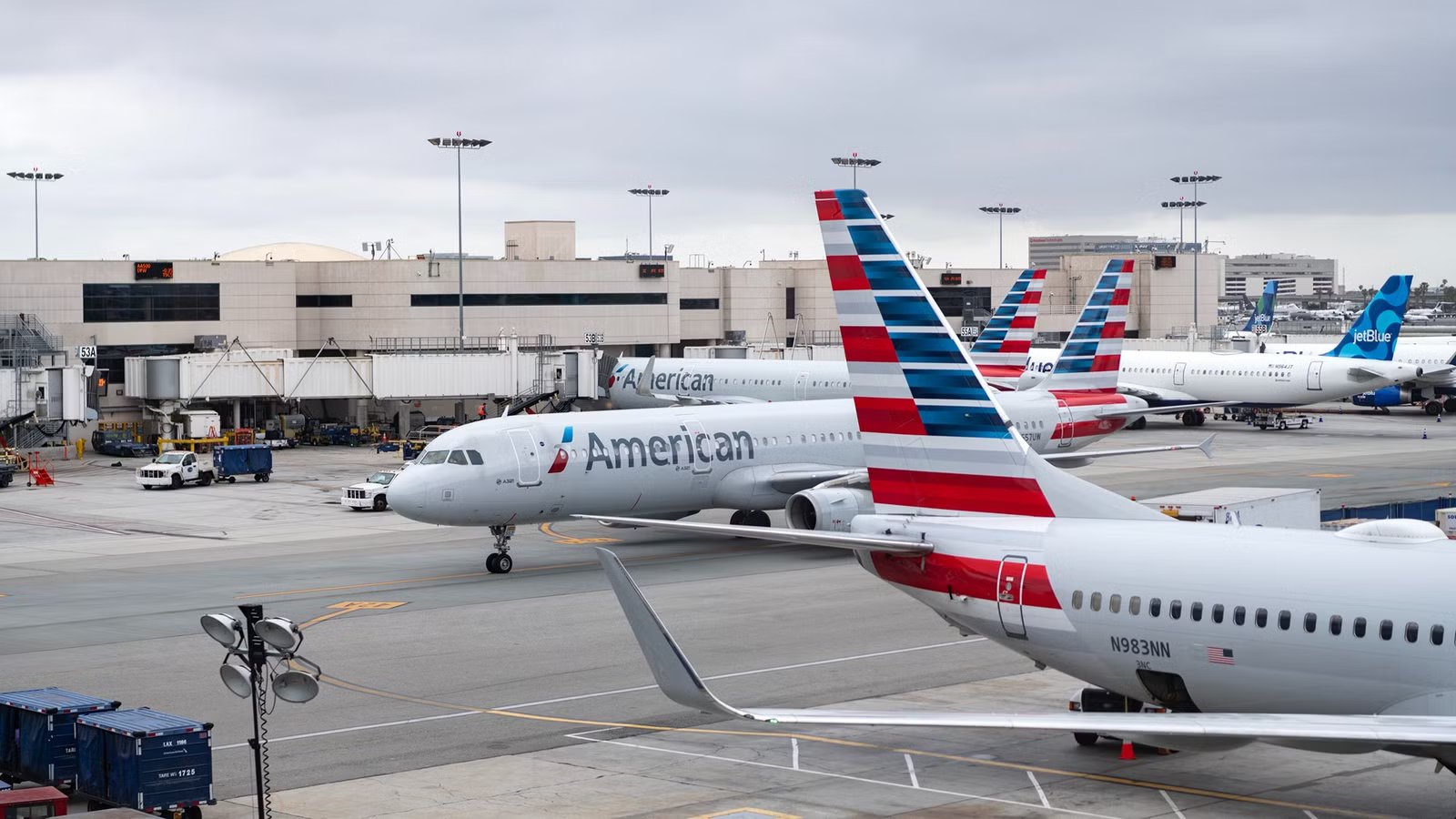
 American Airlines has also embraced the aircraft for premium-focused long-haul narrowbody operations. After receiving its first Airbus A321XLR in October 2025, the carrier launched service between New York John F. Kennedy International Airport (JFK) and Edinburgh Airport (EDI) in March 2026 using a relatively premium-heavy configuration featuring 20 Flagship Suite business class seats, 12 premium economy seats, and 123 standard economy seats.
Airline | Airbus A321XLR |
|---|---|
Iberia | 8 |
Aer Lingus | 6 |
Qantas | 6 |
American Airlines | 4 |
IndiGo | 2 |
The layout demonstrates how airlines increasingly view the aircraft not simply as a leisure-oriented narrowbody, but as a serious premium transatlantic platform. Iberia became the global launch operator for the type and quickly demonstrated the flexibility Airbus promised during development. Beginning with flights to Boston Logan International Airport (BOS) in November 2024, the airline expanded operations to destinations including Washington DC (IAD), San Juan (SJU), Recife (REC), and Fortaleza (FOR).
Many of those routes would be difficult to sustain economically using larger widebody aircraft throughout the year, but the A321XLR allows airlines to maintain frequency while significantly lowering operating costs. The largest operators of the A321XLR, according to the latest data from ch-aviation, are outlined in the table above.
The Striking Differences Between The Airbus A321XLR & Boeing 737 MAX 10
The Airbus A321XLR and Boeing 737 MAX 10 represent the pinnacle of evolution in the aviation industry, pushing narrowbodies to their absolute limits.
Why The Rear Centre Tank Changes Narrowbody Aviation

The Rear Centre Tank may appear to be just another fuel system innovation, but its broader importance lies in what it allows airlines to do operationally. By integrating nearly 3,400 gallons of additional fuel directly into the aircraft structure, Airbus transformed the A321 from a successful short- and medium-haul aircraft into a jet capable of reshaping long-haul route planning.
For airlines, the aircraft creates opportunities to bypass congested hubs and connect city pairs that previously lacked sufficient demand for widebody service. Smaller transatlantic routes can now operate with lower risk because airlines no longer need to fill 250 or 300 seats to make flights profitable. The economics also improve schedule flexibility because carriers can increase frequency using smaller aircraft rather than relying on fewer widebody departures.
The tank itself became the key enabling technology behind that strategy. Without the RCT, the Airbus A321XLR would simply be another incremental evolution of the A321neo family with marginally better performance. Instead, the integrated structural tank gave Airbus a practical method of pushing a narrowbody aircraft into territory once dominated by much larger jets. In doing so, the manufacturer may have created the closest thing the industry has seen to a true Boeing 757 successor in more than two decades.