

 dailynewsnblog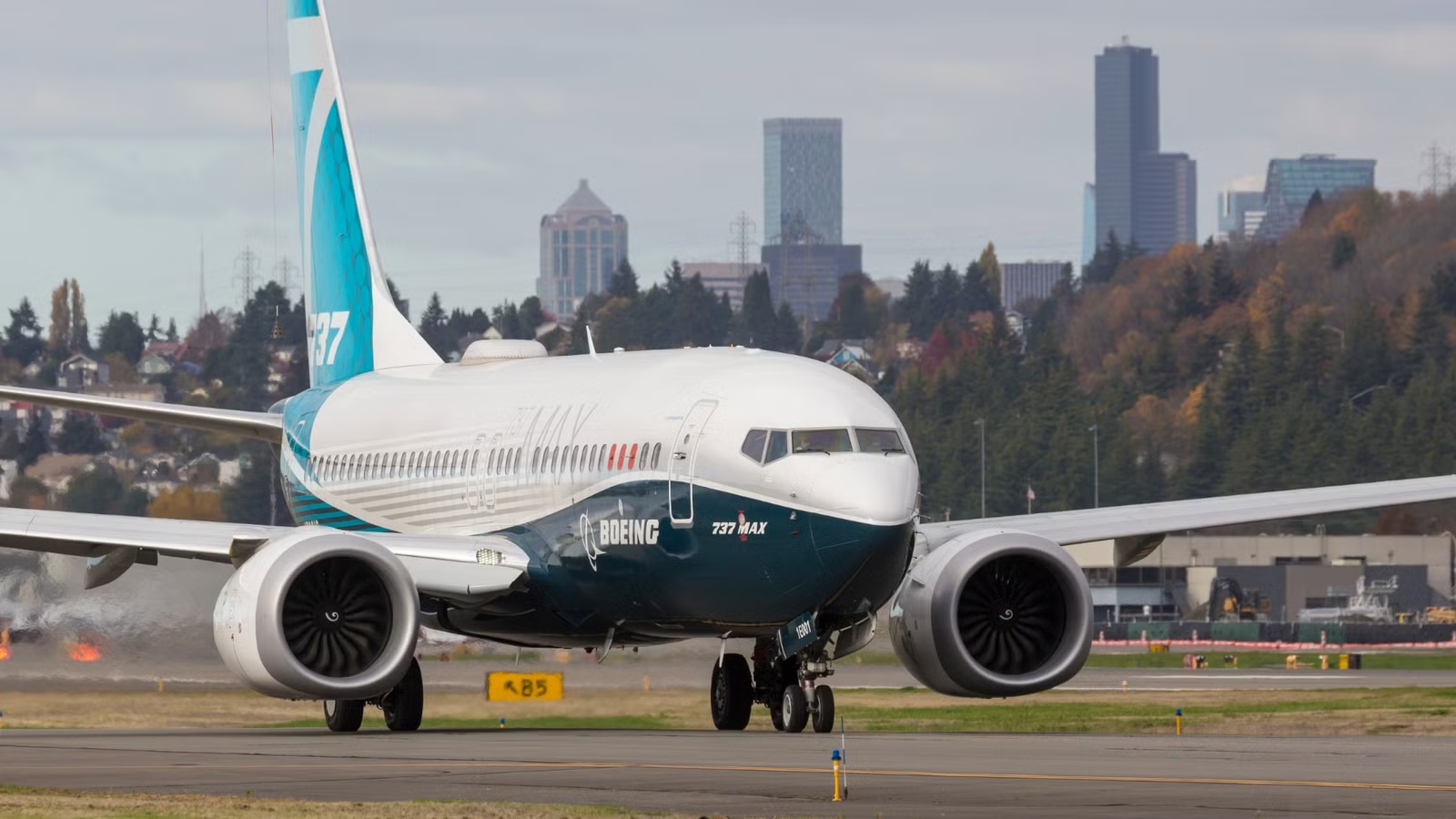
Reuters spoke with the Deputy Administrator of the Federal Aviation Administration, Chris Rocheleau, on the opening day of the Farnborough Airshow, about the expected certification of  Boeing’s single-aisle 737 MAX 7, MAX 10, and widebody 777X. He commented that the agency expects all three to be certified in the near future.
FAA Administrator Bryan Bedford also told Reuters that the FAA had increased resources allocated to the Boeing planes by 35% to 40% after coordinating with the plane maker to streamline priorities. He indicated that the MAX 7 is likely to be the first to pass final scrutiny before entering production, but the other two planes would follow shortly after.
Boeing Picks Up Momentum

The engine anti-ice system has been the primary roadblock to the 737 MAX 7 going into production. As the company has worked to implement an engineering fix, Boeing has also built 30 complete aircraft that are in storage and awaiting delivery. The anti-ice issue applies to all 737 MAX variants, but the next eight and MAX 9, which are already in service, are getting waivers until a retrofit can be applied. The 737 MAX 10 also requires this fix before it is certified, but the bigger jet also requires an enhanced angle of attack system before the FAA will sign off on it.
When it comes to the long-delayed next-gen widebody 777X, the FAA has not committed to an exact date, but Rocheleau said that the FAA is following the company’s lead to drive the timeline. Owing to its complexity and Boeing’s business disruptions, the 777X is over half a decade behind schedule, but it incorporates a long list of novel technologies pioneered by the 787 Dreamliner and others that have never been seen before. As the largest twin jet ever built, it features both industry-first folding wingtips and the most powerful turbofan engines ever installed on a commercial aircraft.
Rocheleau was quoted as giving these remarks to Reuters:
“Closer than ever before. I think the -7 is literally around the corner, and -10 right behind it. Whether it’s this year or earlier next year… we’re kind of letting Boeing drive that when they bring us the right information and we work through it together.”
Catch what other flight trackers miss
Emergency squawks, holds, NOTAMs — live signals, no signup.
Open tracker
Catch what other flight trackers miss
Emergency squawks, holds, NOTAMs — live signals, no signup.
Open tracker
The FAA Hands The Reins Back Over

Bedford previously commented to Reuters last week to clarify that much of the delay, if not all, surrounding the prolonged certification of the three highly anticipated jetliners stems from frequently shifting engineering priorities on Boeing’s behalf. He stated that since the company has stabilized its technical focus, the FAA has been able to support them more effectively.
His update also comes after the recent announcement that Boeing is going to be allowed to resume issuing its own individual airworthiness certifications for 737 MAX and 787 Dreamliner airframes. This is a major indication of progress after the 737 MAX disasters and the 20-month global fleet grounding, which also led to the loss of this authority during the FAA investigations.
The Race Begins To Catch Up With Customer Demand

Handing airworthiness certification back to the plane maker has also unburdened the FAA workforce to dedicate more personnel to the certification process. One sign of increased momentum came recently as the 777X cleared a major milestone by passing the 50% mark for FAA Type Inspection Authorization flight testing. Rocheleau noted that the widebody flagship will only be certified after both narrowbody MAX planes cross the finish line, pinning it for late 2026 or early 2027.
Until recently, Boeing’s narrowbody production was at 42 aircraft per month, but the company was recently approved by the FAA to ramp up to 47 and plans to increase that number to 53 deliveries per month after the MAX 7 and MAX 10 are certified. The prolonged certification blockages for the three jets still awaiting final sign-off represent the most expensive backlogs in aviation history. Combined, these three programs face a bottleneck of over 1,600 delayed aircraft orders worth billions, preventing airline modernization plans worldwide.





![9 Labor Day Mattress Sales From Organic Brands [2026]](https://dailynewsnblog.com/wp-content/uploads/2026/09/avocado-mattress-labor-day-sales.jpg)