dailynewsnblog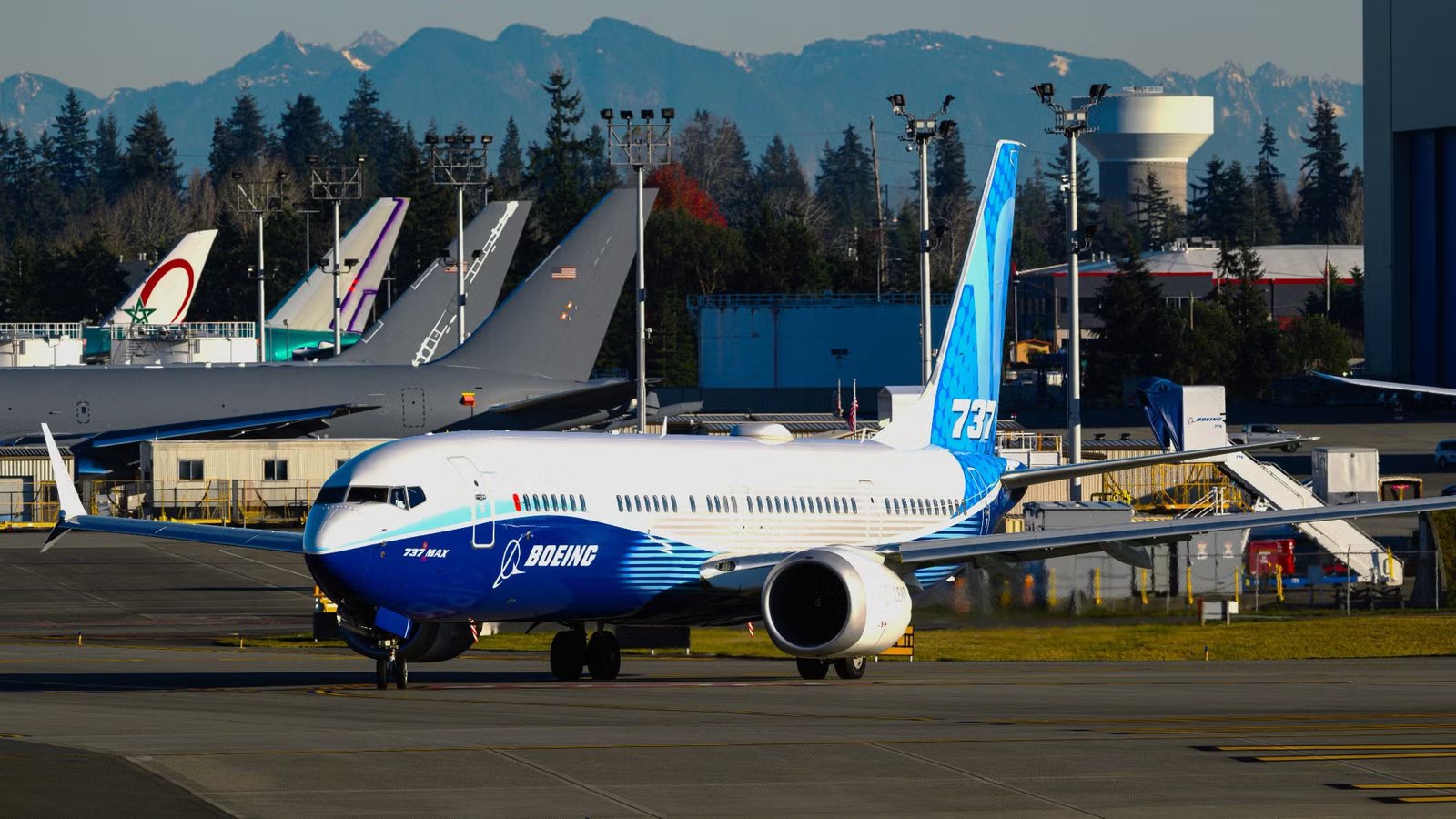
The Boeing 737 MAX 10 could receive its long-awaited certification from the Federal Aviation Administration ( FAA) as soon as next week, following a successful final type certification board meeting (TCBM) on Friday. The largest variant of the 737 MAX family was originally supposed to enter service in 2020, but it has been delayed by several technical issues.
However, a software issue that can disrupt the autopilot’s control of the aircraft during certain go-around conditions remains unresolved. While the FAA recently ruled that the flaw does not pose a safety concern, multiple airlines have reportedly told Boeing they will not accept new aircraft fitted with the affected software.
FAA Board Meeting Paves Way For MAX 10 Certification

As reported by The Air Current, the type certification board meeting took place on Friday morning and was successful, citing three people familiar with the matter.  Boeing is now expected to submit a project statement of completion (PSOC) to the FAA before the agency formally signs the type certificate, a final step that could happen as early as next week.
The MAX 10 completed its final certification flight in July after 976 flights and more than 2,060 flight hours, although the recently disclosed software issue led to additional delays. Boeing was informed of the flaw by WestJet following a test flight in November 2024, but it did not inform 737 operators for almost two years.
The FAA concluded earlier this month that the issue does not pose a safety concern, as pilots still maintain control of the aircraft and receive clear indications of the system’s behavior. It ultimately ruled that Boeing was not required to fix the software before certification, instead issuing a non-mandatory Special Airworthiness Information Bulletin (SAIB), covering both 737 MAX and 737 Next Generation models with the affected software versions.
Why Airlines Are Avoiding Boeing’s Newest FMC Software

The software issue affects versions U14 and U14.1 of the 737 MAX’s flight management computer (FMC). Under certain conditions during a go-around, the software can cause the autopilot to stop following its programmed vertical navigation (VNAV) path. The system switches to another mode, leaving pilots to manage the aircraft’s altitude and speed restrictions themselves.
According to The Air Current, US airlines have avoided U14 for years because of several separate software problems. Instead, they have continued using the older U13 version, which was introduced when the first 737 MAX was certified in 2017.  Alaska Airlines,
  American Airlines,
  Southwest Airlines and
  United Airlines have all confirmed that none of their in-service MAX aircraft use U14 or U14.1, with a source telling The Air Current that airlines view U13 as “the lesser of the two evils.”
Last month, United also told Simple Flying that it is “not taking deliveries of new aircraft” equipped with U14 or U14.1. While the older software is available for the MAX 8 and 9 variants, the MAX 7 and MAX 10 rely on the newer versions. The MAX 7 was certified in August with the newer software installed, while the MAX 10 used U14.1 throughout its certification flight testing.
Boeing initially said a permanent software update would arrive in 2028, alongside updated pilot guidance in November. However, the company has since said it is working to bring both forward. It added that it is also working with airlines on a procedure that would allow pilots to re-engage VNAV if the problem occurs.
First MAX 10 Customers Expect Spring 2027 Deliveries

WestJet will be the launch customer of the MAX 10 and plans to operate the type’s first passenger flights in early 2027, although this will hinge on progress with Transport Canada’s certification. Meanwhile, Alaska Airlines expects its first airframe in the spring of 2027 and hopes to launch passenger flights by mid-May, while Ryanair says it expects to receive its first 15 examples in spring 2027.
United is the type’s largest customer with a firm commitment for 167 aircraft, followed by Ryanair with 150 firm orders and another 150 options. United CEO Scott Kirby said in August that the carrier expects its first MAX 10 around July 2027.