dailynewsnblog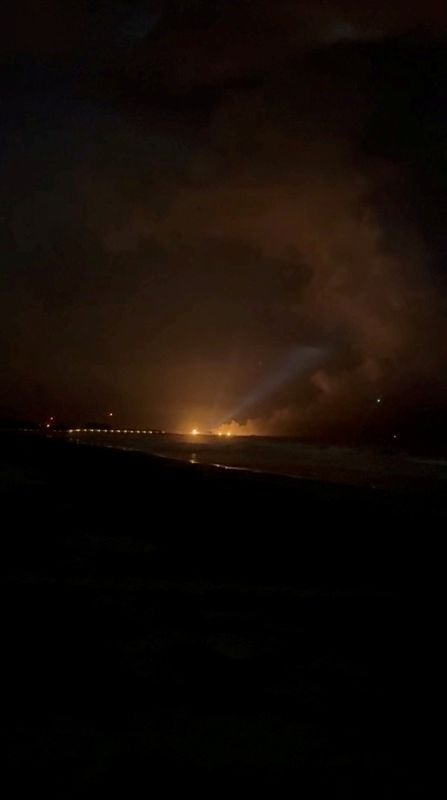
By Akash Sriram
NEW YORK, May 30 (Reuters) – Blue Origin faces a months-long setback after the explosion of a rocket damaged its launch pad, company and industry sources said, scrambling schedules for Amazon satellite launches and bolstering SpaceX’s dominance in the commercial launch market.
The mishap, which occurred during a test fire of the engines for the New Glenn rocket’s launch next week, comes at a critical time for Jeff Bezos’ business empire. His companies Blue Origin and Amazon are seeking to establish themselves as viable challengers in the heavy-lift and global satellite internet network industries, competing with Elon Musk’s SpaceX.
Thursday’s setback could also complicate NASA’s lunar ambitions.
A Blue Origin booster called “No, It’s Necessary” – a nod to a line from the film Interstellar – was wrecked in the incident on Thursday. The launch pad was “practically destroyed” and engineers expect at least a six-month disruption, if not longer, said a person familiar with the matter who declined to be named because they are not authorized to speak with media.
“It’s only been a year since the SpaceX Starship also exploded on the launch pad and Blue Origin can also recover. But it will take months to rebuild,” said Antoine Grenier, partner and head of space consulting at Analysys Mason.
MONTHS-LONG REBUILD EXPECTED
After a Falcon 9 exploded on the launch pad in 2016, SpaceX spent more than a year repairing the damaged facility, though it resumed launches within 4-1/2 months by shifting operations to a second Florida pad.
While Amazon’s decision to bring aboard more launch partners, including SpaceX, has reduced its dependence on any single rocket, it gives Musk’s business leverage over Bezos, his long-running rival.
“Sorry to see this, I hope you recover quickly,” Musk said in a post on X, later replying to Bezos with “Ad astra per aspera,” a Latin phrase that speaks to overcoming impossible goals.
Amazon LEO was relying on New Glenn’s rapid launch cadence to deploy half of its more than 3,200 satellite broadband constellation by July 2026 to meet regulatory deadlines. An extended grounding by the FAA will severely threaten the timeline.
CONSTELLATION DEPLOYMENT IN JEOPARDY
Analysys Mason’s Grenier said Amazon has already tapped much of the near-term capacity available from other heavy launch providers. While SpaceX could absorb some additional demand, its Falcon 9 rocket can carry roughly half as many Amazon LEO satellites per launch as New Glenn, meaning any major shift of launches could require a significant increase in mission count, he said.