dailynewsnblog
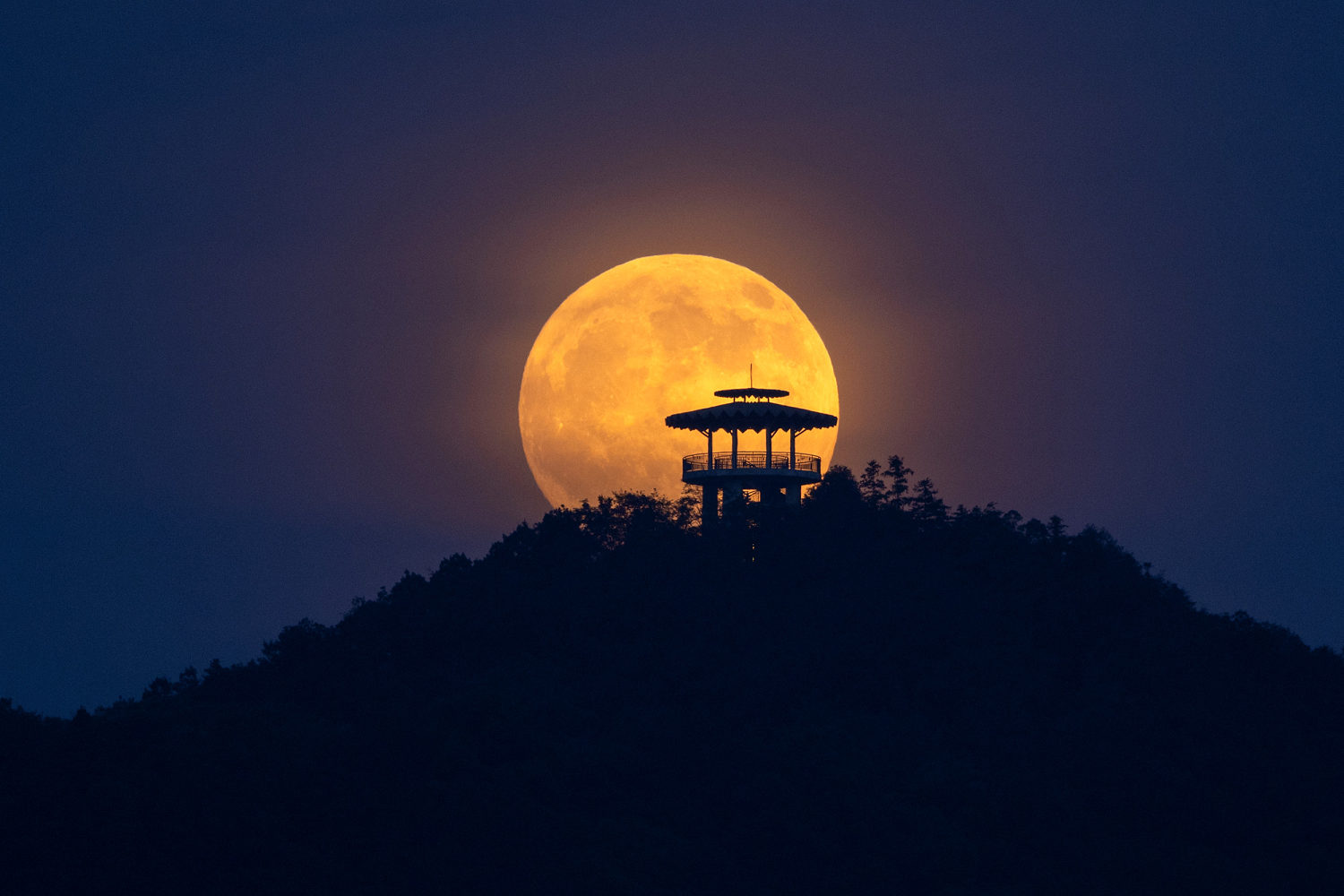
Two weeks after a total solar eclipse wowed skywatchers in southern Europe, a near-total lunar eclipse is set to put on a show Thursday night for people across North and South America.
Lunar eclipses occur when Earth slips between the sun and the moon and casts a shadow on the lunar surface. During this week’s event, nearly the entire moon — 96.2% at the eclipse’s peak — will be shrouded in Earth’s shadow.
Weather permitting, skywatchers in the continental U.S. will have some of the best views. The eclipse will also be visible elsewhere in North America, South America, parts of Europe and Africa.
During the eclipse, Earth’s shadow will appear reddish orange on the lunar surface because of the way Earth’s atmosphere scatters light from the sun. That’s why a total lunar eclipse is also known as a “blood moon.”
Thursday’s eclipse will begin at 9:23 p.m. ET, when the moon first enters the outer part of Earth’s shadow. The real action gets underway, however, at 10:33 p.m. ET, when Earth’s shadow starts to envelop the lunar surface, appearing to take a “bite” out of the lunar disk.
The eclipse will peak at 12:12 a.m. ET, when more than 96% of the lunar surface will be shrouded. The event will end at 3:01 a.m. ET when the moon exits the outer edge of Earth’s shadow.
Most viewers in North and South America, except those in Alaska and the northernmost reaches of Canada, will have a chance to see every stage of the lunar eclipse. For those in Europe and Africa, however, the eclipse will begin early Friday, and the moon will set as the event is progressing.
Unlike solar eclipses, lunar eclipses can be viewed safely with the naked eye, and skywatchers can use binoculars and telescopes to catch more dramatic views.
The lunar eclipse follows a total solar eclipse — when the sun, the moon and Earth align, with the moon passing in front of the sun and blocking its light — that darkened skies in Spain, a small part of Portugal, Greenland, Iceland and northern Russia.
Solar and lunar eclipses usually come in pairs because of the fortuitous way the moon, Earth and sun interact. The three celestial bodies happen to align from our perspective on Earth because the sun is 400 times farther from Earth than the moon, while also being 400 times bigger. That makes them appear the same size in the sky.
Solar eclipses occur during the new moon phase. Typically around two weeks later, when the moon is on the other side of Earth from the sun, lunar eclipses occur during the full moon phase.
The next solar eclipse, on Feb. 6, will be visible in parts of South America and Africa. The next lunar eclipse will occur overnight from Feb. 20 to 21. It should be visible in North and South America, Europe, Africa, Asia, Australia and Antarctica, according to NASA.