dailynewsnblog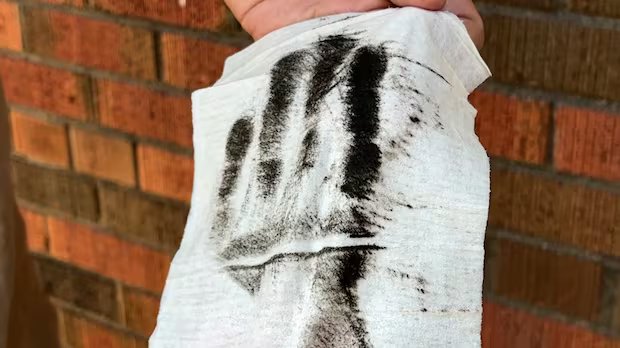
Emissions from manufacturer Birla Carbon were “a primary source” of the soot falling on Hamilton neighbourhoods last month, Ontario’s Ministry of the Environment, Conservation and Parks (MECP) has said.
Black dust falling over neighbourhoods in Hamilton is a perennial issue going back decades, particularly near the eastern industrial area. However, residents and local politicians said the soot fall in early July was particularly heavy and affected areas that are not usually impacted.
The sooty fallout was so bad — coating homes and ending up on pets and children — that many residents called on elected leaders to address the problem.
On Tuesday evening, ministry spokesperson Lindsay Davidson told CBC Hamilton that officials have “referred Birla for formal investigation by the ministry’s environmental investigations and enforcement branch for potential violations of Ontario’s environmental laws.”

People living in and around Hamilton’s east end say their homes have been covered in black soot this week. Soot is not a new concern for people in the area, but Ward 4 councillor Tammy Hwang says this time is different, with people further away being affected.
Carbon black producer says it’s co-operating with government
Birla Carbon told CBC Hamilton that it’s “co-operating fully” with the ministry.
CBC asked what could have caused the emissions and what might have been emitted.
Spokesperson Roysten Dmello did not address those questions, instead saying, “the company has not received any communication or copy of the report from MECP with regard to the ministry’s findings.”
Birla Carbon’s factory on Parkdale Avenue N. is its only one in Canada, according to its website. The company, which produces carbon black, is active in 14 countries.
Carbon black is a fine black powder used in manufacturing products, including rubber and plastic.
The government shared its analysis and sampling results with Hamilton Public Health, according to Davidson, the ministry spokesperson.
The ministry will require Birla Carbon “to take all necessary action to prevent future incidents,” Davidson said.
Public health staff are assessing the ministry’s findings and consulting with toxicological experts, Dr. Bart Harvey, Hamilton’s associate medical officer of health, said in an email.
“Hamilton Public Health will be commenting publicly on our assessment in the coming days, including any potential health impacts identified through our review,” Harvey said.
Carbon black emissions linked to negative health impacts
While officials have not said what was in the July emissions attributed to Birla Carbon, a 2023 proposed government standard for the carbon black sector notes, “Ontario’s carbon black facilities are a significant source of sulphur dioxide air emissions, particularly in Sarnia and Hamilton where the facilities are located.”
The standard, which was listed as “under active review” in March, goes on to say “short-term exposure to sulphur dioxide can cause respiratory distress.”
In some cases, it says, exposure “can cause effects on the heart, which may result in hospital admissions or, in severe cases, premature death.”
The standard says “sulphur dioxide emissions are a source of fine particulate matter,” and are associated with “various negative health impacts, particularly on the respiratory and cardiovascular systems.”
Company should be fined, councillor says
Coun. Tom Jackson told CBC Hamilton he received soot complaints from about 45 of his Ward 6 residents in the upper city, which he said was an unprecedented number. Many complainants suspected Birla Carbon, he said.
He implored company leadership to come and speak with his residents, saying he would happily organize a town hall.
Jackson hopes the company receives an “extremely substantial” fine and said he is working on a motion to redirect any funds from such a fine to residents, so they can be reimbursed for costs related to cleaning the grime.
Industrial jobs have long been important to Hamilton, Jackson said, but he wants to see businesses take “a heck of a lot more responsibility.”
“Darn it all, these companies just need to do a much better job … to ensure this black soot doesn’t happen again,” he said.
The ministry shared its findings the same day CBC Hamilton reported on the results of a study by McMaster University researchers, who sampled soot at 50 homes in Hamilton in 2024 and 2025.
Sarah Styler, an associate professor of environmental chemistry at McMaster University, and Grace Yao, a PhD candidate in Styler’s lab, said they found toxic chemicals consistent with coal combustion. Amounts of dust and polycyclic aromatic hydrocarbons (PAHs) were higher near the industrial area in northeast Hamilton, they found.
Due to resource limitations, the study couldn’t look at everything in the grime, Yao said, meaning it’s possible other sources contributed to the fallout. Still, “coal combustion is particularly significant in creating the PAHs that we’re talking about,” she said.
Styler’s team couldn’t reach a conclusion about which industrial-specific sources are creating the PAHs, she said.
With more monitoring and “analytical firepower,” narrowing down the source should be possible, she added.