dailynewsnblog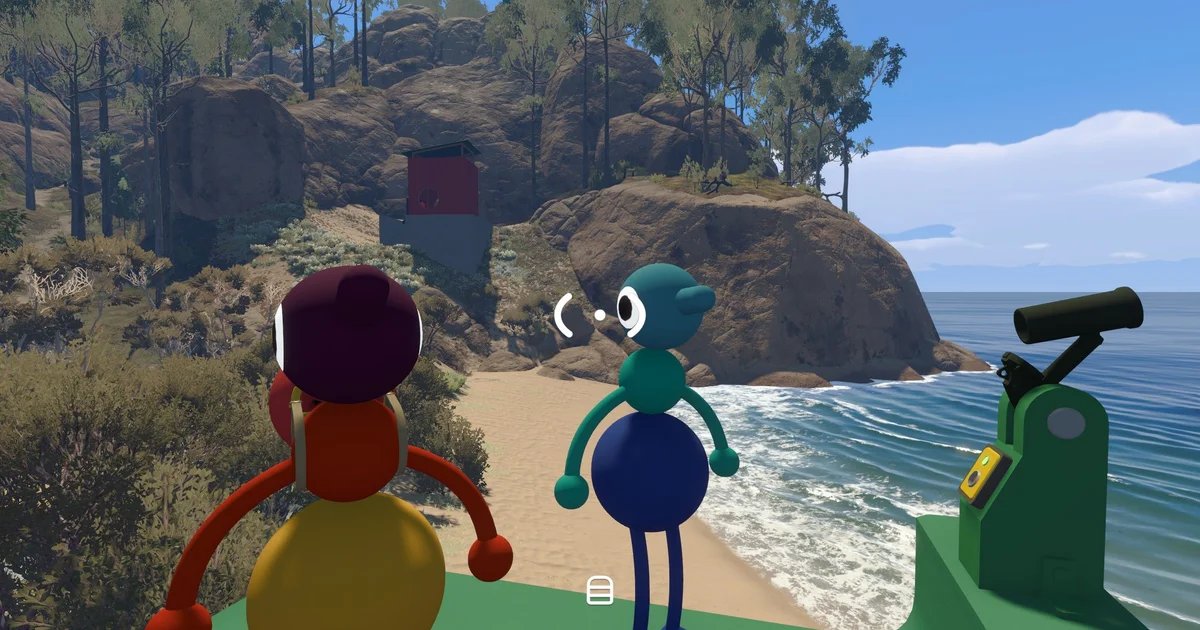
The other week, the SIM card in my phone stopped working. At first, working from home, the change was barely noticeable: a router handled my internet coverage, and Whatsapp messages continued unabated. Only once I left the house did I realise that a safety net had been cut.
I’ve never once called for a fire engine, but the option has long been a source of comfort. Now, suddenly SIMless, I could not. Nor could I check in with my wife about which binbags to buy. Wi-fi spots at Starbucks and shopping centres became little islands, safe ports where I could resume contact while out and about. A weekend away in a big city became a precisely planned operation, during which comms had to be closely managed, for fear of being isolated and left to orienteer through unfamiliar terrain.
Playing Big Walk, I’ve experienced something eerily similar. Though House House have built a jolly multiplayer hiking game, it’s placed a huge emphasis on close communication. Proximity chat is demanded, and confined to a tight radius – tighter than in comparable co-op games that have beaten Big Walk to market. In the colourful mountaineering hit Peak, for instance, your friends’ voices only really vanish when one of you drops through the clouds, having attempted an overambitious bout of freeclimbing. And in Content Warning, the extreme vlogging game, the absence of a pal’s screams typically heralds their death at the hands of some faceless snatcher.

In Big Walk, by contrast, you can stumble out of range of your friends’ hearing simply by accident. On one occasion, gamboling through a wood, a small crag briefly blocked our group’s way – an imposition so minor it didn’t even interrupt conversation. Unthinkingly, I chose to step left around the rock, while my friends went right. Within seconds, I was enveloped by a silent crowd of trees, and realised my mistake. My comrades could only have been metres away – but which way?
At a glance, Big Walk may resemble a number of other co-op games that fall under the reductive-yet-useful label of ‘friendslop.’ But where Peak was mostly put together in a month-long game jam, Big Walk has been under construction for years, and its well-considered and long-honed ideas are uniquely slowburn.
Setting out into one of its island zones, you’ll routinely happen across mysteries designed to arouse curiosity and delight. In the trough of a valley, a sensory garden that pumps music into the wild – each speaker adding a new textural element, like bells or finger clicks, to the ambiance. On a hilltop, a cannon that fires flares high into the sky. And across the landscape, a bright-blue railway, replete with a tantalisingly stationary train. Nothing is explained, but everything can be prodded and played with. It’s the platonic ideal that Riven: The Sequel to Myst was reaching for – wrapped in an invitingly bouncy mode of 3D exploration. (If I have one complaint about Big Walk’s moreish motion, it’s that boulders are too sticky, and even that I suspect is a design choice – forcing you to find more interesting ways to traverse than spamming the spacebar against an incline.)

Sound is a recurring element of the environmental puzzles you come across, and employed in a number of imaginative ways. One conundrum requires you to simultaneously pull three levers – each one situated on a separate bluff overlooking the sea. With only the white noise of the waves as accompaniment, my friends and I gesticulated wildly across the water at each other, in clumsy attempts to coordinate.
Another devious scenario locks a single player behind soundproof glass, and asks them to wordlessly direct their peers in pressing a series of nearby buttons in the right order. A third simply gathers you together in a well-furnished sitting room and asks you to spend five minutes in each others’ company – chatting, lounging, whatever.
Solving a puzzle grants you a doodah – essentially a large Kong, for those familiar with rubber dog toys – and collecting enough doodahs allows you to push the game forward. But backpacks are rare, and you can only pick up one item at a time, which means that doodahs compete with all sorts of other carryable items – including the torches that combat Big Walk’s pitch-black nights. Or the walkie-talkies that might otherwise prevent you from getting left behind in the shuffle.

One such separation took me right back to childhood. As we pottered along a gantry toward an oceanside amphitheatre, a friend slipped from a cliff into the shallows below. The vertical distance made voice chat impossible – and by the time the rest of us had clambered down to the water’s edge, our friend had followed the coast to somewhere beyond our view.
In moments like these, your next course of action is to try and psychologically map a route back to meeting again. If a friend knows they’re lost, where will they go? What we needed was a theme park entrance to return to, and a staff member to beg for use of the tannoy system. The closest Big Walk equivalent, we reasoned, was the mountaintop, with its flares and static radio system. Sure enough, our teammate had followed the same logic, and we were reunited halfway up the slope, to a chorus of happy ‘Hey!’s.
Future ordeals were prevented as we began to pick up on the subtle, telltale hints that can clue you into the location of a distant friend. One is the glow of a player’s eyes, which retain their gleam even in the dead of night. They’re situated on the side of your penguin-esque head – which means that, by turning 90 degrees, you can signal your presence to any teammates who might be following behind.

Then there are the broadcast stations that sit atop Big Walk’s tors and gnolls. Ideally, someone on the team will be carrying a walkie-talkie to capture any transmissions that come down from on high. But if not, you can observe the radio’s signal light from afar. Should it turn green, then you know someone’s speaking into it, and can pin down precisely where they are. Their SOS need not go unanswered, even if you can’t hear them.
Or at least, I think that’s how it works. Information in Big Walk is gathered through trial and error, and every team will develop their own haphazard systems for staying in touch. Some will create a rudimentary morse code that travels via flashlights; others will seek out and cling to the megaphones scattered throughout the land. And before then, every last player will stumble about in the quiet, get into scrapes in the dark, and find their way home only once the sun comes up. To be lost is not to fail; it’s part and parcel of learning and adventure.
If life without a SIM card goes badly, and I end up left behind like a prime minister’s infant in a pub, I hope I can embrace isolation in the fashion Big Walk suggests: as a puzzle to outthink and overcome. And I hope, too, that I can bypass the panic and look forward to the joy of the moment when I and my companions find each other again.

![Big Cut: Emirates Slashes 29% Of Flights To Florida [Full Details]](https://dailynewsnblog.com/wp-content/uploads/2026/08/138-emirates-boeing-777-300-spyros-vasileiou-_-shutterstock.jpg)