dailynewsnblog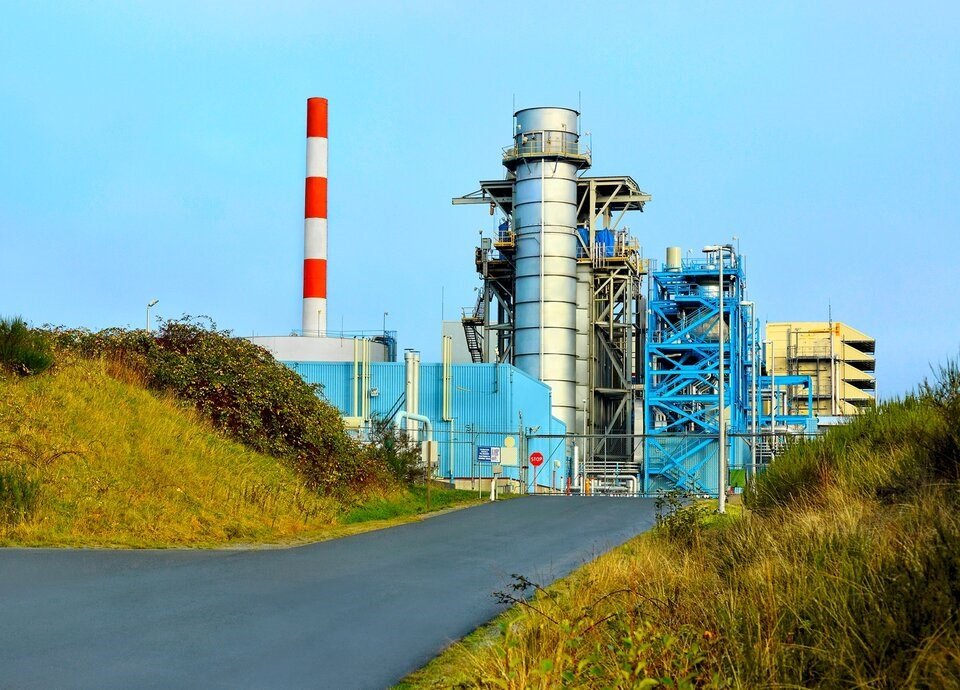
BC Hydro seeks to extend contracts with two major natural gas plants—a proposal that would undermine regulations requiring B.C. to build a grid free of fossil fuels by 2030
Faced with an electricity shortfall, B.C. Hydro is seeking to extend contracts with two major natural gas plants, a policy reversal that challenges one of the province’s core climate goals.
In a May 28 submission to the B.C. Utilities Commission, the utility seeks approval to pursue new agreements with Island Generation, a gas power plant at an old mill in Campbell River; and McMahon Cogeneration, a gas-fired facility in Taylor in northeastern B.C.
B.C. Hydro chief regulatory officer Chris Sandve said in the submission that electricity demand is expected to skyrocket with the rise of data centres, electric vehicles, economic growth and large industrial customers like mines and gas export terminals.
B.C. is now projected to face an electricity shortfall of 500 megawatts by 2030—enough power for 500,000 homes.
The risk of an energy shortage is “significant,” wrote Sandve, especially as government seeks to guide the economy through an uncertain geopolitical moment.
Together, the gas power plants generate about 400 megawatts of electricity, enough to cover 80 per cent of the forecasted supply gap identified by B.C. Hydro.
Evan Pivnick, a program manager with the think tank Clean Energy Canada, said the change represents a major shift in B.C.’s energy policy.
“This is changing core policies in the procurement of clean electricity in the province,” said Pivnick.
B.C. Hydro is currently bound by regulations to phase out all fossil-fuel power plants by 2030.
The 950-megawatt Burrard thermal generating station in Port Moody was decommissioned in 2016 and is currently being dismantled, while the utility had planned to stop buying electricity from Island Generation in October and McMahon a few years later, when their contracts expired.
According to Sandve, B.C. Hydro is in a tough spot, since under the Clean Energy Act, the province must produce all its own power, but sticking to that rule undermines its regulated target to electrify the entire grid with renewable sources.
B.C. Hydro submitted the 31-page document to the utilities regulator as an update to its 2025 integrated resource plan, a 20-year strategic road map meant to show how the province will meet rapidly escalating electricity demand.
The plan targets programs to reduce demand, expand the grid and bring on more capacity to generate more electricity by building new wind and solar projects.
In two back-to-back calls for power, B.C. Hydro has awarded electricity purchasing agreements to 14 wind and solar projects, enough to provide thousands of megawatts of clean energy on a scale two and a half times that of B.C.’s massive John Horgan Dam and Generating Station, formerly known as Site C.
The projects are scheduled to gradually come online between 2028 and 2034.

The expansion plans come as swings in extreme weather have repeatedly driven B.C.’s electricity demand to record highs. During the 2021 heat wave, the province saw its peak demand spike to a record 8,568 megawatts. That record was broken in 2024, when a powerful cold snap increased peak demand to 11,300 megawatts.
Some places are more vulnerable than others. Vancouver Island generates roughly 40 per cent of its electricity locally—half through hydroelectric stations and half through independent facilities. The remaining 60 per cent is imported from the mainland via underwater cable systems.
The Island Generation gas plant makes up about a quarter of all local capacity.
In its BCUC submission, B.C. Hydro says it has begun installing utility-scale batteries across the province, including on Vancouver Island, in its push to reliably provide capacity during the worst two-week cold spells.
“These resources provide short duration capacity, typically four to eight hours in duration. However, they cannot provide longer duration capacity,” wrote Sandve.
With so many unknowns, Pivnick said keeping the gas-fired plants open is a sensible plan so the utility can meet demand on short notice.
That includes during peak moments of electricity consumption—like a winter cold spell or summer heat wave—or if power cables supplying Vancouver Island from the mainland are damaged in a natural disaster.
B.C. Hydro’s resource mapping has found the province has the potential to build enough reasonably priced onshore wind projects to produce about 25,000 gigawatt-hours of electricity. That’s more than half of what the utility currently supplies B.C. every year.
The utility told the BCUC it plans to partner with other third-party developers and First Nations to close the remaining electricity gap by 2034. It’s also planning to upgrade turbines at two dams in the Kootenays, while exploring the potential for geothermal electricity generation and reopening the conversation about large hydro dams.
In its search for new back-up sources of energy, B.C. Hydro told the BCUC that it is also exploring the construction of new gas-fired power plants. Sandve wrote that “there are limited viable new capacity resources in British Columbia and developing new capacity resources generally requires long lead times.”
The document said B.C. Hydro is “not exploring baseload gas, coal, or nuclear” because of their “key disadvantages, such as being high emitting or being subject to significant cost and seismic risks.”
Barry Penner, a former B.C. Liberal cabinet minister who now chairs the Energy Futures Institute, said B.C. Hydro’s move to keep gas-fired plants operational is a “dose of reality,” and the “most explicit recognition that we need natural gas” as the province races to build renewable energy projects.
“There’s limited time and limited options to meet peak demand by 2030,” said Penner. “That’s a very tough timeline.
“Clearly, there’s been a change in thinking at B.C. Hydro.”
According to Penner, the move to keep gas-fired power plants as part of B.C.’s energy mix shows the entire CleanBC climate plan is built on a major flaw: the assumption that the province has a cheap, endless supply of clean electricity.
Nancy Olewiler, an economist and professor emeritus at Simon Fraser University, pushed back against the idea that CleanBC is a failure.
Olewiler, who previously served on B.C. Hydro’s board of directors and co-chaired B.C.’s Climate Solutions Council, said few foresaw the rise of data centres and their voracious appetite for energy. She said blaming climate policies for a rise in industrial electricity demand is misguided.
For Pivnick, the idea of building new gas power plants—even to meet peak demand—is a worrying policy shift that could send the province on a dangerous path.
“Right across the country there’s a big question over what role natural gas is going to play in the grid,” he said. “I think there’s going to be a careful line to walk here.”
Olewiler and Pivnick said the makeup of B.C.’s energy future will ultimately hinge on detailed cost estimates and determining which power sources are cheapest for ratepayers over the long run.
“When we expose ourselves to gas, we expose ourselves to global energy prices,” said Pivnick. “We better be absolutely certain.”
CORRECTION: An earlier version of this story incorrectly stated that Barry Penner is on the board of Capital Power.