dailynewsnblog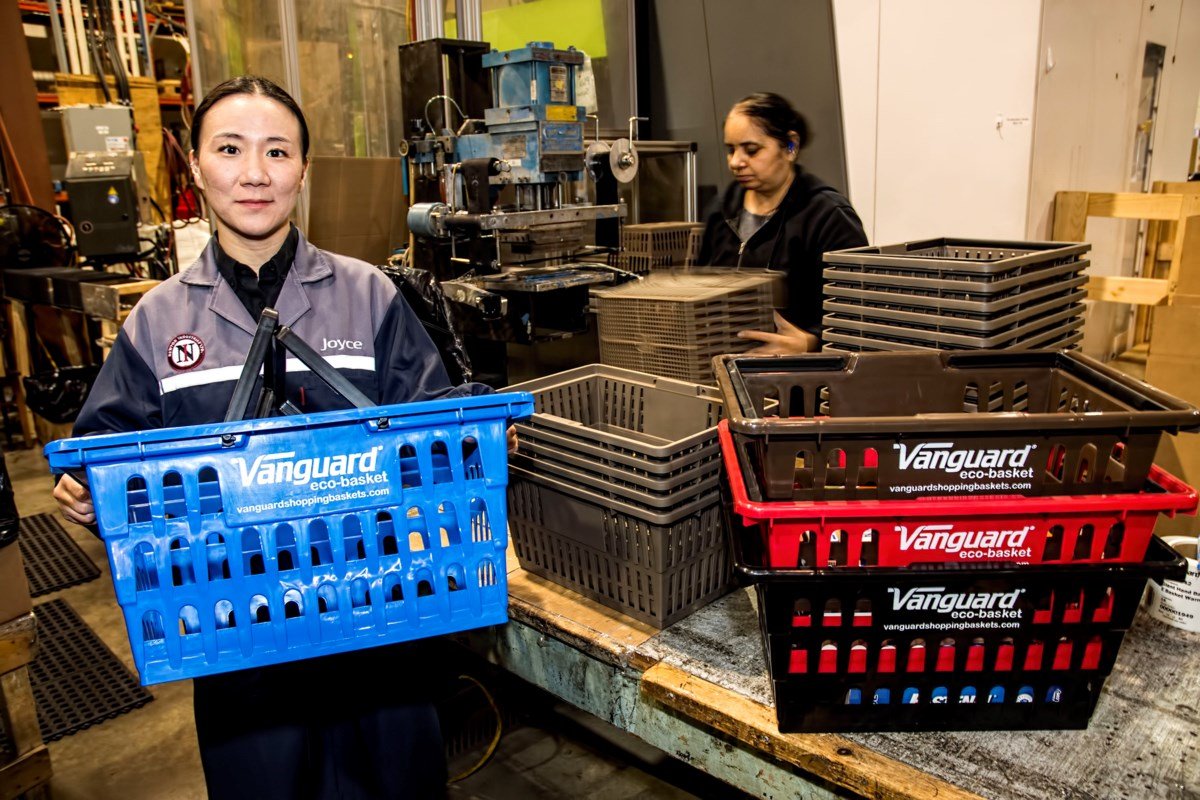
Companies in B.C. are absorbing new levies, while products face longer waits at the border
Trade tensions between Canada and the U.S. continue to escalate, deepening uncertainty for B.C. businesses that depend on cross-border trade.
Some B.C. business owners say they are being hit with the 50 per cent tariffs that the Trump administration imposed late last month on a range of Canadian goods.
Others told Business in Vancouver they started to have delays getting products across the border during the early days of U.S. President Donald Trump’s second term, before the current tariff spat with Canada erupted.
There is also the spectre that businesses could feel a pinch from counter-tariffs that Prime Minister Mark Carney levelled on a wide swath of American products starting Sept. 8.
This means more work for lawyers and customs brokers, and frustration and expense for business owners.
“We’re being tariffed,” Newton Industries Ltd. CEO Joyce Tang said.
She had endured hassles and legal costs last year to ensure that her company’s products would be covered under the Canada-United States-Mexico Agreement (CUSMA) and therefore be able to enter the U.S. tariff-free.
Newton specializes in parts for the construction sector, plastic shopping carts for grocers and other plastic items.
Trump’s new tariffs apply to Tang’s products despite them being compliant with the CUSMA free-trade agreement because the tariffs are levied under Section 338 of the U.S. Tariff Act of 1930.
That statute allows the U.S. tariffs to bypass free trade agreements as they are levelled on products due to what Trump claims are discriminatory trade practices, said Miller Thomson LLP managing partner Daniel Kiselbach.
Tang said she is covering the cost of the 50-per-cent tariffs on her sales in the short term.
Some of her U.S. customers require suppliers to provide between 45 and 60 days notice of a price increase, she said.
Tang said she has alerted those customers that a price increase is coming due to the tariffs, and that they will have to pay the tariff after 60 days.

Other business owners affected by tariffs, such as Quadrogen Power Systems Inc. CEO Alakh Prasad, said they are trying to diversify sales.
Canada launched what it calls its Regional Tariff Response Initiative last month, when federal Housing Minister Gregor Robertson was at Burnaby-based Quadrogen’s head office to announce low-interest loans to help businesses diversify exports.
Robertson oversees Pacific Economic Development Canada (PacifiCan), which provided Quadrogen with a $3.6-million loan, Prasad said.
“We have been affected by U.S. tariffs,” he said.
His company makes systems that enable customers to convert biogas generated from food waste into renewable natural gas that companies can use to reduce their carbon footprints, or to sell to resellers. Prices for the systems can range up to $8 million.
“We have installed 116 systems and 70 of them have been in the U.S.,” Prasad said. “The U.S. has been our biggest market.”
Prasad has sold some systems to European companies, he said. He now aims to sell to companies in India, Indonesia, Malaysia, Singapore and Vietnam, he added.
B.C. businesses are diversifying trade away from the U.S.
In the first seven months of this year, B.C. exports to the U.S. accounted for 47.8 per cent of B.C.’s total exports, as calculated by Central 1 from Statistics Canada data. That is down from 51 per cent in the same period in 2025, the financial institution said in a recent report.
Border obstacles impact business
Vancouver-based AquaEye is another company where more than half of its revenue comes from Americans.

Its handheld sonar devices can be held underwater, providing users with the ability to scan 50 metres in the distance, and at a depth of 20 metres for a 180-degree stretch of water in front of the user, said CEO Carlyn Loncaric.
Technology in the devices helps identify people in the water who may need rescuing, she explained.
“We used to be able to ship products overnight to U.S. customers in need, and now we can’t,” Loncaric said.
She pointed to a situation last year when a customer in Texas ordered her sonar devices to use during flash flooding.
AquaEye sent them, but instead of the devices getting to the customer within a day, the products languished at the U.S. border, Loncaric said.
This challenges her ability to sustain her company’s revenue growth.
AquaEye’s revenue increased 301.7 per cent—to $2,760,660 in 2025 from $687,264 four years earlier, according to BIV‘s 2026 list of fastest-growing B.C. companies.
Loncaric said she has “not yet” seen her products dinged with tariffs but she is concerned that this may happen, particularly when products are delayed at the U.S. border.
She is not alone.
Breanna Leininger, vice-president of U.S. operations at Pacific Customs Brokers, said she has also seen many B.C. exporters’ product shipments stuck at the border.
The U.S. Customs and Border Protection (CBP) and the Canada Border Services Agency are both increasing enforcement and are increasingly asking for more detailed documentation, she said.
The CBSA in phases rolled out what it calls the CBSA Assessment and Revenue Management (CARM) system starting five years ago. It fully came into effect in late 2024.
CARM has come in tandem with more verification audits, Leininger said.
The CBP, similarly, is asking for additional documentation and is doing so more frequently, she added.
“They’re really drilling in on supply chains,” Leininger said.
“They don’t want to just know which bakery that bread might have come from. They want to know which mill the flour used was milled at and where that wheat was sourced. They’re going much deeper into supply chains.”
In the past, exporters were expected to have basic importation documents, such as an invoice, a bill of lading and a packing list, Leininger said.
Now, the CBP asks for production records, labour records and sourcing information.
They want to know more information to better assess the U.S. government’s official Harmonized Tariff Schedule classification codes for goods, and to determine the goods’ country of origin because both of those things determine tariff rates, Leininger said.
In the past, goods often flowed into the U.S. and the CBP would later ask for documents, usually within one year, she said.
Now, there are more examples of goods stuck at the border until exporters can provide detailed documentation.
“It’s a lot that is needed, and I don’t think we’ve even begun to see the beginning of all the changes,” she said.
Knowing which goods get tariffed can be complicated
Swift adaptation is a competitive advantage, said Kiselbach of Miller Thomson, who has been helping clients determine which of their products are subject to the new U.S. tariffs.
When Trump invoked the tariffs, he did so under several proclamations, Kiselbach said.
Tariffs apply to items based on them being deemed products of Canada, and depending on the tariff codes that the goods are assigned, he said.
Each of Trump’s proclamations for tariffs comes alongside what Kiselbach called “annexes,” which describe the types of goods that are covered.
He said he advises clients to evaluate their situations.
“Look at your supply chain and determine whether or not there are any mitigation, or recovery, opportunities,” Kiselbach said.
Wording in sales contracts also matters.
Businesses may be able to pass tariffs onto U.S. customers but the key is to have that ability stated in contracts, said Kiselbach.
Contracts could outline a cost-sharing agreement if there are new tariffs. Or provide the Canadian businesses with a way to get out of the contract if there are new tariffs.
“Provision can be done or taken into account for negotiating shorter-term duration contracts or contracts that, for example, implement a cost-sharing relationship if tariffs go to a certain level,” Kiselbach said.
“The ultimate question is, at what rate does the business model become unprofitable?”
[email protected]
Bluesky.com/glenkorstrom.bsky.social
BIV’s free newsletters cover daily business, real estate, B.C. politics and more. Sign up here for B.C.’s most important business news delivered directly to your inbox.