dailynewsnblog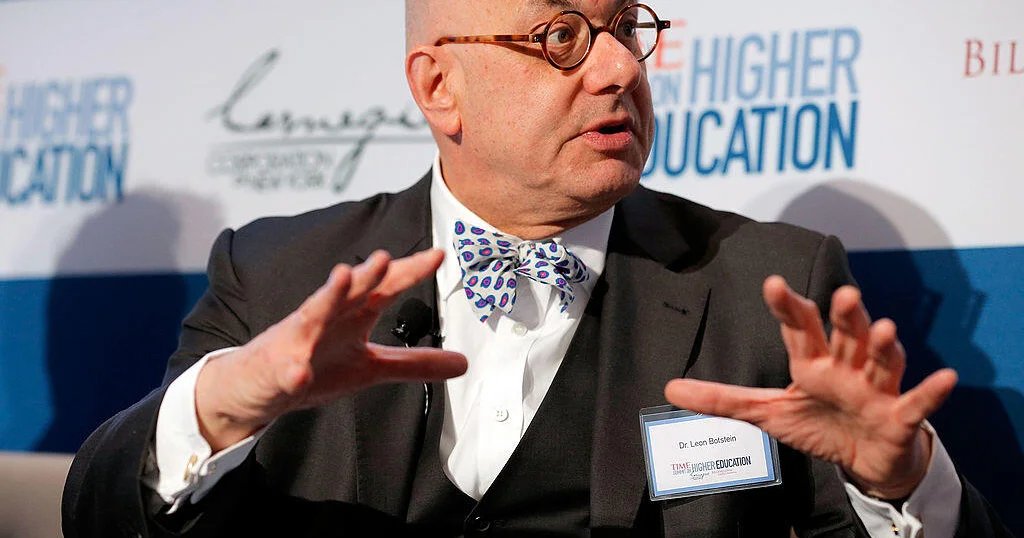
The longtime president of Bard College announced his retirement Friday, months after it was revealed that he had a much deeper relationship with convicted sex offender Jeffrey Epstein than was previously known.
Leon Botstein, 79, who has been president of the small, liberal arts college in New York for a half century, will retire at the end of June, he wrote in a lengthy letter to the campus community.
In the letter, Botstein didn’t mention the scrutiny of his ties to Epstein, except to say that he had waited to announce his retirement publicly until the completion of an independent review of his relationship with the notorious sex offender that was published Thursday.
“I believe it was prudent and in the best interest of Bard to wait until the Wilmer Hale review was complete to make this announcement,” he wrote.
He said he would remain on Bard’s faculty as a teacher and musician.
“Our longtime President, Leon Botstein, announced today that he will be retiring from the presidency at the end of June,” the school said in a separate statement. “Over the course of fifty years, President Botstein has been a transformative leader with the vision and unwavering commitment that has shaped Bard into the world-class educational institution it is today.”
Bard’s trustees had enlisted the outside law firm WilmerHale to conduct an independent review of the communications between Epstein and Botstein. The review found that the president did not do anything illegal but “made decisions in the course of that relationship that reflect on his leadership of Bard,” according to a summary provided by the college.
“In his public statements and his statements to the Bard community, President Botstein minimized and was not fully accurate in describing his relationship with Epstein,” the review said.
Botstein was not accused of any involvement in Epstein’s exploitation and abuse of girls and women. But he was among a long list of prominent and notable men and women who maintained friendly relationships with him for years, despite his status as a convicted sex offender.
A trove of documents released by the Justice Department this year showed that Botstein and Epstein had met on multiple occasions, with Epstein sometimes arriving at Bard by helicopter. The president had also asked Epstein to be a guest at the 2013 graduation ceremonies and suggested they meet for an opera performance.
In addition, Botstein reached out to Epstein weeks after The Miami Herald reported new details on Epstein’s criminal prosecution in 2018, saying “I want you to know that I hope you are holding up as well as can be expected,” and had separately referred to his “friendship” with Epstein in at least two emails.
Epstein steered $150,000 to Botstein in 2016, which the president has previously said he donated to the college. Botstein has previously denied having a personal connection with Epstein, instead saying his contacts with Epstein were centered on fundraising for the college.
At one point, according to the review, Botstein disagreed with a senior faculty member who felt Bard should not engage with Epstein, concluding that the president “relied on his view that a person convicted of crimes involving sex with a minor—’an ordinary sex offender’, in his words—could be presumed to be rehabilitated in the same way that any other convicted person should, in his view, be given that presumption.”
“President Botstein forcefully argues that Bard’s need for funds was paramount. His view was, ‘I would take money from Satan if it permitted me to do God’s work,'” the review said.
The Executive Committee of the Board of Trustees at Bard, in a separate message, wrote that it is grateful for Botstein’s decades of service to the college, but added that the “concerns raised in recent months have been serious and deeply felt.”
“We are grateful to those who came forward to share their perspectives, and we recognize the importance of the questions that prompted this review and the deliberation that followed,” the committee wrote.
It said funds associated with Epstein will be directed to organizations that support survivors of sexual harm.