dailynewsnblog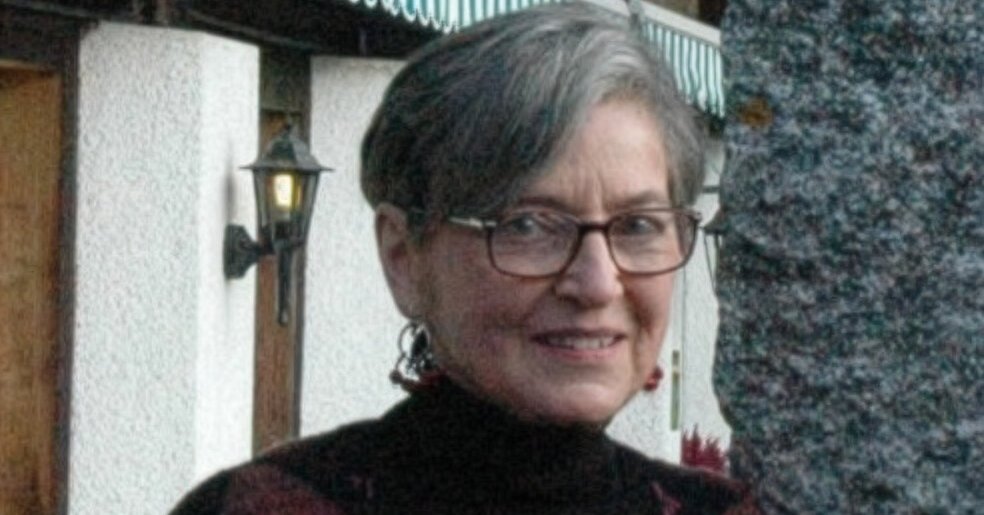
Barbara Hatch Rosenberg, an expert on biological weapons who emerged as a leading voice during the F.B.I.’s rocky effort to identify the culprit in the deadly anthrax attacks of 2001, died on March 14 at her home in Northampton, Mass. She was 97.
Her death was confirmed by her stepdaughter Claudia Kellogg.
A molecular biologist, Dr. Hatch Rosenberg was a founder of the Federation of American Scientists’ Working Group on Biological and Chemical Weapons and a former adviser to the Clinton White House when the anthrax scare startled an America that had recently been wounded by the attacks of Sept. 11, 2001.
Soon after the attacks, envelopes with powder in them were mailed to news outlets, supermarket tabloids and U.S. senators’ offices. The powder was found to contain the spores of the bacteria that causes anthrax, a dangerous infection.
By October, five people had died, including two postal employees at a Washington, D.C., processing center and a 94-year-old widow in Connecticut. Seventeen people were sickened.
Dr. Hatch Rosenberg, a professor at the State University of New York’s Purchase campus, began to develop a theory of the culprit — as an insider, a government scientist or contractor, not a foreign terrorist — that drew the attention of the F.B.I. and many news outlets.
The F.B.I. eventually focused on an American scientist, Steven J. Hatfill, who had once worked at the U.S. Army Medical Research Institute of Infectious Diseases. In August 2002, he was publicly declared a “person of interest” in the investigation by Attorney General John Ashcroft.
But after months of searches, interrogations and hounding by news outlets, Dr. Hatfill turned out to be innocent. In 2008 he won a $5.8 million settlement from the Justice Department and received apologies from media outlets that had suggested he was the culprit.
Dr. Hatch Rosenberg never apologized, and maintained that she had never explicitly named Dr. Hatfill, who later worked in the Trump administrations.
But the F.B.I. agent in charge of the investigation, Van Harp, was later asked in a sworn deposition whether Dr. Hatch Rosenberg had brought up Dr. Hatfill in a meeting she had in June 2002 with the F.B.I. and congressional staffers. Mr. Harp responded, “That’s who she was talking about.”
An F.B.I. search of Dr. Hatfill’s residence was conducted shortly after that meeting, and he later insisted that it was Dr. Hatch Rosenberg who had singled him out.
Dr. Hatch Rosenberg was a dogged opponent of biological weapons and, with the anthrax attacks, her preoccupation had finally reached the public’s consciousness. A week before Sept. 11, she had written an opinion essay in The Baltimore Sun sharply criticizing the George W. Bush administration for rejecting a treaty to monitor compliance with the international Biological Weapons Convention.
Early in November 2001, Dr. Hatch Rosenberg came to the conclusion that the anthrax in the mailings had originated in a government lab at the Army Medical Research Institute of Infectious Diseases, at Fort Detrick, Md. On Nov. 21, she unveiled her suspicions at a meeting in Geneva about the Biological Weapons Convention. The anthrax “came out of the U.S. biological weapons program,” she told the delegates — a bracing hypothesis.
By Nov. 29, the Stockholm International Peace Research Institute was distributing a paper by Dr. Hatch Rosenberg in which she wrote that “the perpetrator is an American microbiologist who has access to recently-weaponized anthrax or to the expertise and materials for making it, in a U.S. government or contractor laboratory.”
The F.B.I. soon came calling, wanting to know if Dr. Hatch Rosenberg had any suspects in mind. Her name began appearing with increasing frequency in news stories. Government scientists called her with tips.
She began criticizing the F.B.I. In a lecture in February 2002 at Princeton, she accused the bureau of “dragging its feet” — perhaps because, she suggested, the suspect might know too much about biodefense secrets.
She “thinks she knows who was responsible for the anthrax attack,” Nicholas Lemann wrote in The New Yorker a month later. The suspect was “confused, upset, depressed, angry,” he quoted her as saying, and had an ax to grind.
Conservative news outlets ridiculed her. The Weekly Standard called her “The Miss Marple of SUNY Purchase” for insisting that the anthrax attacker was American, rather than an Islamist foreigner.
Dr. Hatch Rosenberg persisted, meeting with the F.B.I. in June on Capitol Hill. The F.B.I. began to turn up the heat on Dr. Hatfill, searching his apartment soon after, as “television cameras, satellite TV trucks, overhead helicopters were all swarming around,” he later told reporters.
Barbara Hatch was born in New York City on June 26, 1928, the oldest of three children of Arthur Hatch, who worked for the electric utility holding company Ebasco, and Evelyne (Schreiber) Hatch. She grew up in Great Neck, on Long Island.
She studied chemistry at Cornell, graduating with a bachelor’s degree in biochemistry in 1950, and received a master’s degree in physical chemistry from Columbia in 1957 and a Ph.D. from Cornell in the same subject in 1962.
She worked as a biological chemist at the manufacturing conglomerate American Cyanamid and was a research scientist at Memorial Sloan Kettering Cancer Center in New York from 1962 to 1989. She taught at Cornell (now Weill Cornell) Medical College from 1970 to 1985, before going to Purchase, where she was a research professor of environmental science. She retired in 2008.
Her focus on biological weapons stemmed from her anti-Vietnam War activism in the 1960s and her attendance at the conference in 1986 in Geneva that aimed to strengthen the Biological Weapons Convention, which had been signed in 1972. She was one of the founders of ProMED, the international early warning system now under the aegis of the International Society for Infectious Diseases.
Dr. Hatch Rosenberg was divorced from her first husband, John Rosenberg, in the late 1960s. She married her second husband, the scientist Liebe Cavalieri, in 1970. He died in 2013. She is survived by a brother, C. Richard Hatch; two stepdaughters, Ms. Kellogg and Frances Cavalieri; 11 step-grandchildren and 12 step-great-grandchildren.
In 2007, the F.B.I. began to focus on a government scientist, Bruce E. Ivins, who had access to the anthrax at Fort Detrick — in contrast to Dr. Hatfill, who lacked such access. In July 2008, as the agency closed in, Dr. Ivins died by suicide. Less than two weeks later, Dr. Hatfill was officially exonerated.
But Dr. Hatch Rosenberg continued to criticize the F.B.I. and its investigation; she and several others published a paper in 2011 that raised the prospect that Dr. Ivins had help in obtaining his weapons, or may even have been innocent.
In September 2002, with public anxiety over anthrax waning, Dr. Hatch Rosenberg had despaired that her passion — the threat of biological weapons — was fading from view.
“It is surprising how quickly public terror in response to the anthrax attacks turned to public indifference,” she wrote in The Los Angeles Times that month. “But the story isn’t over. The likelihood of bioterrorism is increasing, and the American public is still the preferred target.”
Georgia Gee, Kitty Bennett, and Kirsten Noyes contributed research.